Customize my trip


Best Oaxaca Tours For Families In 2026
Best Oaxaca tours for families: Hierve el Agua, weaver villages, easy food walks and kid-friendly pacing. Trip picks from Rutopía's Oaxaca team.


Content
They highlight our work



Unique trips in Mexico.
Tailor made for you.
Request your tripTailor made for you.
Let a local guide help you plan your trip to Mexico
Start tailor-made tripOaxaca with kids is one of those trips that sounds more complicated than it is. The city is walkable and compact. The food is adaptable. The artisan villages have enough hands-on activity that children who would otherwise spend twenty minutes in a museum actually stay engaged for two hours in a weaver's workshop. The real planning challenge is not whether Oaxaca works for families — it does — but which experiences to anchor the trip around and how to pace the days so adults get depth and kids don't hit a wall by 3:00 p.m. This guide covers both, narrowing the full range of Oaxaca tours worth booking in 2026 to the family-friendly picks. For a custom family trip with logistics handled, start with our Oaxaca team.
How Oaxaca works for families: The honest picture

Oaxaca City's historic center is pedestrian-friendly, reasonably flat in most areas, and not overwhelming in the way that Mexico City can feel to children who aren't accustomed to dense urban environments. The main market areas are sensory but not unsafe: crowds, smells, color, noise — interesting to curious kids, manageable for parents. The temperature is mild year-round at 1,550 meters; there's no wilting heat like the coast.
The cuisine presents more challenges than the city itself. Oaxacan food is genuinely spiced, and while "spicy" in the chile sense is often moderate, the flavor profiles are unfamiliar to picky eaters. Tlayudas, cheese quesadillas, and tamales are usually safe territory. The markets have more conventional options alongside the more challenging ones. Most restaurants in the historic center are accustomed to families and have plates that work for younger children.
The biggest practical constraint for families: the days that adults find richest — long village visits, multi-hour mezcal circuits, extended ruins walks — are the days that wear children out fastest. Building the schedule around kids' energy rather than adult wish lists is the adjustment that makes Oaxaca work as a family destination.
The top Oaxaca tours to book in 2026 map the full menu of Oaxaca experiences if you want to see the complete picture before narrowing to family-specific picks.
Experiences that genuinely engage kids
Hierve el Agua: The natural pools at the edge of the cliff, with the valley view below, hold children's attention in a way that most archaeological sites don't. The drive is an adventure, the pools are swimmable, and the landscape is dramatic enough to feel like something from a story. Under-12s almost universally love this. Plan to spend 2.5 to 3 hours at the site. Bring water shoes and snacks. Full logistics in the Hierve el Agua guide.
San Martín Tilcajete alebrije workshop: Watching an alebrije being carved from a piece of copal wood and then painted with fantastical creatures is inherently compelling for children who have any interest in art or animals. Many workshops will let older children (9 and up) try painting a small practice piece under supervision. The village is 23 km from Oaxaca City, easily done as a half-day. See the artisan villages guide for the full village picture.
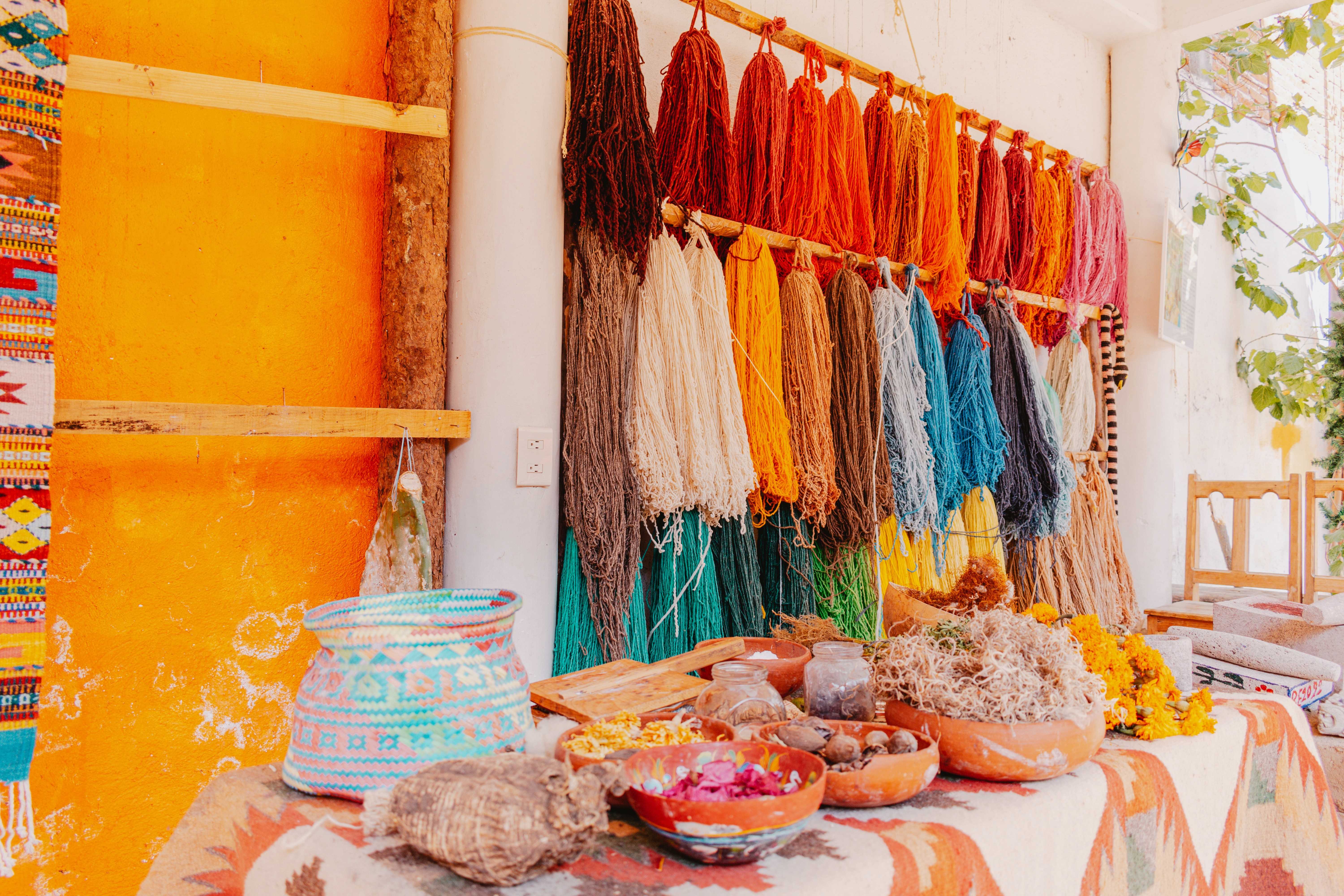
Teotitlán del Valle weaving workshop with natural dye: The cochineal dyeing demonstration — purple that turns crimson that turns orange — is the kind of chemistry lesson children remember. Bring light-colored clothing they don't mind getting a dye spot on; the invitation to touch and experiment is usually extended to children who show genuine curiosity.
A cooking class designed for kids: Several Oaxaca operators run cooking classes that work for family groups. The key variables: a kitchen with enough counter space for children to participate, a cook who is genuinely patient with children rather than just tolerant, and a menu that produces something children will actually eat (tamales and quesadillas rather than a full mole negro that takes three hours). Ask the operator specifically whether they've worked with children before booking.
Local tip: If a family is interested in gastronomy but does not necessarily want to take a cooking class, a food tour can be a great alternative. Oaxaca is one of Mexico's most important culinary destinations, and its flavors can be discovered through markets, traditional eateries, street food stands, and local specialties. This is a more relaxed and flexible way to experience the city's food culture, especially when traveling with children. Our comparison of an Oaxaca cooking class versus a food tour weighs which suits families best.
Mercado 20 de Noviembre: The cooked-food market is stimulating and approachable for children who are adventurous eaters. Point at things. Try the tejate (the cold cacao drink). Watch the tasajo being cut and cooked on the grills. This works best as a midday stop lasting 45 to 60 minutes, not as a structured activity.
Local tip: For families looking for something different in Oaxaca City, a cycling tour through its artistic streets can be a fun and original way to explore beyond the classic sights. Instead of focusing only on museums or main squares, families can ride through colorful neighborhoods, discover murals, street art, hidden corners, and creative local spaces that show a more contemporary side of Oaxaca. It is a great experience for teenagers and adults, as it combines movement, fresh air, culture, and visual storytelling in a relaxed and dynamic way.
El Tule tree: The enormous Montezuma cypress in Santa María del Tule, 10 km from Oaxaca City, is simply a very big tree. Children tend to find it satisfying in a direct way that adults sometimes overthink. The trunk is 58 meters in circumference. That registers differently when you're six years old and you try to wrap your arms around it. Good 30-minute stop on the way to the valley circuit.
Local tip: If a family is interested in hiking, nature, and forest landscapes, Oaxaca can be a wonderful place to include a hiking experience in the Sierra Norte. Just a few hours from Oaxaca City, this region offers trails through pine and oak forests, scenic viewpoints, fresh mountain air, and Zapotec communities that have developed well-organized ecotourism projects. Our guide to planning Oaxaca nature tours in the Sierra Norte covers the gentler, family-friendly trail options.
Experiences to approach carefully with children

Monte Albán: The ruins are fascinating and appropriate for children, but the best Monte Albán experience (arriving early with a licensed guide who explains the archaeology in depth) works better for children 10 and older who can follow explanations and sustain attention across a 2-hour walk. For children under 8, a shorter visit without a full guide session may be more realistic. See the full Monte Albán site logistics for planning details.
Mezcal palenque visits: Not appropriate as the anchor activity for trips with young children. A brief palenque stop (one producer, one tasting for the adults, a short production demonstration) can work as an add-on to a valley day, but building the family schedule around mezcal is a recipe for restless kids.
Long drives without stops: The new Oaxaca-to-coast road (Highway 175 toward Puerto Escondido) takes 3 to 4 hours now on a straightforward mountain highway. For families considering a coast extension, driving is now the much better option. See our honest assessment of the Puerto Escondido to Oaxaca day trip for the journey.
Pacing: the variable that breaks most family trips
The standard advice for Oaxaca family trips: plan for two structured activities per day, maximum, and treat everything else as optional. A morning Monte Albán visit and an afternoon weaving workshop is a full day. Adding a mezcal stop and a market walk and a cooking class to that same day is how children start crying in a colectivo and adults start arguing about whose idea this trip was.
Specific pacing adjustments that work:
Start activities by 9:00 a.m. when children are fresh and the sites are quieter. Plan an unstructured midday hour around food and rest. Keep afternoons for slower, less structured experiences: a village browse, a market stop, the hotel pool if the property has one.
Build one fully free afternoon per 5 days of travel. This sounds like wasted time. It is not. The free afternoon is when children choose what they want to see again, and that second visit to the thing they loved is often the moment they remember longest.
Private transport over group tours: a private driver-guide can pause for a bathroom, stop at a viewpoint that wasn't on the plan, and reroute when a child needs a break. Group tours cannot. For families with children under 12, private is not a luxury — it's the format that makes the trip work. Our breakdown of how Oaxaca private tours work covers the cost and format comparison.
Practical logistics: transport, food, altitude

Altitude: Oaxaca City sits at 1,550 meters. This is not extreme altitude, but children who are coming from sea level may be slightly tired and more susceptible to dehydration on the first two days. Drink more water than you think you need. Avoid heavy activity on day one.
Food safety: The same rules apply as any Mexico travel: bottled water, stick to cooked food in the first couple of days. Markets are generally fine; the cooking temperatures are high. Restaurants in the tourist zone use purified water as a matter of course.
Strollers: The historic center has cobblestone streets that make strollers genuinely difficult in many areas. A soft carrier or a compact umbrella stroller works better. Most family restaurant spaces and the major sites (Monte Albán entrance, Hierve el Agua poolside area) are accessible without carrying a child.
Car seats: If you're arranging a private driver-guide, request a car seat for children under 5 at the time of booking. This is available but not always provided automatically.
A sample 5-day family itinerary
The route below is a family-paced version of the wider set of Oaxaca tours to book in 2026.
Day 1: Arrive in the afternoon. Walk the zócalo and Alcalá Street. Early dinner at a family-friendly Oaxacan restaurant. Market browse. Day 2: El Tule tree (30 minutes), Teotitlán del Valle weaving workshop with dye demonstration (2 hours), lunch in the village. Back to the city by early afternoon. Rest. Day 3: Monte Albán in the morning and a visit to a workshop where you can paint your own alebrije. Afternoon at leisure. Day 4: Full day to Hierve el Agua via Mitla. Stop at the Mitla ruins Pools at Hierve el Agua. Lunch at the site. Day 5: Cooking class. Afternoon free for shopping and the artisan market. Departure.
For 7-day versions and logistics notes per day, our 5- and 7-day Oaxaca itinerary templates go deeper.
Bookable tours for families
- Oaxaca Family Alebrije and Weaving Day (GetYourGuide): Group or private, covers San Martín Tilcajete and Teotitlán del Valle, family-paced. About $65 to $100 USD per adult, children are usually reduced.
- Family Cooking Class with Kids' Menu (Airbnb Experiences): Home kitchen, market visit, designed for families, menu calibrated for children. About $75 to $110 USD per person.
- Hierve el Agua Private Day Trip (Viator): Private vehicle, stops calibrated to family pace, Mitla included or skipped per preference. About $150 to $220 USD for the vehicle.
- Custom 5-Day Oaxaca Family Route (Rutopía): Private driver-guide, hotel recommendations with families in mind, activities selected for the specific ages in your group. Contact us for current pricing.
Pricing at a glance
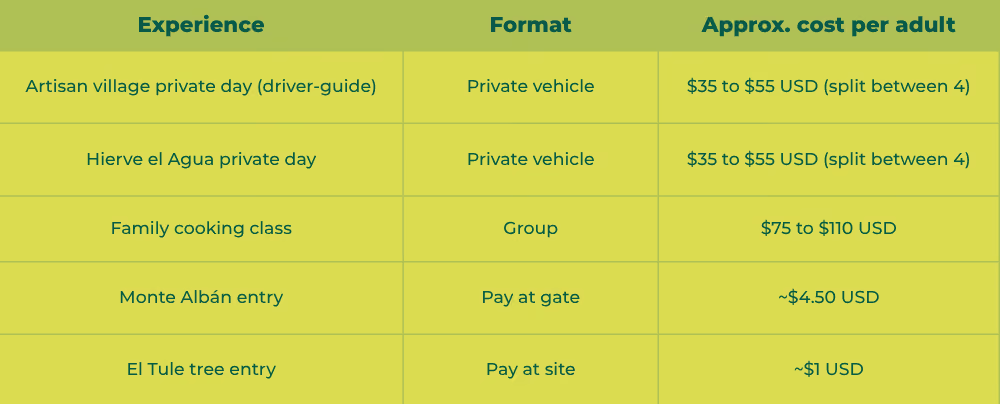
Children's pricing: most Oaxaca experiences charge half price or less for children under 12. INAH sites (Monte Albán, Mitla) are free for children under 13.
FAQ
What age is Oaxaca appropriate for? Any age, with the right planning. Under 4: doable if the parents are experienced travelers and comfortable with a slower pace. Ages 5 to 9: excellent for the sensory and visual experiences (dye demonstrations, alebrije workshops, Hierve el Agua). Ages 10 to 14: the full menu is accessible, including Monte Albán with a proper guide and more market depth.
Is Oaxacan food suitable for picky eaters? Partially. The baseline flavors (corn, beans, cheese, chicken) are familiar; the specific preparations are less so. Most sit-down restaurants can do a plain quesadilla or a chicken dish without complex saucing. The markets require more adventurousness. A picky eater will have fewer problems in Oaxaca than in more seafood-forward coastal Mexico destinations.
Should we take a group tour or go private? For families with children under 12, private is almost always the better choice. The ability to adjust timing, take unexpected breaks, and reroute the day when someone's energy drops makes a substantial difference to the experience. See the honest cost comparison of private versus group Oaxaca tours.
Is Oaxaca safe for families? The historic center and the central valley tourist circuit are safe for family travel. The same precautions apply as any Mexico city: stay in the tourist zone, use pre-arranged private transport for day trips, and keep a close eye on children in the markets. Standard travel insurance and copies of documents are recommended as for any international travel.
Looking for more Mexico travel resources? Be sure to check out:
Written by
Design your trip to Mexico with a local travel designer. Unique activities and lodging, 100% tailor-made and stress-free.
.webp)
Related posts
Duration:
Trip duration
Days
Mexico Children Travel
Everything you need to know to travel to Mexico with children. Best places to go, best times to visit, things to take into account.
Read more

Duration:
Trip duration
Days
The magic of lucha libre in Mexico City
Dive into the thrilling tradition of lucha libre in Mexico City. Experience the iconic masked wrestlers and the vibrant arenas in this unique journey.
Read more

Duration:
Trip duration
Days
Puebla Day Trip Tours From Mexico City For 2026
Puebla day trip tours from Mexico City: drive time, the Cholula pyramid, talavera stops and mole tastings. Honest 2026 advice from our team.
Read more
Join us on this
journey
Plan your trip with usjourney
Join our newsletter to stay up to date on features and releases.
Oups ! Une erreur s'est produite lors de l'envoi du formulaire.
Ready to experience the real Mexico?
Travel with local experts and get hangds-on supoort every step of the way... from planning to arrival.

Your Travel Companion in Mexico, 24/7
We're with you from arrival to departure via WhatsApp for anything you need.
Trusted by thousand of travelers with a 4.9 rating on Google