Customize my trip


How Oaxaca Private Tours Work In 2026
Meta description: Oaxaca private tours explained: what a private guide costs, what's flexible, what isn't and when it's worth paying up. From our trip designers.


Content
They highlight our work



Unique trips in Mexico.
Tailor made for you.
Request your tripTailor made for you.
Let a local guide help you plan your trip to Mexico
Start tailor-made tripPrivate tours in Oaxaca work differently from private tours in most Mexican destinations, and understanding why changes how you plan. In Cancún or Los Cabos, "private tour" often means a private van to a shared destination where you arrive with twenty other private-tour groups. In Oaxaca, a private tour more often means a local guide who has worked the mezcal villages for fifteen years, a phone call made the day before to confirm that the weaver family will be home, and a route that can shift mid-morning if the Tlacolula market is more interesting than planned. The infrastructure is smaller, the relationships are more personal, and the access the format provides is genuinely different from what a group tour can deliver. For a custom private trip built around your dates, our Oaxaca team starts the conversation here.
What private actually means in Oaxaca
A private tour in Oaxaca means your party is the only group in the vehicle, with a guide dedicated to you for the day. It doesn't automatically mean a luxury vehicle or a high-end itinerary; those are separate variables. A private guide in a clean SUV driving two travelers from Oaxaca City to Teotitlán del Valle and back is a private tour. So is a multi-day private route through the Sierra Norte with a specialist birding guide and simple community lodge accommodation.
What private always means in Oaxaca: no waiting for group departures, no sharing the guide's attention with twelve strangers, and the ability to redirect the day when something more interesting appears. That last point is undervalued. Oaxaca is a destination where the best experiences often emerge from a guide who notices something — a textile demonstration that wasn't scheduled, a palenquero who happens to be opening a new batch of tobalá today — and adjusts the plan. A group tour cannot do that.
The true advantage of the private format is not exclusivity, but the ability to experience Oaxaca with greater flexibility, deeper cultural insight, and reliable logistical support.
The two formats: guide-only vs driver-guide
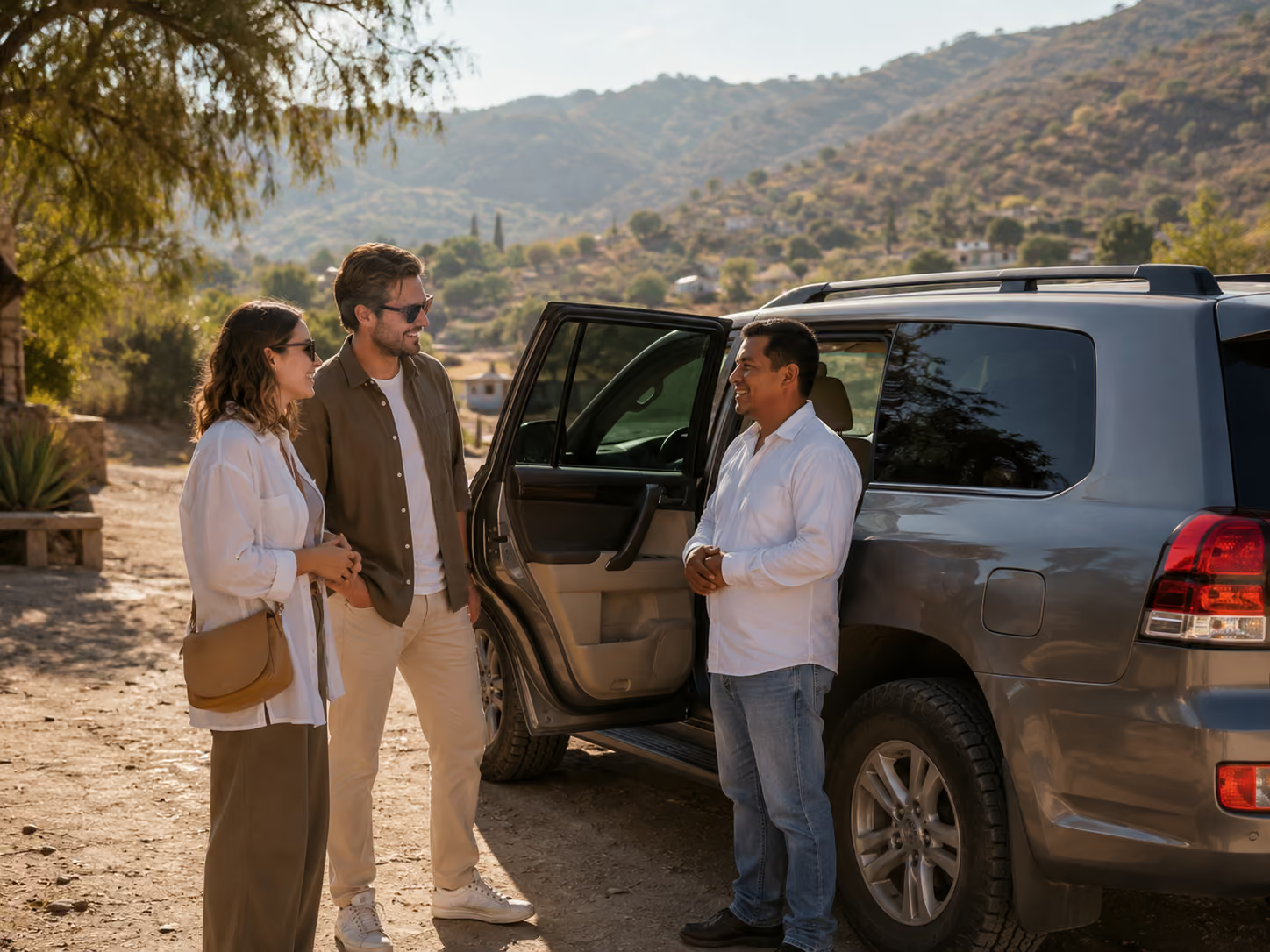
Driver-guide: The most common private format for Oaxaca day trips. One person handles both the driving and the cultural context. They know the artisan families, the road conditions, and when to stop at a viewpoint you didn't know existed. The driver-guide model works well for valley circuits and day trips where the routes are defined and the logistics are manageable. Most reputable Oaxaca operators work primarily with driver-guides.
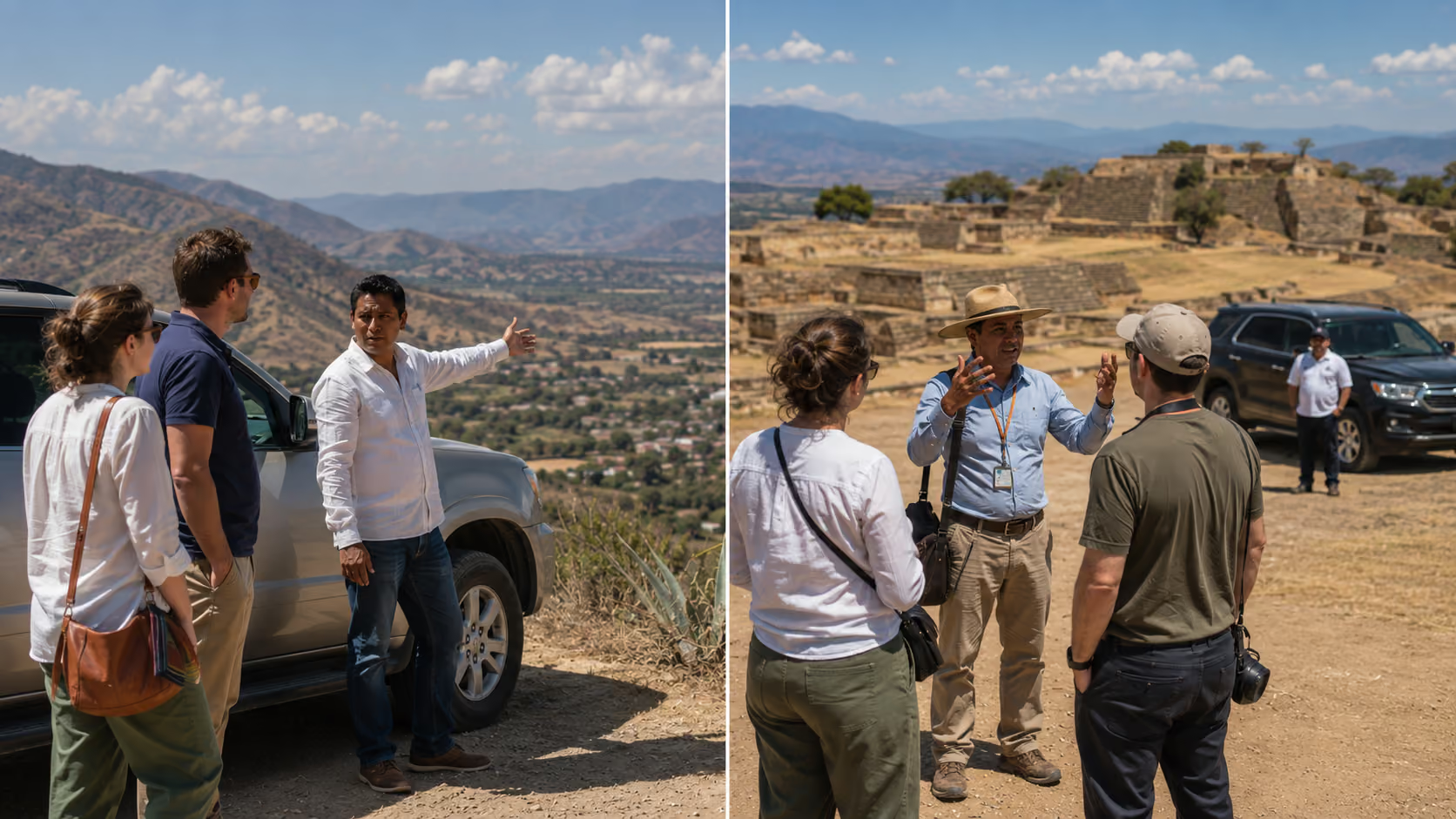
Separate driver and guide: Less common but available for specialized experiences. A specialist guide — a licensed archaeologist for Monte Albán, an ornithologist for the Sierra Norte, a textile historian for the weaving villages — may not drive. In that case, a separate driver handles the vehicle and the specialist focuses entirely on interpretation. This format costs more but produces deeper expertise when the guide's knowledge is the main reason you're booking.
For multi-day private trips, the format often shifts: a trip planner designs the route and handles logistics, a local driver manages the vehicle across multiple days, and specialist guides are brought in for specific sites (Monte Albán, a palenque, a nature trail) rather than staying constant throughout.
What a private guide costs in 2026
Private guide rates in Oaxaca are set per day (or per half-day) for the guide's time, separate from vehicle costs, entry fees, and experiences.
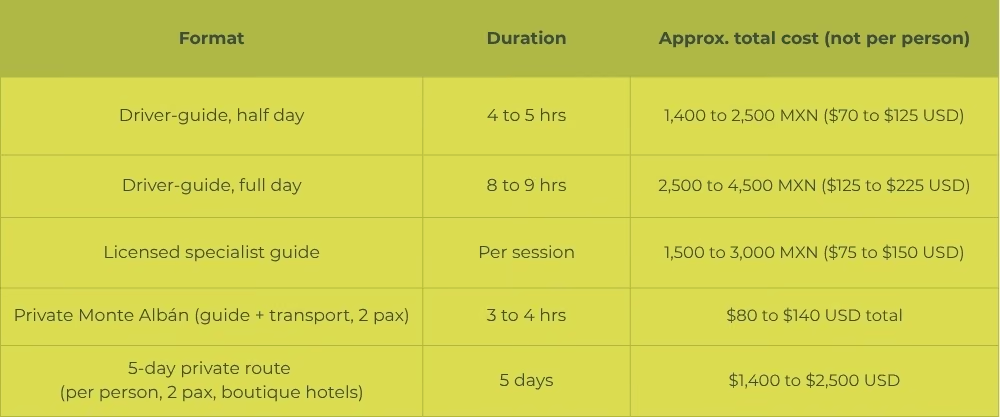
Driver-guide, full day (8 to 9 hours): 2,500 to 4,500 MXN ($125 to $225 USD). This covers the guide's time and their vehicle fuel for the day. It is a per-vehicle cost, not per person: two travelers split it at $62 to $112 each, four travelers at $31 to $56 each.
Licensed specialist guide (archaeologist, ornithologist, textile historian): 1,500 to 3,000 MXN ($75 to $150 USD) per session, on top of any vehicle costs.
Multi-day private route: Per-day rates often decrease slightly for 3 or more consecutive days with the same guide/driver, because the logistics overhead decreases once the route is established.
What's included in the guide rate: the guide's time, their knowledge, their phone calls to the artisan families and palenqueros. What's not included: your entry fees, your meals, any workshop or experience fees, vehicle fuel beyond a standard Oaxaca valley circuit. Clarify this breakdown before booking; it's where misunderstandings about "all-inclusive private tours" tend to originate.
What you gain: the specific advantages in Oaxaca's context
Pre-arranged access to specific families: A good driver-guide in Oaxaca has relationships with weaving families in Teotitlán del Valle, alebrije carvers in San Martín Tilcajete, and palenqueros in the Sierra Sur that they've built over years. Showing up cold at a workshop produces a different experience from arriving because someone called ahead and said "my travelers are genuinely interested in the process." The second version gets you into the kitchen. The first version gets you into the shop.
Real-time information about access and conditions: The Hierve el Agua road block situation, the specific palenque that just opened a new batch of tepextate, the Tuesday morning when the Santo Domingo museum has a guided archaeology walk that isn't on the website. This information lives with guides who are in the field every week, not on travel booking platforms.
Pacing that fits two people, not fourteen: The difference between a two-hour stop at a Teotitlán weaving workshop and a twenty-minute stop as part of a group circuit is the entirety of the experience. With private, the stop ends when you're ready to leave, not when the group schedule requires.
Genuine conversations: A guide with no group to manage can have a real conversation with you about the region, its politics, its food, the changes they've watched happen over a decade of work. These conversations are the ones travelers remember.

What you don't gain: honest limits of the private format
Meeting other travelers: If you're solo and open to travel companions, a small group tour provides social opportunity that private does not. Solo travelers who choose private often find the depth of the guide relationship compensates; others find the lack of other travelers isolating. Know which type you are.
Lower prices: Private is more expensive per person for groups of one or two than comparable group tours. The per-vehicle economics become more favorable at three or four travelers. At two people, budget for paying a premium and decide whether the experience difference justifies it for you.
Necessarily better logistics: "Private" doesn't mean the guide knows everything. Ask whether your specific guide has done the route you're planning recently. A guide who has been working the central valley circuit for ten years but has never arranged a Sierra Norte birding overnight is not the right person for that trip. Match the guide's expertise to the experience you want.

How Oaxaca private tours handle road blocks and access issues
This is specific to Oaxaca and worth understanding. Community road blocks — the practice of temporarily closing a road or site as part of a community protest or negotiation — happen in Oaxaca with more frequency than in most Mexican tourism destinations. Hierve el Agua has been closed multiple times in recent years. Some palenques operate on community land where access requires relationship. Certain artisan village workshops are only accessible with an introduction.
A good private guide in Oaxaca navigates this by: checking access the day before a planned visit, having alternative routes and experiences ready when primary plans are blocked, and having the community contacts to find out whether a block is likely to lift or is likely to last weeks. This is not something a group tour operator can do at individual trip level — the logistics don't allow it. It is one of the clearest practical advantages of private over group in Oaxaca specifically.
Local tip: in Oaxaca, flexibility is part of the experience - In Oaxaca, it is always worth keeping a flexible mindset. Even the best-planned day can shift because of a road block, a community decision, a local celebration, or an access change announced at the last minute. In Oaxaca, the private experiences are not rigid scripts. They work because the guide knows how to read the local context and adjust the day intelligently.
The Hierve el Agua guide covers the access situation for that site in detail.
The vehicle question: what to expect
Most Oaxaca driver-guides operate clean, air-conditioned SUVs or full-size vans depending on group size. What you should confirm before booking: vehicle age and air conditioning (the valley in summer is warm), seatbelt availability for all passengers (standard in newer vehicles, not guaranteed in older ones), and whether the vehicle is the guide's own or hired for the day (hired vehicles sometimes change last minute).
The mountain roads to Hierve el Agua, the Sierra Norte, and the coast require vehicles with adequate suspension. Ask whether your guide's vehicle is appropriate for the routes you're planning. Most experienced Oaxaca guides know the road and won't take a low-clearance sedan to the Sierra Norte trailhead, but it's worth confirming.
Multi-day private routes: how they're built
A multi-day private route in Oaxaca typically involves: a trip planning conversation that identifies your interests and pace, an itinerary draft with specific daily plans and accommodation suggestions, pre-arranged access to the experiences you want, and a guide (or guides) who manages logistics on the ground.
For a 5-day private Oaxaca route, the architecture might look like: Day 1 in the city with a walking-focused guide, Days 2 and 3 in the central valleys with a driver-guide who knows the artisan families and palenques, Day 4 in the Pueblos Mancomunados with a community guide, Day 5 open. Each day has a different guide specialization; the trip planner holds the thread.
For longer routes that include a coast extension, the guide and vehicle typically change at the airport or after the mountain crossing. This requires careful logistics but is manageable with an operator who has coast connections as well as highland ones.
The Oaxaca itinerary packages guide covers the 5, 7, and 10-day templates in detail.

How to vet a private guide before you book
Three questions that reveal more than most booking platforms show:
"Have you done this specific route recently?" — Recency matters in Oaxaca because access conditions change. A guide who last took travelers to Hierve el Agua six months ago may not know the current road block status.
"Which family or producer will we visit, and what is your relationship with them?" — A guide who can name a specific person and describe the relationship is different from one who says "we visit a weaving workshop in Teotitlán." Specificity is the tell.
"What happens if the planned experience is unavailable?" — A good guide answers this confidently and with alternatives. Vagueness here is a warning.
Booking through an established Oaxaca operator rather than sourcing a guide independently does the vetting for you, because the operator's reputation depends on guide quality. The trade-off is a small layer of overhead cost. For first-time Oaxaca visitors, the operator route is almost always the right call.
Private vs shared activities during Day of the Dead in Oaxaca
This is especially important when planning a trip to Oaxaca during Day of the Dead. Unlike many destinations where tours and guides can be arranged closer to the travel date, this is not something that can be organized last minute. Due to the exceptionally high demand during this season, it is strongly recommended to plan and secure services well in advance — ideally several months ahead, and in some cases up to a year — as availability becomes very limited.
Many of the most meaningful experiences — such as visits to community celebrations, artisan workshops, family altars, and cultural walks — depend on a small number of highly experienced local guides. These guides not only understand the cultural depth of the traditions but also know how to navigate the city and surrounding communities during one of the busiest times of the year.
Private experiences offer the advantage of flexibility, personalization, and deeper cultural immersion. However, because of the limited number of qualified guides, these services tend to sell out quickly.
Shared experiences can also be an excellent option, particularly for travelers who are more flexible and open to joining small groups. They still provide access to key Day of the Dead activities and can be a practical and enjoyable alternative when private guide availability is limited due to high demand.
Bookable options
- Central Valley Private Day Trip (Viator or GetYourGuide): Driver-guide format, valley circuit with artisan and/or mezcal stop. About $130 to $220 USD for the vehicle.
- Private Monte Albán with Archaeologist (Viator): Licensed guide, private format, 2 to 3 hours. About $80 to $140 USD for two people.
- Custom Multi-Day Private Oaxaca Route (Rutopía): Designed from your interests up, with vetted guides for each phase. Contact us for current pricing and availability.
Pricing at a glance
FAQ
Is a private guide worth it if I've already done some research? Yes, for different reasons than information delivery. The guide's value in Oaxaca is relationships and real-time access, not facts you could find online. A guide who calls a specific palenquero and says "my travelers are arriving at 3:00 p.m. and they want to taste the tobalá" is providing something no amount of research replicates.
Can I request a female guide? Yes. Oaxaca has a growing number of female guides, particularly in cultural and food tourism. Make the request when booking; it may require a slightly longer lead time to confirm availability.
What languages are available? English-speaking guides are widely available in Oaxaca's private market. French and German are available with advance notice through most operators. Italian and other languages depend on the operator's network.
How far in advance should I book a private guide? For standard dates: 2 to 3 weeks ahead is comfortable. For Guelaguetza, Day of the Dead, or Christmas: 3 to 6 months. Good private guides in Oaxaca are genuinely booked out during peak festival weeks. The best time to book guide covers the full seasonal picture.
Looking for more Mexico travel resources? Be sure to check out:
Written by
Design your trip to Mexico with a local travel designer. Unique activities and lodging, 100% tailor-made and stress-free.
.webp)
Related posts

Duration:
Trip duration
Days
A Complete 2026 Xochimilco Boat Tour Guide
Xochimilco boat tour guide: which dock to use, real trajinera costs, food options onboard and quiet weekday visits. 2026 tips from our CDMX team.
Read more
Duration:
Trip duration
Days
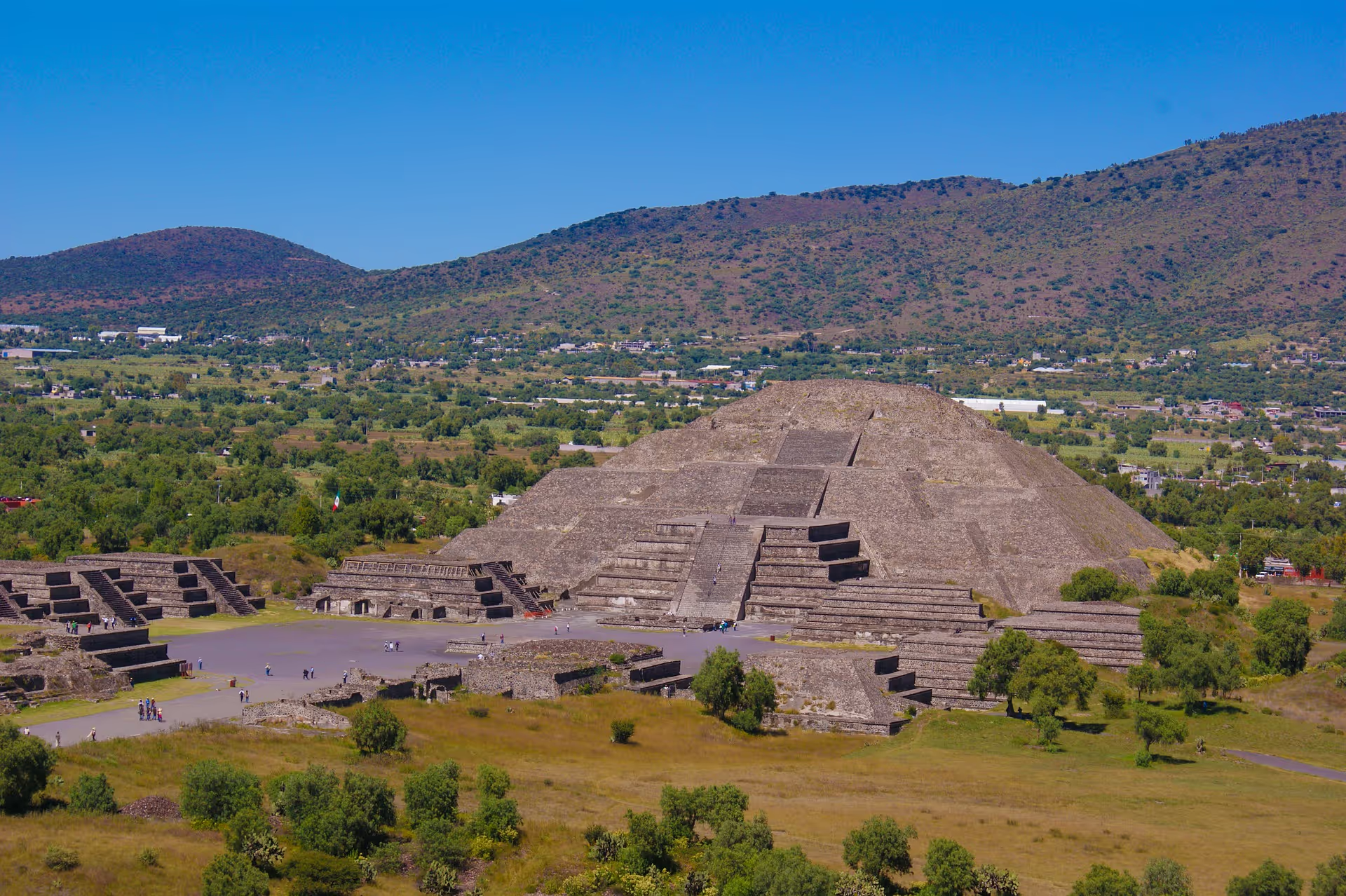
Teotihuacan Guide
Teotihuacan, one of the most important archaeological sites in Mexico. Here you will find a guide for visiting Teotihuacan.
Read more
Duration:
Trip duration
Days
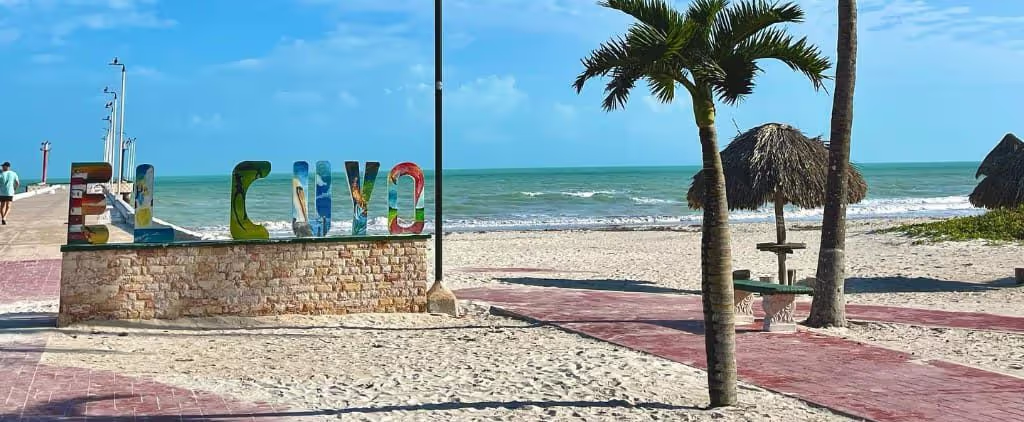
El Cuyo Sunrises
Book with Rutopía a beachfront vacation with palm trees and a gentle Caribbean breeze in El Cuyo, Yucatan Peninsula.
Read more
Join us on this
journey
Plan your trip with usjourney
Join our newsletter to stay up to date on features and releases.
Oups ! Une erreur s'est produite lors de l'envoi du formulaire.
Ready to experience the real Mexico?
Travel with local experts and get hangds-on supoort every step of the way... from planning to arrival.

Your Travel Companion in Mexico, 24/7
We're with you from arrival to departure via WhatsApp for anything you need.
Trusted by thousand of travelers with a 4.9 rating on Google