Customize my trip


Oaxaca Cooking Class Vs Food Tour In 2026
Meta description: Oaxaca cooking class vs food tour: costs, time, what you learn and which markets each covers. A direct compare from Rutopía's Oaxaca food team.

Content
They highlight our work



Unique trips in Mexico.
Tailor made for you.
Request your tripTailor made for you.
Let a local guide help you plan your trip to Mexico
Start tailor-made tripMost travelers to Oaxaca decide between a cooking class and a food tour the way they decide between a map and a guided walk: one feels more self-directed, the other more curated. That instinct isn't wrong, but it misses the more useful distinction. A food tour is primarily about breadth and context: you eat widely, you understand how the cuisine fits together, and you leave knowing what to order for the rest of the trip. A cooking class is about a single, extended encounter with one dish or one tradition: you learn why mole negro takes four hours and thirty-two ingredients, and you understand it in a way that does not come from eating it. Both are worth doing in Oaxaca. Both rank among the top Oaxaca tours worth booking in 2026; the question is which to prioritize with limited time, and on which day. To build either into a custom Oaxaca trip, our planning team can help.
The direct comparison at a glance

What a food tour actually covers in Oaxaca
A well-run Oaxaca food tour moves through the city's edible geography: the cooked-food stalls of Mercado 20 de Noviembre, a few street vendors in the centro, at least one sit-down spot, and likely a mezcal or tejate (the pre-Columbian cacao and mamey drink) stop along the way. The guide is threading a story through the stops: where chapulines (toasted grasshoppers with lime and chile) fit into the food chain and why Oaxacans have been eating them since before corn was cultivated in the way we know it; how tasajo differs from cecina differs from chorizo negro; why the clay pots used to cook black mole are not the same as the ones used to store mezcal.
The best food tours don't just accumulate stops. They sequence them to build a picture: start with street corn to establish the baseline of Oaxacan flavor, move to tlayuda (the large toasted tortilla with black bean paste, asiento, and toppings) to understand the architecture of a local meal, add an enfrijolada stop to see what happens to day-old tortillas in a Oaxacan kitchen, and land at a market stall for tasajo to understand how the local obsession with dried and cured meat connects to altitude and lack of refrigeration. Each bite illuminates the next.
What food tours cannot give you is time. You eat at each stop, you listen, you walk on. There is no waiting for something to reduce, no understanding of how the chile negro becomes the paste that becomes the mole.
What a cooking class actually covers in Oaxaca

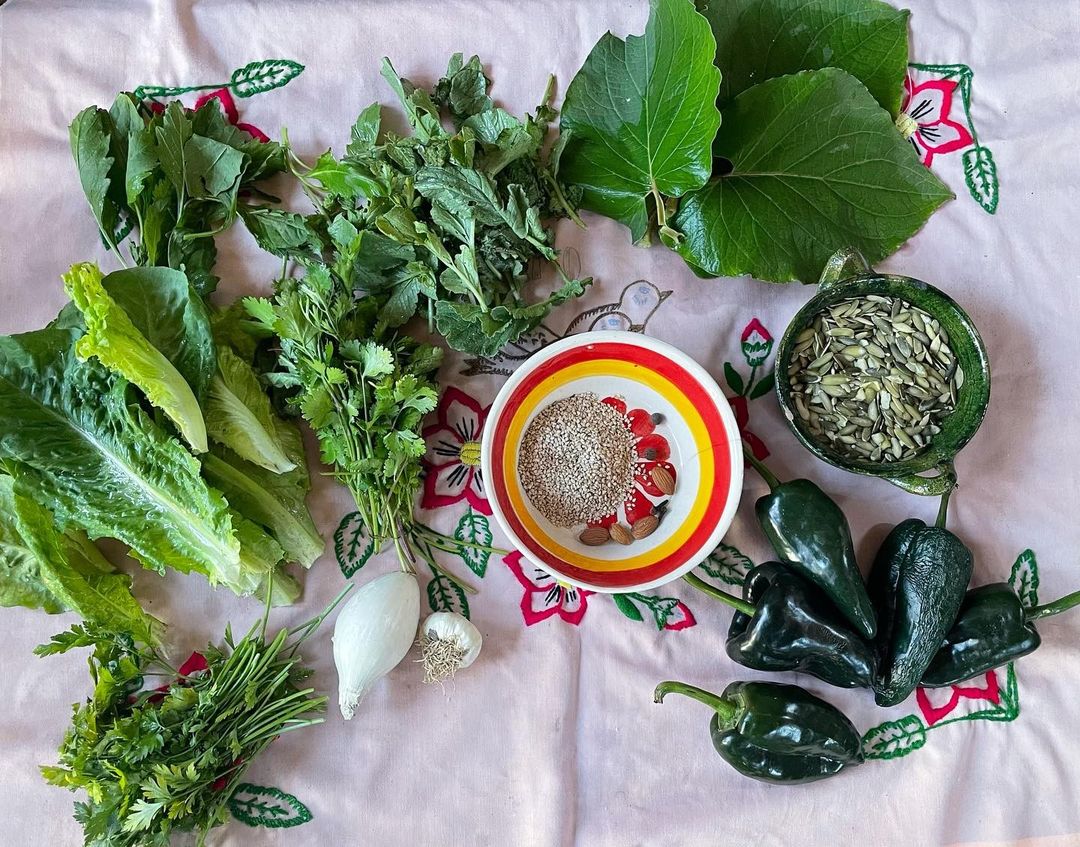
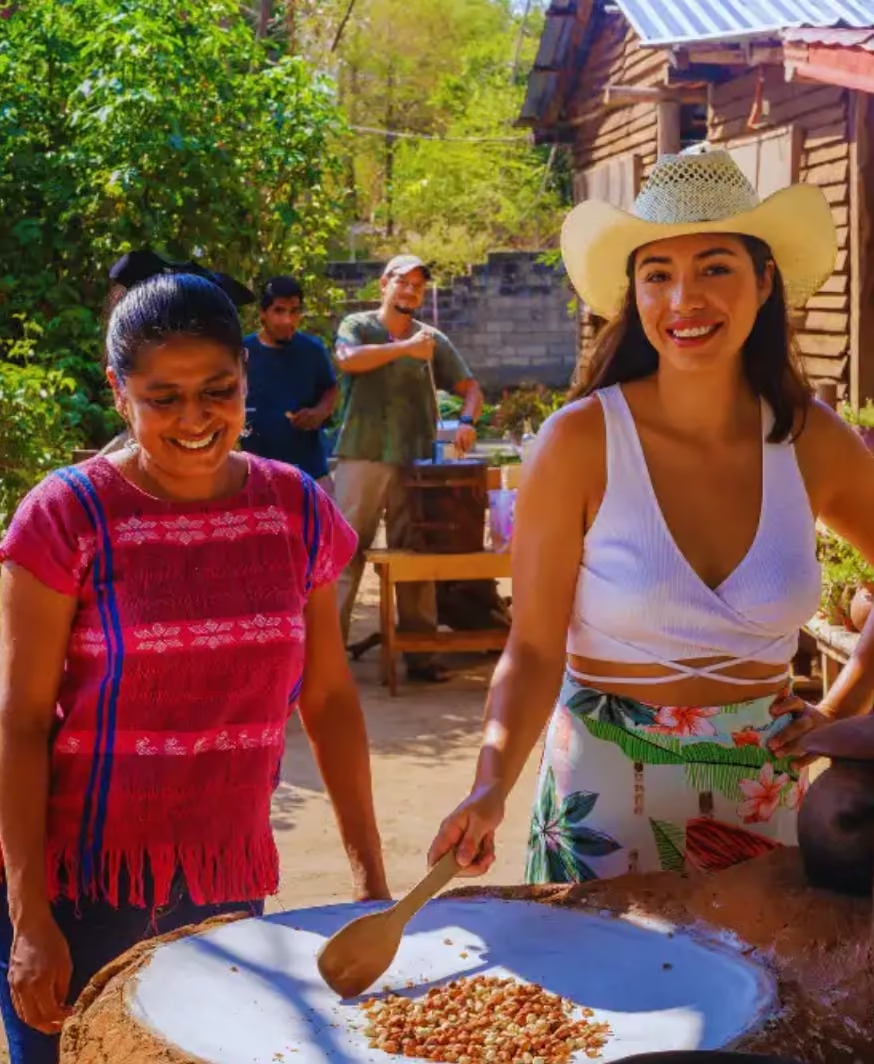
A cooking class in Oaxaca is organized around a single culinary event: making a meal. The arc is consistent across most serious operators. You meet in the morning, walk to an ingredient market together, and the guide or cook names and explains what they're selecting and why. Dried guajillo vs dried pasilla negro vs dried mulato for a mole: the difference in heat, in flavor, in function. Fresh epazote versus dried. The specific variety of chile that only grows in the valley at this altitude and doesn't travel well.
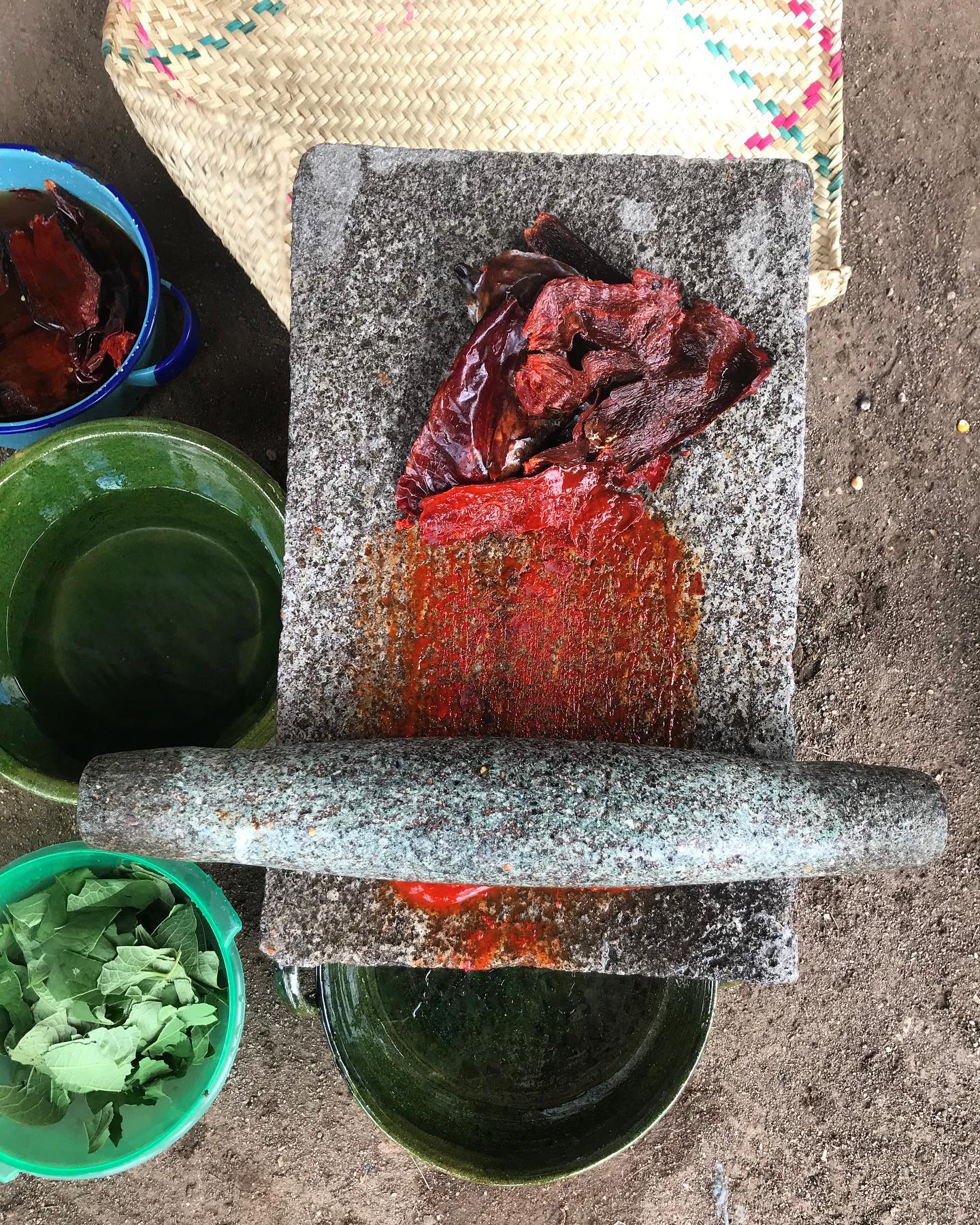
Back in the kitchen, the work begins. Toasting dried chiles on a comal until they soften and release their oils. Grinding on a metate (the stone grinding surface that predates the blender by several thousand years, still preferred by serious cooks for mole). The point is not that you learn to grind on a metate, because you won't do it again at home. The point is understanding what happens to a dried chile when it's ground rather than blended: the oils stay different, the texture stays different, the flavor is not quite the same. That knowledge changes how you eat mole for the rest of your life.
The meal you eat at the end is made by you, under guidance. That's a different kind of satisfaction from being served something, and it tends to produce a specific type of memory.
The market difference: which one takes you where
This distinction matters more than most guides mention.
Food tours typically spend significant time in Mercado 20 de Noviembre, the market where Oaxacans eat cooked meals. The stalls here run tasajo, tlayudas, memelitas, and chocolate de agua. This is the market where the product of Oaxacan cooking is consumed; it's the best place to understand what the cuisine tastes like in its natural habitat.
Cooking classes typically go to Mercado Benito Juárez, the adjacent produce and ingredient market, or sometimes to specialty vendors in the abastos market district. The goal is ingredients, not finished food: the dried chiles, the herbs, the masa, the fresh cheese (quesillo, the Oaxacan string cheese, is bought here by the kilo and pulled into strings by the vendor as you wait). Understanding where the ingredients come from and what they cost changes how you understand the food that comes from them. It also allows you to get a feel for the day-to-day buying dynamics of the locals — from choosing the ingredient at their stall to eat it there, and the way the vendors interact with customers.
Some cooking classes include a stop at both markets, which is genuinely useful. Ask before you book.
What you leave with: knowledge retained vs experience felt
A year after their trip, travelers who took a food tour in Oaxaca tend to remember what they ate, which dishes surprised them, and the general arc of the city's cuisine. They can describe mole negro to someone who hasn't had it. They probably ordered better at restaurants for the rest of the trip, because they knew what to look for.
Travelers who took a cooking class tend to remember the cook. A specific person's hands on a metate. The smell of chiles toasting. The moment the sauce changed color in the pot. They may not be able to replicate the recipe, but they know, physically, what it takes to make it. That's a different kind of knowledge and it tends to be more durable.
Neither is superior. They deposit different things.
The types of each: not all are equal
Cooking classes divide into three distinct formats:
Family home kitchen: The most intimate. You're in someone's house, their kitchen, their grandmother's recipe. Group sizes are small (4 to 8). Quality is high when the operator has a genuine relationship with the family; it's staged when the family has been recruited to perform domesticity for tourism. Ask how long the operator has worked with this specific cook.
Culinary school or restaurant format: More polished, more controlled, often more technique-focused. You'll learn more about ratios and process; you'll feel less like a guest in someone's home. Good for travelers who want replicable technique alongside the cultural experience.
Market-forward class: The market visit is longer and more detailed, the cooking portion is shorter. Best for travelers who are primarily interested in ingredients and food culture rather than technique.

Food tours also split into types:
Street food focus: Vendors, carts, corners. More stops, smaller bites, faster pace. Best for adventurous eaters who want to go wide and don't need a sit-down anchor. This tour also allows you to discover a little more beyond the market — like the culture and the streets. What a local person would eat on a normal day.
Market deep-dive: Concentrated in one or two market spaces, with longer time at each stall and more conversation. Best for travelers who want fewer stops and more context.
Restaurant-hopping format: Combines street stops with a sit-down component at a recognized Oaxacan restaurant. Better for travelers who want a transition point between the market experience and independent dining.
How to spot a quality operator in each format
For cooking classes, the tell is the cook. A class run by the person who grew up making this food is different from one where a coordinator hires a cook to run tourists through a standardized format. Ask who specifically will lead the class, what their background is, and whether the menu changes with season or stays the same year-round. A class that changes with what's in season at the market is almost always better.
For food tours, the tell is the guide's relationship to the vendors. A guide who walks up to stalls where they're greeted by name, where there's a brief exchange in Zapotec or local Spanish before the tasting begins, is a guide who has been doing this long enough to have real relationships. A guide who narrates at stalls where nobody reacts to them is a guide reading a script.
In both cases, group size matters: a class or tour with more than twelve people loses the personal dimension that makes Oaxacan food culture worth learning about in the first place.
How private and group Oaxaca city tours compare on price and pacing applies to cooking classes and food tours alike. The same judgment applies to booking any serious Oaxaca tour: know who's actually leading it before you pay.
Can you do both?
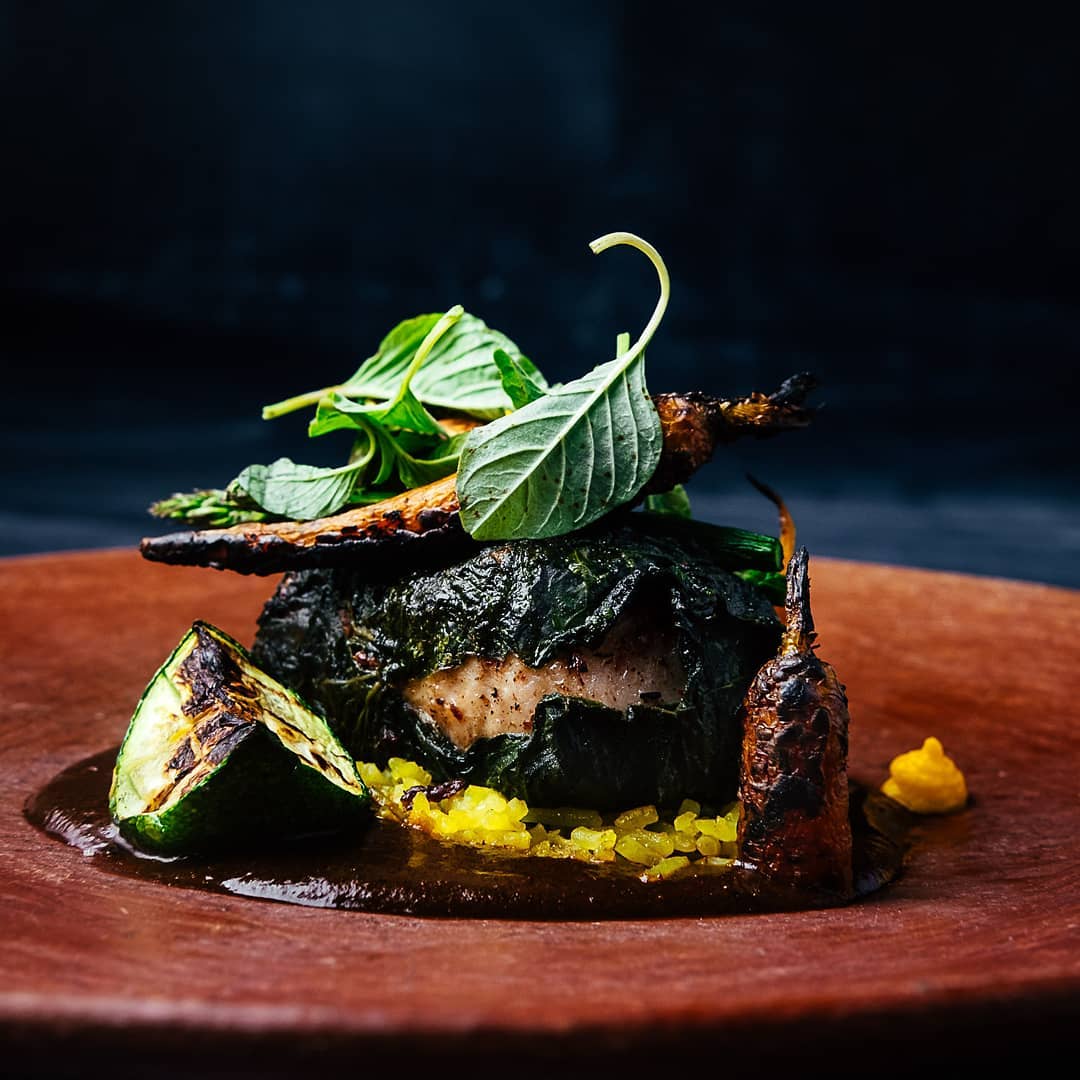
Yes, and they work best in sequence. A food tour on day one gives you the orientation: you know what tlayuda tastes like, you know the markets, you know the basic vocabulary of the cuisine. A cooking class on day three gives you the depth: now that you've eaten mole negro twice at restaurants, learning how it's made is something you can connect to actual taste memories. That sequence is more powerful than either in isolation. On the day between, most travelers slot a major sight like Monte Albán, which pairs well with a lighter food day, and either food experience folds into a broader Oaxaca tours itinerary.
For travelers with only 5 days in Oaxaca and limited morning slots, the choice usually comes down to what matters more to you: breadth or depth. Travelers who want to eat well and confidently across the whole trip do better with a food tour early. Travelers who came to Oaxaca specifically for the food, who have been cooking Mexican food at home and want to understand the source, do better starting with a class. Couples often pair these with the slower-paced Oaxaca tours for couples; families lean on the kid-friendly pacing in our Oaxaca tours for families roundup.
For trip-planning context, where food experiences land in 5- and 7-day Oaxaca routes shows how to slot these days in.
Bookable options
A short list of formats across platforms.
- Oaxacan Home Cooking Class with Market Visit (Airbnb Experiences): Family kitchen, 4 to 5 hours, group of 4 to 8. About $70 to $100 USD per person.
- Oaxaca Street Food and Market Tour (GetYourGuide): 3 to 4 hours, 7 to 9 stops, small group. About $50 to $75 USD per person.
- Private Mole Negro Cooking Class (Viator): Single dish focus, private format, 4 to 5 hours, 2 to 4 travelers. About $150 to $250 USD total for the group.
- Custom Food Day (Rutopía): We can arrange a food tour in the morning and a cooking class in the afternoon on the same day, with the right guide for each. Contact us to discuss.
FAQ
What dishes appear in a typical Oaxaca cooking class? The most common options: mole negro (the complex one, made with mulato and pasilla negro chiles, chocolate, and dozens of other ingredients), tamales oaxaqueños (wrapped in banana leaf, which is specific to Oaxaca), enfrijoladas, and at least one salsa. Some classes cover more than one dish; some go very deep into a single mole. Ask before you book what the menu includes.
Are food tours appropriate for vegetarians? Oaxacan food is meat-heavy, but most of the distinctive flavors are in the chiles, the beans, and the corn preparations. A good tour guide can route around the meat-forward stops and still show you the essential cuisine. Let the operator know when you book, but you may want to consider a cooking class instead to personalize the experience around traditionally vegetarian dishes.
What time of day do these run? Cooking classes almost always start in the morning (8:00 to 10:00 a.m.) because markets are at their best then and the cooking time puts lunch at the right hour. Food tours run both morning and evening; an evening tour with a mezcal component has a different, slower character than a morning market tour. Both have merit.
How many people are typically in these groups? Reputable cooking classes: 4 to 10. Reputable food tours: 6 to 14. Private formats are available for both and worth considering if you're traveling as a couple or have dietary needs that complicate group logistics.
Looking for more Mexico travel resources? Be sure to check out:
Written by
Design your trip to Mexico with a local travel designer. Unique activities and lodging, 100% tailor-made and stress-free.
.webp)
Related posts
Duration:
Trip duration
Days
Mexico Travel Agencies
Everything you need to know about the best agencies in Mexico. Comparative table of five travel agencies. Customized trips.
Read more
Duration:
Trip duration
Days
A 2026 Guide To The Best Yucatán Tours
Best Yucatán tours for 2026: cenotes, Chichén Itzá, Mérida, the flamingo coast and Holbox. Routes mapped by Rutopía's Yucatán-based travel team.
Read more
Duration:
Trip duration
Days
Day of the Dead and more: What to do in Mexico City in November
Discover the best activities in CDMX this November, from Day of the Dead to cultural festivals, markets, and must-see events.
Read more
Join us on this
journey
Plan your trip with usjourney
Join our newsletter to stay up to date on features and releases.
Oups ! Une erreur s'est produite lors de l'envoi du formulaire.
Ready to experience the real Mexico?
Travel with local experts and get hangds-on supoort every step of the way... from planning to arrival.

Your Travel Companion in Mexico, 24/7
We're with you from arrival to departure via WhatsApp for anything you need.
Trusted by thousand of travelers with a 4.9 rating on Google