Customize my trip


A Complete 2026 Monte Albán Tour Guide
Meta description: Monte Albán tour guide: the best hour to climb, private vs group tour costs, what to skip and licensed guides. Local tips from Rutopía's Oaxaca team.

Content
They highlight our work



Unique trips in Mexico.
Tailor made for you.
Request your tripTailor made for you.
Let a local guide help you plan your trip to Mexico
Start tailor-made tripMonte Albán is one of the oldest cities in Mesoamerica: a Zapotec capital that was inhabited and continuously expanded from roughly 500 BCE to 700 CE, sitting at 1,940 meters above sea level on a flattened mountaintop with views of three converging valleys. Ten kilometers from Oaxaca City and yet, for most visitors, a different world entirely. It is also one of Mexico's best-kept major ruins in the sense that it sees a fraction of the crowds at Chichén Itzá and Teotihuacán while covering comparable historical weight. It consistently earns a place among the best Oaxaca tours to book in 2026, and getting the most from it depends on when you arrive and who takes you through it. If you want a guided Monte Albán visit built into a wider Oaxaca trip, our Oaxaca tour page is the place to start.
What Monte Albán actually is
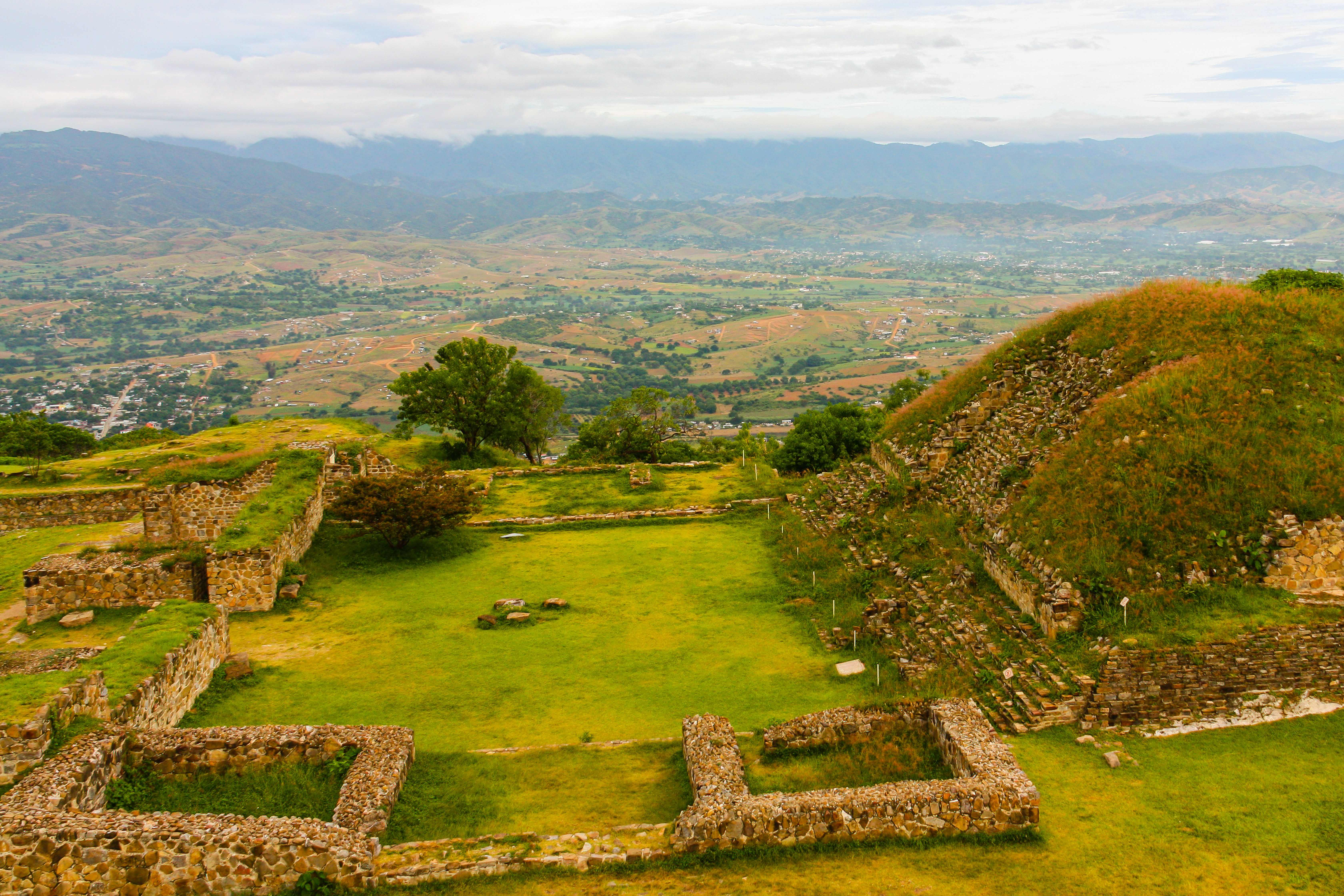
Most visitors know Monte Albán as "the ruins outside Oaxaca." What they don't know is that it was one of the first true urban centers in the Americas: a planned city of 25,000 to 30,000 inhabitants at its peak, with a ceremonial core, a ball court, an astronomical observatory, and over 2,500 terraces carved into the surrounding hillsides where the residential neighborhoods once stood. The Zapotec civilization built it. The Mixtec later occupied it and used the tombs. The Spanish never bothered to destroy it because it had been largely abandoned centuries before they arrived.
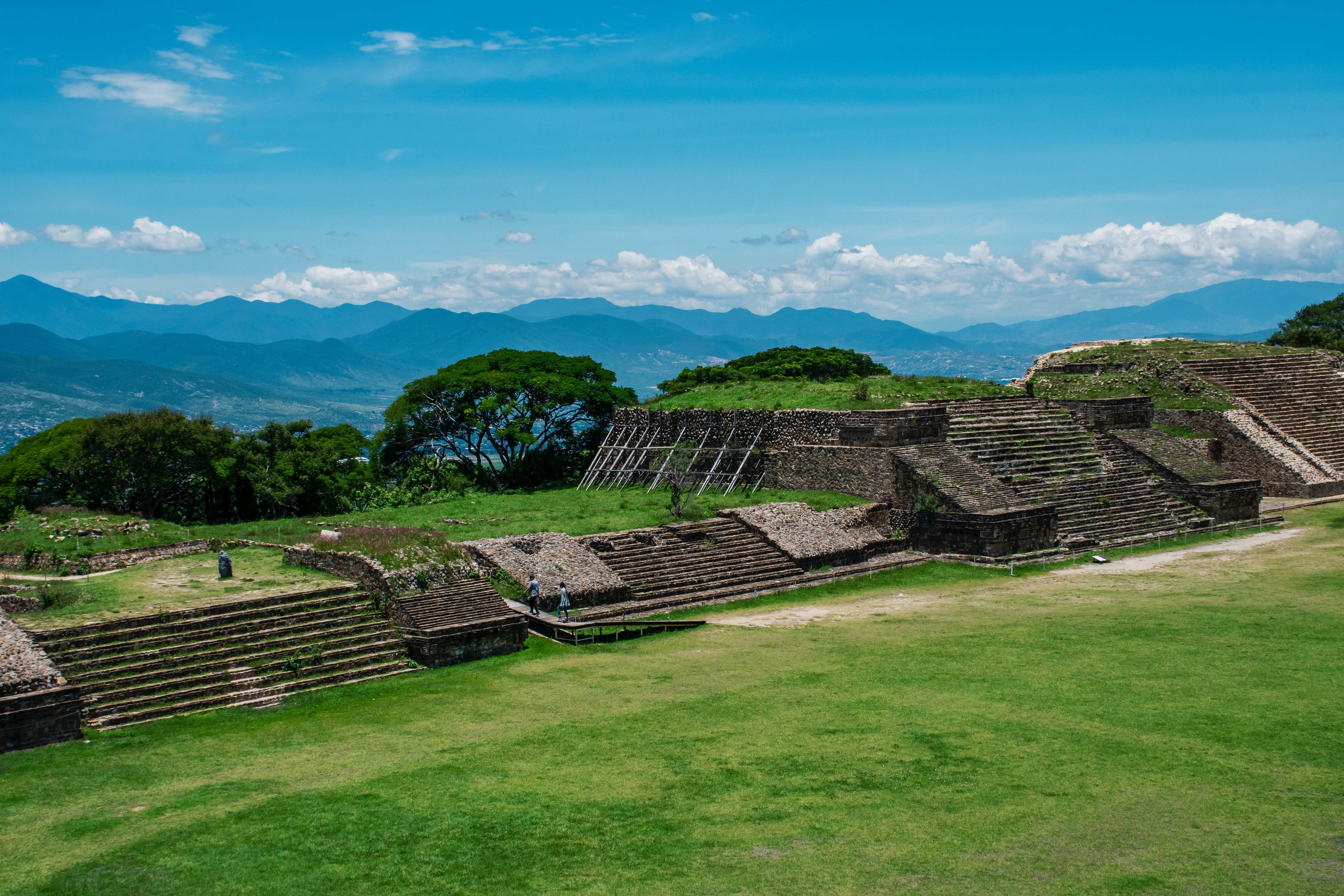
The main plaza is a 300-by-200-meter esplanade ringed by temples and platforms. The whole site covers about 40 square kilometers, though the accessible visitor area is a manageable 2 to 3 km walk. What makes a visit here feel different from a photo stop is understanding what the structures actually were: Building J, the arrowhead-shaped platform in the middle of the plaza, is oriented to align with specific star positions and is the subject of ongoing astronomical research. The Dancers (Los Danzantes), relief carvings on Building L, are the oldest stone carvings in the valley and their exact meaning remains debated.
Monte Albán and the historic centre of Oaxaca City are jointly listed as a UNESCO World Heritage Site. The top Oaxaca tours guide covers where this visit sits within a wider Oaxaca itinerary.
The best time to arrive
Arrive at 8:00 a.m., when the site opens. This is not a soft suggestion. By 10:30 a.m., the tour buses from Oaxaca City are arriving in waves and the main plaza becomes noticeably crowded. The early morning light is also better for the stonework, lower and warmer than midday, and the temperature is cooler for climbing the platforms.
A personal note worth flagging: the north platform at Monte Albán, the large terraced pyramid at the far end of the main plaza, faces southeast across the valley. At 8:00 a.m. on a clear day, that view is exceptional. By 11:00 a.m., with a hundred people on the platform and the light going flat, it's just a good view. Show up early.
Local Tip: Beat the Crowds for the Perfect Shot - Be the absolute first to arrive at the site! Catching the early morning light not only guarantees you get the best photo from above without the crowds, but it also lets you enjoy the breathtaking views in peace before the midday heat kicks in.
The site closes at 5:00 p.m. Afternoon visits (after 2:00 p.m.) are quieter than late morning but the heat peaks mid-afternoon and some of the smaller structures are in full sun. If early morning is genuinely not possible, late afternoon on a weekday is the second-best choice. The calendar matters as much as the clock: knowing which weeks bring the heaviest crowds to Oaxaca helps you avoid arriving on a festival Sunday when even the early slot fills fast.
Private tour vs group tour: the honest comparison
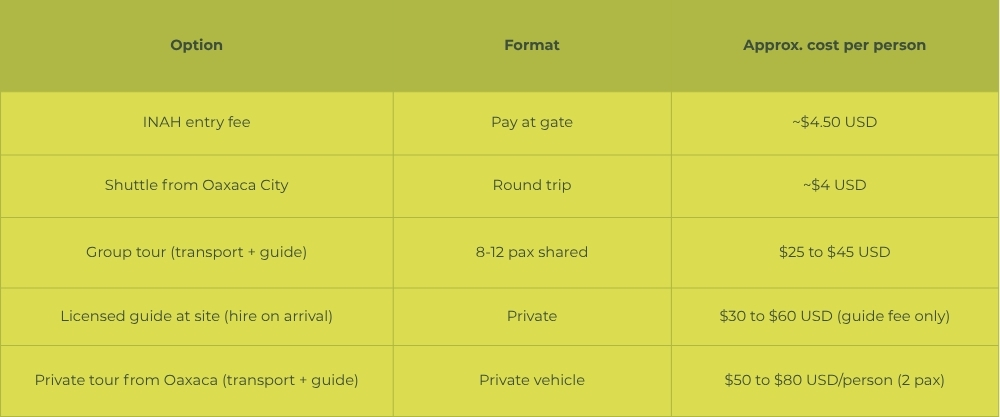
Group tours to Monte Albán typically include transportation from a Oaxaca City hotel, 2 to 2.5 hours at the site with a shared guide, and transport back. They run 250 to 500 MXN per person ($12 to $25 USD), often including the entry fee.
A private guide hired at the site or pre-booked through an operator runs 600 to 1,200 MXN per session ($30 to $60 USD) for the guide fee alone, separate from transport and entry. For two travelers, the per-person math becomes competitive with a group tour quickly, and the experience is substantially different: a licensed archaeologist or INAH-certified guide can spend 20 minutes on Los Danzantes explaining the competing interpretations of the carvings, whereas a group guide has to keep seventeen people moving.
The guide-at-the-site option is worth knowing about for independent travelers: there is a licensed guide association at the entrance to Monte Albán, and you can hire a guide when you arrive. Quality varies. Asking for an INAH-certified guide specifically tends to produce better results than accepting the first offer at the gate.
Pro Tip: Flexibility Over Schedules - If you prefer not to stick to a strict itinerary, your best option is to hire a certified guide directly at the site entrance. This allows you to explore at your own pace and customize the tour to fit your family's needs and rhythm on the spot!
For a broader look at how private guiding works across Oaxaca, the costs and format options are covered in more detail.
Licensed guides and where to find them
Mexico's INAH (Instituto Nacional de Antropología e Historia) certifies guides at major archaeological sites. A certified guide at Monte Albán has passed a written and oral exam in archaeological knowledge specific to the site. They are not the same as a general tour guide who also visits Monte Albán.
You can hire an INAH-certified guide at the entrance kiosk when you arrive. Rates are set and posted. Pre-booking through a Oaxaca operator who has an established relationship with a specific guide is worth doing for travelers who want a guarantee of quality and the ability to request an English-language specialist. Our team can arrange this; the Oaxaca tours page is the starting point.
What to see and what to skip
Do not skip: Building J (the astronomical observatory), Los Danzantes on Building L, the north platform view across all three valleys, and Tomb 104 if it's open. Tomb 104 contains one of the finest examples of Zapotec funerary urns found in situ in the valley; it opens and closes according to conservation schedules, so ask when you arrive.
Spend time at: The ball court in the southwest corner, which is smaller than Chichén Itzá's but better preserved in several details. The Museum at the site entrance has the original artifacts from the tombs, including jewelry and jade pieces, and is worth 30 to 45 minutes before or after your walk.
What you can move through faster: The residential terrace areas to the north and east of the main plaza are extensive and historically significant, but visually repetitive. If you're short on time or energy, cover the main plaza thoroughly and trust that you've seen the heart of the city.
What to bring: Water, sunscreen, and a hat. The main plaza is entirely exposed to sun and wind at 1,940 meters. The shadeless plateau catches more UV than the valley below; burn times are faster than most visitors expect.
Getting there from Oaxaca City
The standard route is by the shuttle bus that leaves from the parking area near the Mercado de Artesanías in Oaxaca City. Shuttles run from roughly 8:00 a.m. to 3:00 p.m. on a fill-and-go basis; in peak season, there's usually a shuttle ready to leave every 20 to 30 minutes. The trip takes about 20 minutes each way. Round-trip shuttle cost: roughly 60 to 80 MXN per person ($3 to $4 USD).
Private transport from a central Oaxaca hotel adds 5 to 10 minutes and removes the shuttle wait. Most operators include transport in their Monte Albán tour price. Taxis from the city run about 120 to 200 MXN each way ($6 to $10 USD).
There is no practical public bus route directly to Monte Albán. The shuttle is the recommended independent option.
Entry costs and practical logistics
INAH entry fee for Monte Albán in 2026: approximately 90 MXN for general admission ($4.50 USD). Mexican nationals and residents may pay a reduced rate. Children under 13 are free. Foreign professional filming or commercial photography requires a separate permit from INAH.
The site has a café and gift shop near the museum. Bring cash; card payment is not always reliably available. ATMs are in Oaxaca City but not at the site itself.
Hours: Monday to Sunday, 8:00 a.m. to 5:00 p.m. The site does not close for the lunch hour, which makes 12:00 to 2:00 p.m. the quieter walking window if morning is not possible.
Combining Monte Albán with other stops
Monte Albán works best as a standalone morning. It is not easily combined with Hierve el Agua into a single day; the two sites are in opposite directions from Oaxaca City and the combined travel and visit time exceeds a comfortable day. The Tlacolula valley circuit around Hierve el Agua pairs more naturally with that site.
What does combine well with Monte Albán: a market visit in the afternoon (Mercado 20 de Noviembre for lunch, or the nearby Mercado Benito Juárez for browsing), followed by the Santo Domingo church and museum in the late afternoon when the light is best on the gold stonework. That's a full and well-paced Oaxaca day. There are more ways to build the best Oaxaca city tour afternoon than most travelers realize.
Rutopia’s recommendations:
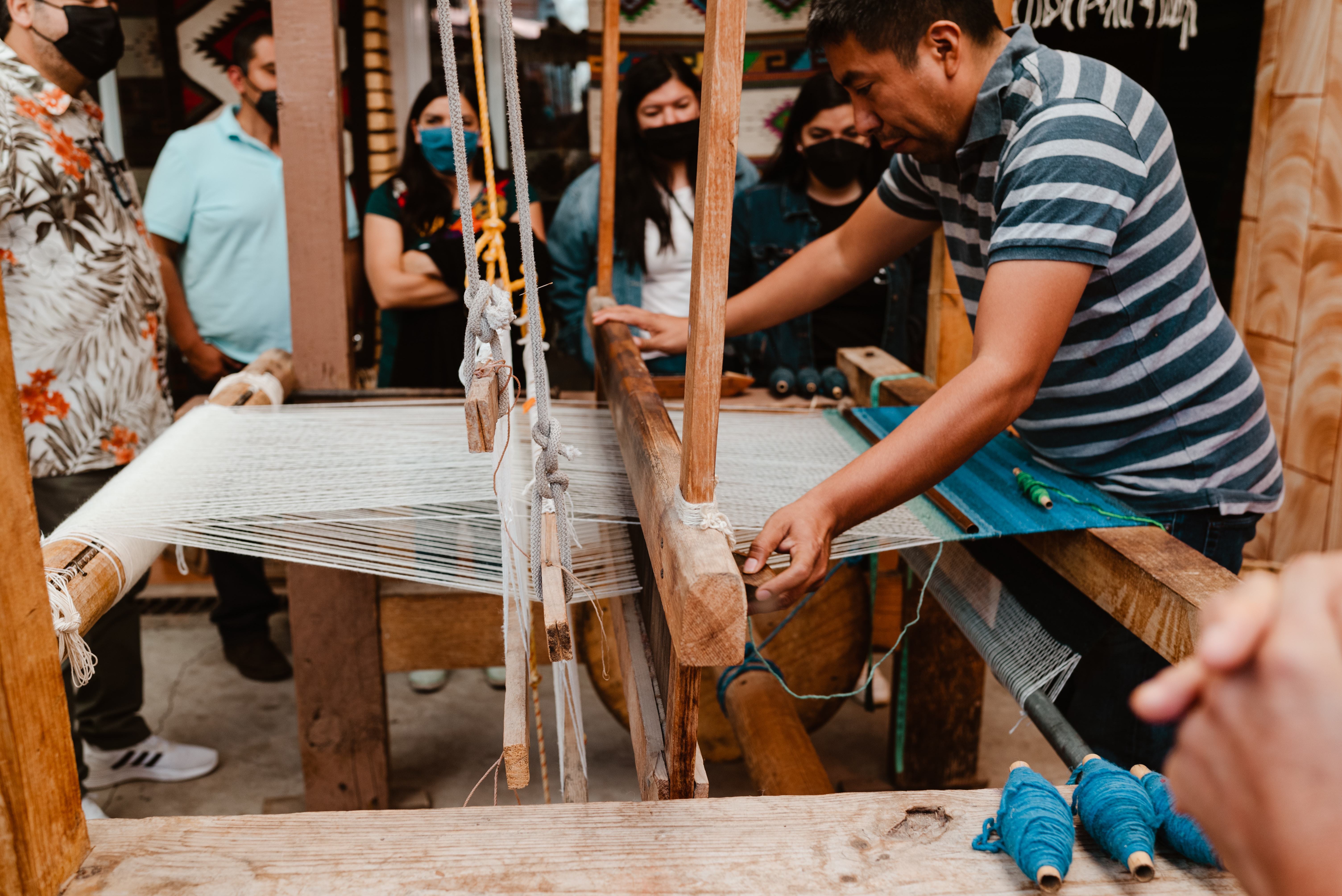
Unleash Your Creativity: From Monte Albán to Magical Alebrijes!
The ultimate highlight of this day trip is the perfect combination of ancient history and hands-on artistry. Your adventure begins by exploring the towering pyramids and sacred plazas of Monte Albán, the spectacular mountaintop capital of the ancient Zapotecs. Directly after, you will head to the nearby village of Arrazola to step inside a traditional workshop and paint your very own Alebrije (fantastical wooden folk art). Arrazola and its neighbours reward a full day of their own, as a tour through Oaxaca's alebrije and weaving villages shows, and choosing your own colors to customize a unique, personal masterpiece is exactly the kind of hands-on stop that makes our Oaxaca tours for families roundup, especially enjoyable for children before heading back to the hotel to rest.
A Very Floral Option
If plants and flowers are your thing, there is no better way to end your day after exploring Monte Albán than by taking a relaxing stroll through Oaxaca's stunning Ethnobotanical Garden. It is the perfect peaceful contrast to the ancient ruins. It also makes a gentle first taste of the region's plant life, which is where planning Oaxaca nature tours begins for a lot of travelers.
For travelers building a full Oaxaca itinerary, the Oaxaca itinerary packages guide shows how Monte Albán fits into 5, 7, and 10-day routes without rushing.
Bookable tours
Options we point travelers toward, drawn from the same shortlist we use when mapping the top Oaxaca tours worth booking in 2026.
- Monte Albán Guided Tour with Certified Archaeologist (Viator): Private format, 2 to 3 hours, transport from Oaxaca City included. Roughly $80 to $140 USD for a group of two.
- Monte Albán Group Morning Tour (GetYourGuide): Shared group, 8 to 12 pax, includes transport and guide. About $25 to $45 USD per person.
- Oaxaca City + Monte Albán Full Day (Airbnb Experiences): Combines morning at the ruins with an afternoon walking the city and a market visit. $60 to $100 USD per person.
- Private Monte Albán + Oaxaca City Custom Day (Rutopía): Licensed guide, private transport, paced around your energy and interests. Contact us for current rates.
Pricing at a glance
FAQ
How long should I spend at Monte Albán? Two to three hours if you have a guide and are engaged. Ninety minutes if you're self-guiding and primarily there for the views and photos. The on-site museum adds another 30 to 45 minutes and is worth it.
Is Monte Albán better than Teotihuacán? Different, not better or worse. Teotihuacán is larger, more dramatic in scale, and has the famous Pyramid of the Sun. Monte Albán has a more personal scale, a far less crowded experience, and arguably more interpretive depth if you have a good guide. Travelers who've done both often say Monte Albán surprised them.
Can I climb the structures at Monte Albán? Some, yes. The north platform and several smaller platforms are climbable. INAH has closed some structures to preserve them, and the rules update periodically. Ask your guide or the entrance staff about current access.
Is Monte Albán included in most Oaxaca tour packages? Most multi-day Oaxaca packages from serious operators include a Monte Albán visit as a half-day or full-morning component. Check the itinerary specifically: some budget packages list it as optional with an extra cost for the guide. A guide to what's typically included at each Oaxaca package price tier breaks this down.
Is it worth hiring a guide if I've already read about the history? Yes. Reading about Los Danzantes and standing in front of them with someone explaining the competing interpretations of what the figures represent are very different experiences. The best Monte Albán guides have been working the site for years and have a relationship with the archaeology that no amount of research beforehand replicates.
Looking for more Mexico travel resources? Be sure to check out:
Written by
Design your trip to Mexico with a local travel designer. Unique activities and lodging, 100% tailor-made and stress-free.
.webp)
Related posts

Duration:
Trip duration
Days
Your 2026 Oaxaca And Chiapas Tour Itinerary Plan
An Oaxaca and Chiapas tour itinerary for 10 to 14 days: Monte Albán, mezcal villages, San Cristóbal and Palenque. Built by Rutopía's trip designers.
Read more

Duration:
Trip duration
Days
Best Tours In Mexico For First-Timers In 2026
Best Mexico adventure tours for 2026: Chiapas jungle treks, Yucatán cenotes, Oaxaca Sierra hikes and Pacific surf. Pricing, pacing and operator picks.
Read more
Duration:
Trip duration
Days
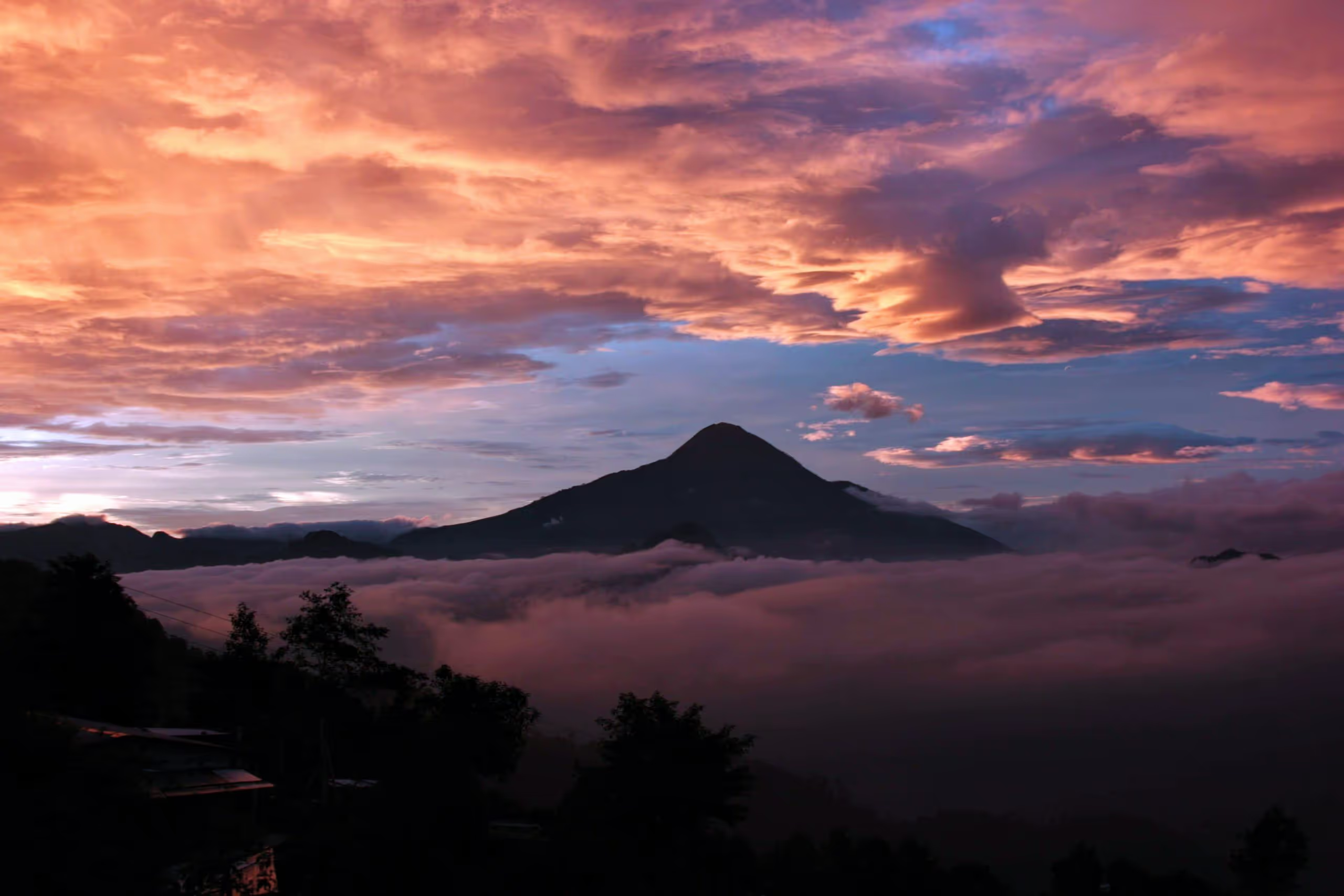
Tacaná Volcano
The Tacaná volcano is located on the frontier between Mexico and Guatemala. Its name is of Mam origin and means house of fire.
Read more
Join us on this
journey
Plan your trip with usjourney
Join our newsletter to stay up to date on features and releases.
Oups ! Une erreur s'est produite lors de l'envoi du formulaire.
Ready to experience the real Mexico?
Travel with local experts and get hangds-on supoort every step of the way... from planning to arrival.

Your Travel Companion in Mexico, 24/7
We're with you from arrival to departure via WhatsApp for anything you need.

Trusted by thousand of travelers with a 4.9 rating on Google