Customize my trip



A 2026 Oaxaca Artisan Villages Tour Guide
Meta description: Oaxaca artisan villages tour guide: Teotitlán weavers, San Martín alebrijes and Atzompa pottery. Named artisans and real prices for 2026 travelers.

Content
They highlight our work



Unique trips in Mexico.
Tailor made for you.
Request your tripTailor made for you.
Let a local guide help you plan your trip to Mexico
Start tailor-made tripThe villages in Oaxaca's Central Valleys have been producing distinct crafts for centuries, and the circuit that connects them is one of the most rewarding day trips available from the city. It's one of the day trips that consistently makes our list of the top Oaxaca tours to book in 2026. Each village specializes in a single tradition. Teotitlán del Valle for hand-woven wool rugs with natural dyes, San Martín Tilcajete for carved and painted copal wood animals, San Bartolo Coyotepec for barro negro (black clay) pottery, Atzompa for its green-glazed ceramics, Santo Tomás Jalieza for backstrap-loom cotton textiles. In most of these places, the craft has been practiced by the same families for generations, and visiting a family workshop is genuinely different from the tourist shops that sell imitations of the same objects in the city center. Knowing the difference matters. If you want these visits built into a custom trip with verified family contacts, our Oaxaca team can arrange it.
Teotitlán del Valle: wool rugs and natural dye
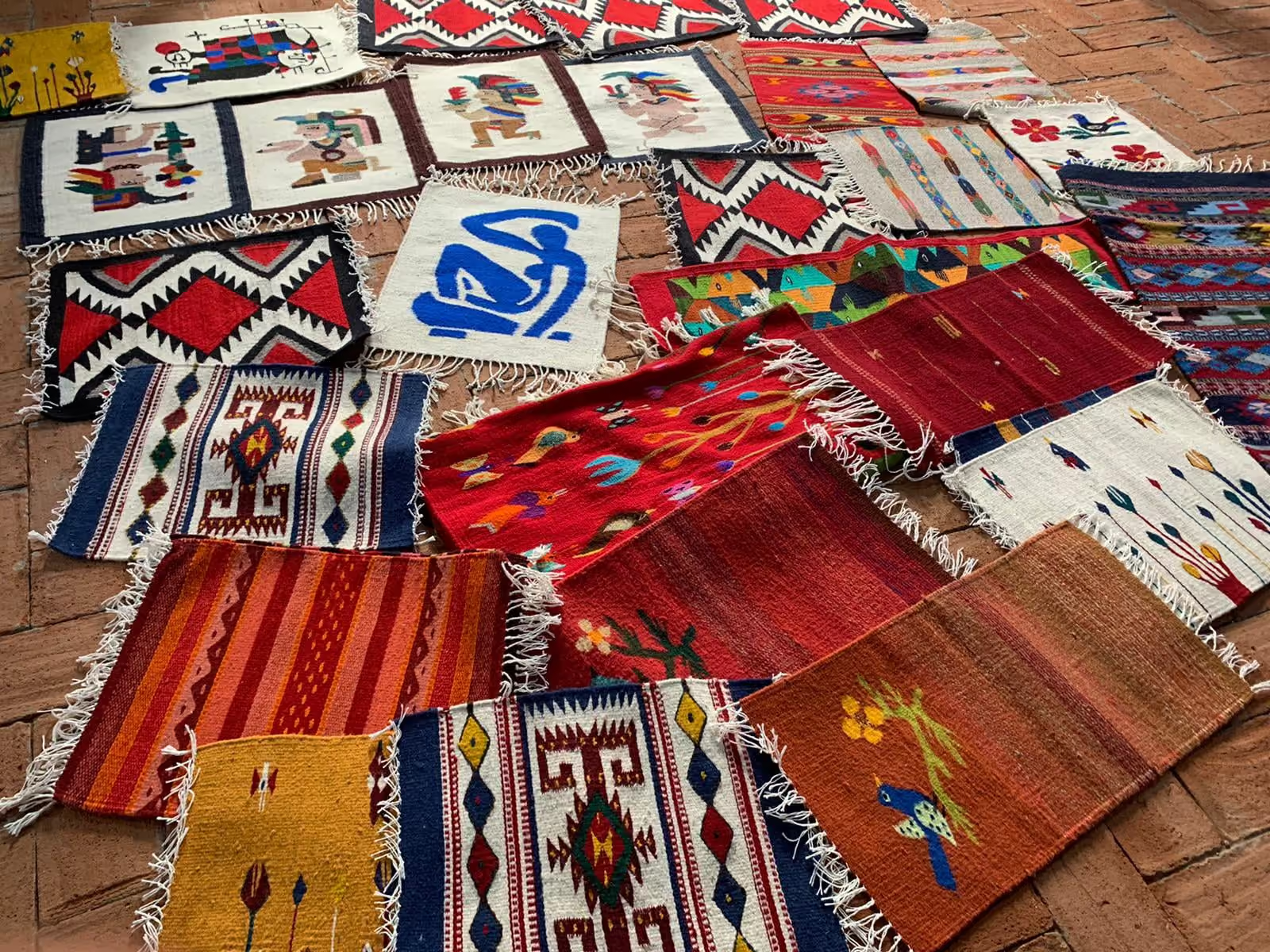
Teotitlán del Valle sits 28 km east of Oaxaca City in the Tlacolula Valley, which puts it on the same eastern road as Hierve el Agua and the wider Tlacolula circuit, so many travelers pair the two. The village has been weaving since before the Spanish arrived, and the tradition has survived in part because it adapted: Zapotec geometric patterns from pre-Columbian codices and architecture now appear alongside custom designs requested by international buyers. The rugs are woven on foot-pedal looms from hand-spun wool, and the serious workshops still use natural dyes: cochineal (the scale insect that lives on nopal cactus, which produces the vivid crimson and pink range), indigo, marigold, pomegranate rind, and huizache bark for tans and golds.
Watching the cochineal dyeing process is one of the more memorable visual experiences in the village: the dye starts as a pale dried powder, turns an almost alarming purple when mixed with water, then shifts to brilliant red with lime juice added, and continues shifting through orange, pink, and coral depending on the mordant. It is chemistry conducted in a courtyard, explained by someone who learned it from their parents.
The gap between a family workshop and a tourist shop matters enormously here. A genuine workshop will have looms active, partially completed rugs in progress, and the dyeing materials visible. A shop selling imitations may offer "rugs" made in Mexican states with no weaving tradition, sold at prices that undercut what genuine labor costs. Price signals help: a small rug (roughly 60 by 90 cm) from a serious family workshop runs 800 to 2,500 MXN ($40 to $125 USD) depending on the complexity of the pattern and dye process. If you're offered the same size piece for 200 MXN, it was not made in Teotitlán.
Best day to visit: Any day, though the village has more energy on Sundays when the Tlacolula market runs nearby and the village itself is active. Mid-week is quieter and better for a longer workshop visit with a specific family. If your dates overlap Guelaguetza or Day of the Dead, it's worth checking when Oaxaca tours get busiest before you lock in a market Sunday.
San Martín Tilcajete: alebrijes

San Martín Tilcajete, 23 km south of Oaxaca City, is the village most closely associated with the painted wooden animal figures known as alebrijes. Both Tilcajete and nearby San Antonio Arrazola sit close to the road out to the Monte Albán ruins, a pairing many day trips make. The craft itself is relatively recent: the figure of the alebrije was popularized in Mexico City in the 1940s by artist Pedro Linares, but the Oaxacan version made from copal wood (a soft, light wood from trees that grow in the surrounding hills) and painted with intricate patterns emerged in the Tilcajete and nearby San Antonio Arrazola villages in the 1980s as artists adapted the form to local materials and Zapotec imagery.
The production is a two-stage family process. Carvers (usually men in traditional family structures, though this varies) shape the figures with machetes and knives, working from unseasoned copal wood that dries as the piece cures over several weeks. Painters (often women or other family members) apply the designs with fine brushes, sometimes working from templates but more often improvising within a family's signature style. A complex mid-sized piece may take a month of cumulative work between carving and painting. The figures range from small simple animals that sell for 80 MXN ($4 USD) to large, intricate narrative scenes that go for 15,000 MXN and up.
The imitation problem is acute here: mass-produced alebrijes from other Mexican states are sold throughout Oaxaca City's tourist zone. A genuine Tilcajete piece will have visible tool marks on the wood surface, slight asymmetry in the carving, and hand-painted details that vary between pieces. Ask in the workshop where the wood came from and who carved and who painted the piece you're considering.
Best day to visit: Daily. The workshops are family homes and operate on their own rhythm; arriving mid-morning gives you the best chance of seeing active work in both carving and painting. The paint-your-own-piece workshops make this one of the most reliable stops for Oaxaca tours built around families.
Local tip: At Don Mario Jiménez’s workshop, a local artisan, visitors learn about the history of this family tradition from his son, Isaías. They are then invited to paint their own hand-carved wooden piece, choosing the colors and patterns that speak to them. This hands-on activity is especially enjoyable for children, who can choose their favorite colors and patterns while discovering one of Oaxaca’s most beloved crafts in a playful and memorable way.
San Bartolo Coyotepec: barro negro
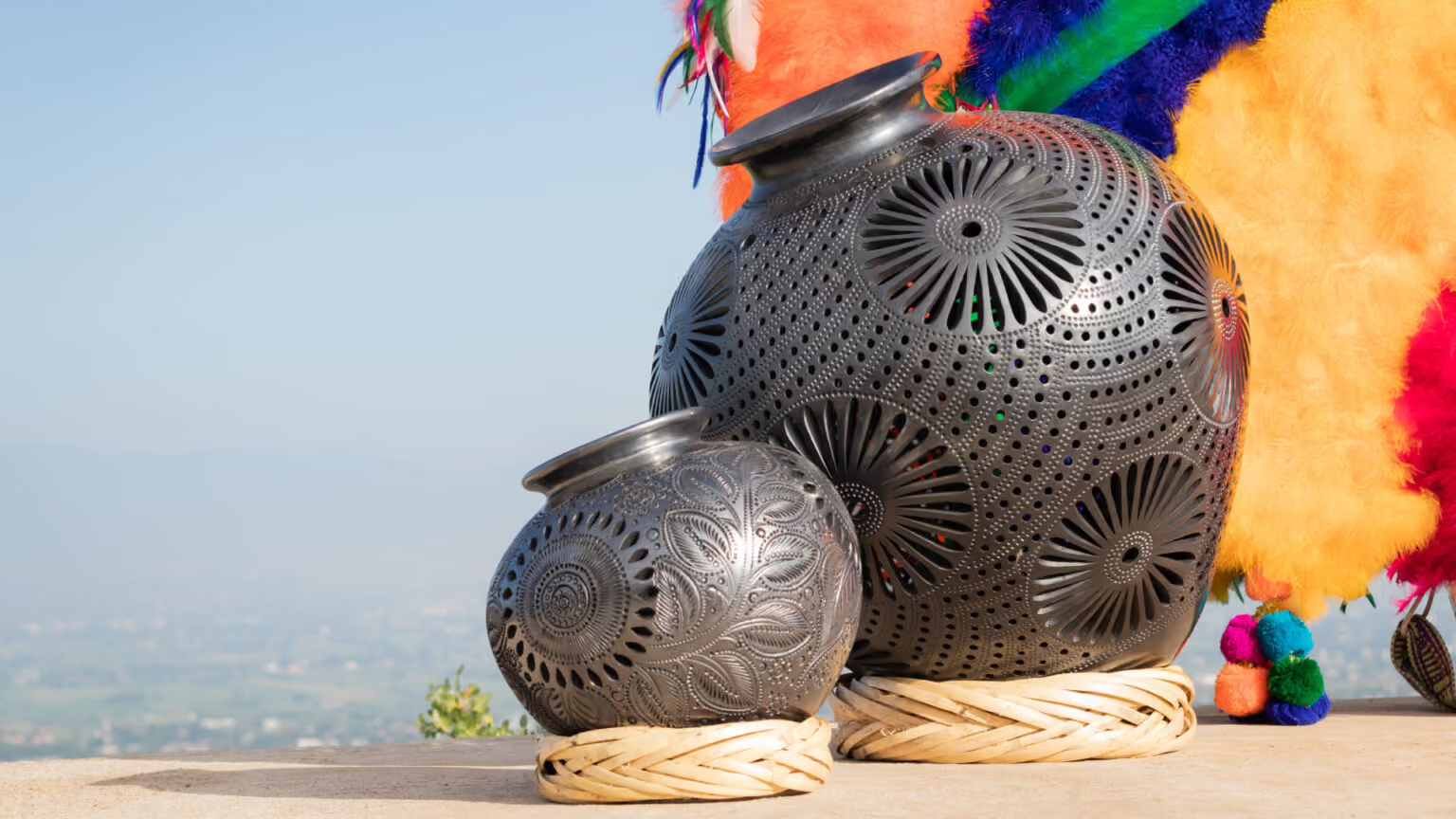
San Bartolo Coyotepec, 12 km south of Oaxaca City, produces the distinctive black clay pottery known as barro negro. The clay comes from a local vein in the surrounding hills; it contains natural minerals that, when burnished before firing and fired in a low-oxygen kiln, produce the characteristic metallic-black sheen. No paint, no glaze: the color and sheen are entirely a product of the clay, the burnishing, and the firing conditions.
The village was relatively obscure until the mid-20th century, when an artisan named Doña Rosa Real de Nieto (known as Doña Rosa) developed the technique of hand-burnishing the unfired clay with a quartz stone to intensify the final luster. She passed the technique to her son Valente Nieto Real, whose family workshop is still one of the most visited in the village.
Pieces range from small decorative figurines (200 to 500 MXN) to large decorative urns and sculptural vessels that can reach 10,000 MXN and above for the most elaborate forms. The production here is slower than most visitors expect; a large piece takes several weeks from clay preparation to final firing.
Best day to visit: Daily. The village also hosts a small Saturday market. The Nieto Real family workshop is open to visitors and includes a demonstration area.
Atzompa: green-glazed pottery
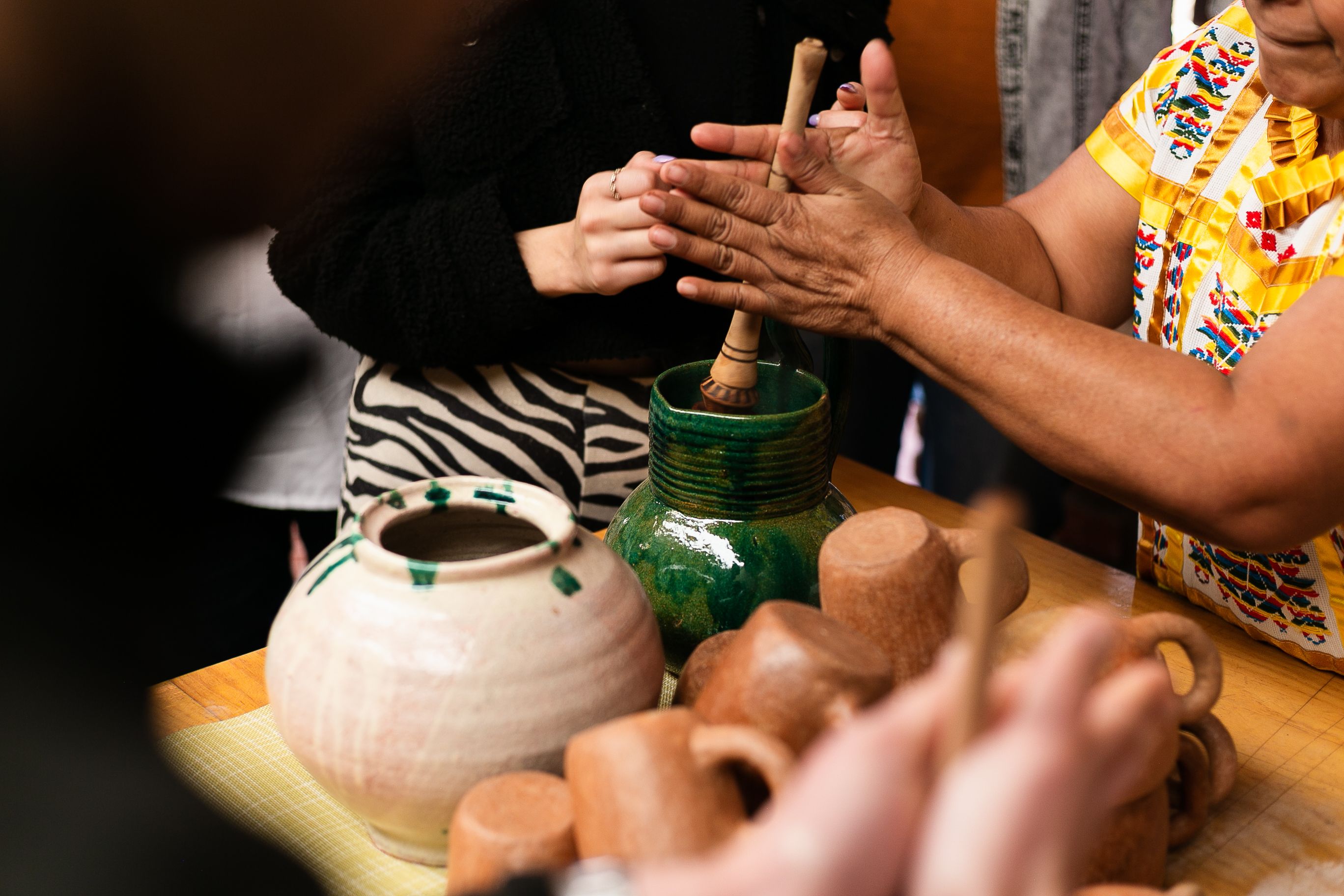
Atzompa sits 8 km northwest of Oaxaca City, closer to the city than any other artisan village on the circuit. It is known for a specific green glaze that is applied to terracotta clay forms: bowls, plates, animal figures, candleholders, and architectural tiles. The glaze is a lead-based formula that has been used in the village for generations, which produces its characteristic warm green tone but also means the functional pieces (bowls, plates) should not be used for food or drink storage without checking that modern reformulations have addressed the lead content.
Beyond the green-glazed work, Atzompa also produces unglazed terracotta figures of considerable skill: Zapotec-influenced clay women, deity figures, and decorative animals that connect to pre-Columbian ceramic traditions. The village's closeness to the city makes it an easy half-day addition rather than a full day commitment.
Best day to visit: Any day. A small market operates on Wednesdays.
Santo Tomás Jalieza: backstrap-loom textiles
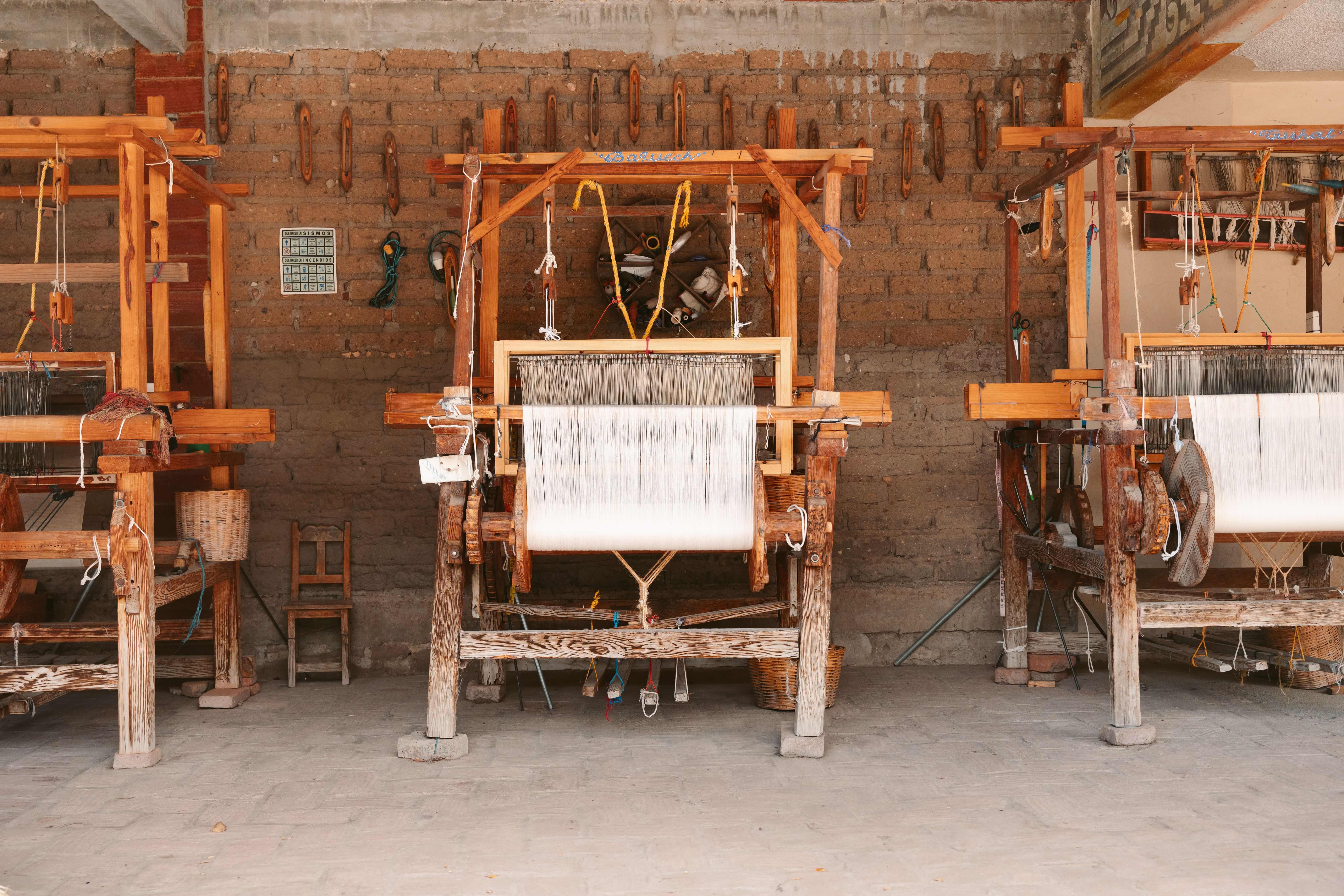
Santo Tomás Jalieza is the least visited of the major artisan villages and one of the most interesting. The village specializes in cotton textile production on backstrap looms, the pre-Columbian weaving technology in which the loom itself is fixed at one end to a post and at the other end to a strap worn around the weaver's lower back, creating tension through the body. The resulting textiles are narrow in width but extraordinarily dense in pattern: geometric designs drawn from Zapotec traditions, woven in cotton that the village produces independently from Teotitlán's wool tradition.
Belts, table runners, bag straps, and small decorative textiles are the most common forms. Prices start at 150 MXN for small pieces and reach 1,500 MXN for larger, more complex work. A cooperative of women weavers manages sales from a shared space in the center of the village, which is worth noting: buying from the cooperative goes directly to the weavers with no middleman.
Best day to visit: Friday, when the village has a small market. The cooperative is open daily.
Local tip: For travelers looking to go beyond Oaxaca’s more visited routes, the Sierra Mixe offers a deeper and more intimate connection with the state’s Indigenous heritage. Less touristy than other regions, this mountainous area has preserved its traditions over generations and is only recently becoming more open to sharing them with visitors in a respectful way.
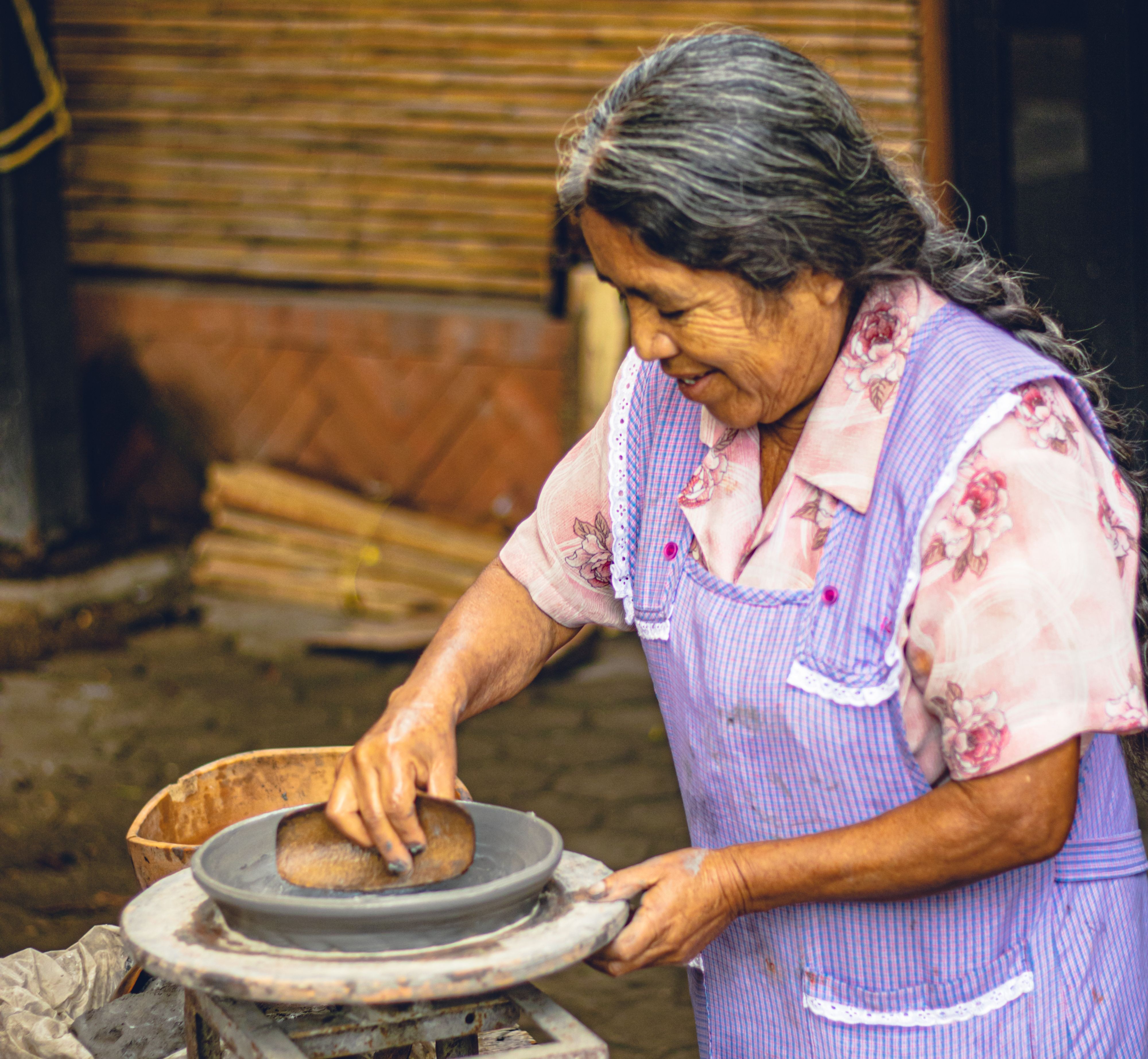
The experience begins in San Pedro y San Pablo Ayutla with a local breakfast called machucado, an ancestral dish prepared by Mixe mountain families as a symbolic way to keep famine away and wish for a generous harvest. The journey then continues to Santa María Tlahuitoltepec, where visitors take part in two meaningful workshops. The first is a pottery workshop with Silvia, a respected local potter, who demonstrates her craft before guiding guests as they create their own piece. The second introduces the textile work of the Gutiérrez family, whose clothing is deeply connected to Mixe worldviews. Fernando shares the natural dyeing process and explains how the fabrics are made, offering insight into one of the community’s most beautiful and carefully preserved traditions.
How to visit authentically: workshops vs shops
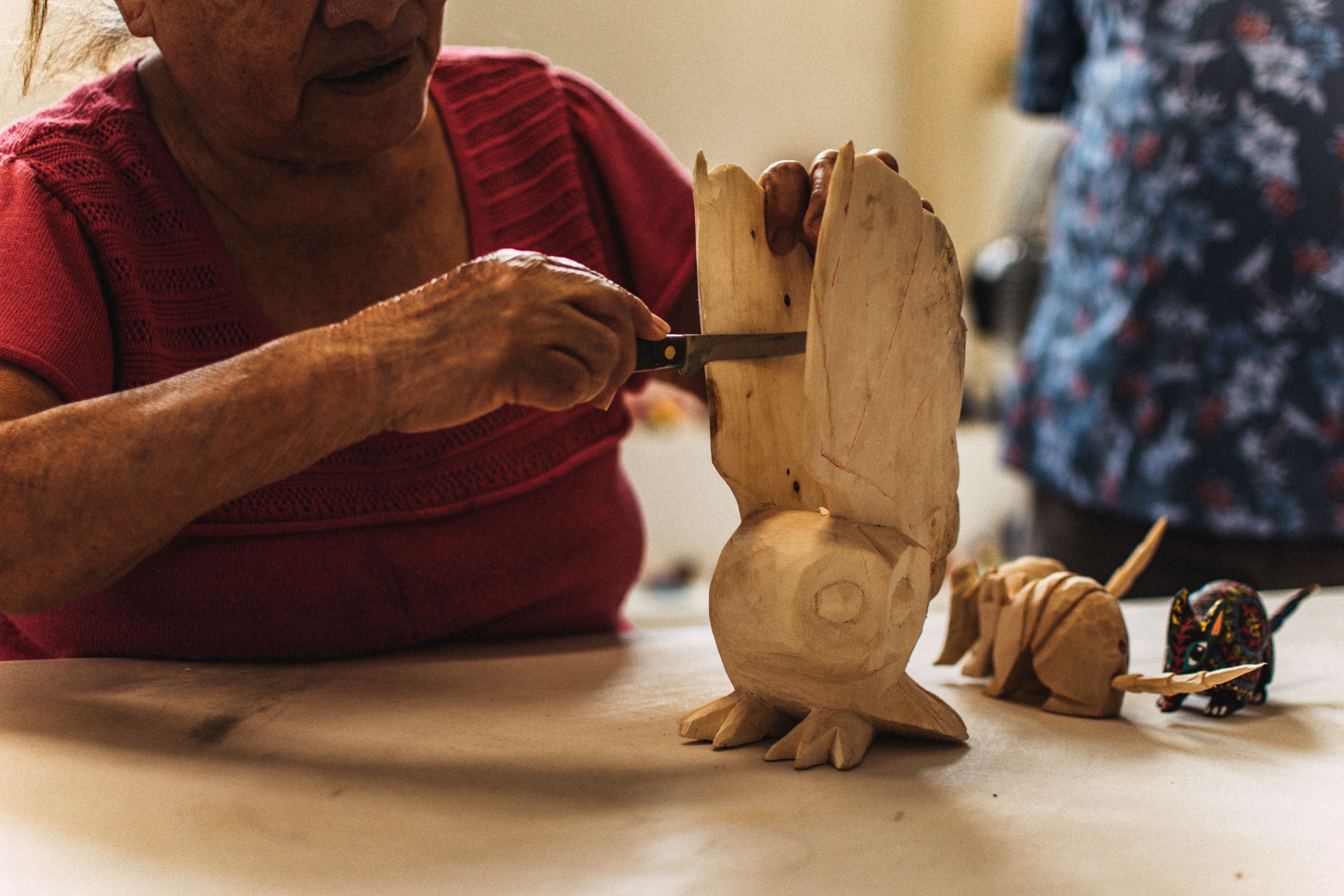
The distinction between a family workshop and a shop selling imitations is not always obvious from the outside. Three indicators that you're in a working space rather than a sales room: active production visible (looms running, carving in progress, clay on a wheel), family members present and working rather than waiting, and prices that reflect actual labor time.
A useful question at any workshop: "Can I see where this is made?" A genuine producer will take you to the production area. A shop will redirect you to the display area. You're not being rude by asking; you're signaling that you're a serious buyer, which producers appreciate.
Understanding how a private Oaxaca driver-guide's family relationships work explains how much that existing access changes the authenticity of these visits.
How to sequence a full-day village circuit
A practical full-day route from Oaxaca City:
Morning: Atzompa (closest, 8 km northwest, 20 minutes from city, 1 to 1.5 hours in the village). Then drive south through the city to San Bartolo Coyotepec (12 km south, 30 minutes from city, 1 to 1.5 hours).
Midday: Lunch in Ocotlán or Santo Tomás Jalieza, then the Jalieza cooperative (30 minutes). Ocotlán also anchors the southern mezcal road, so this is a natural point to fold in a Oaxaca mezcal palenque visit.
Afternoon: East to San Martín Tilcajete (23 km south, 40 minutes, 1 to 1.5 hours), then to Teotitlán del Valle (28 km east of city, 45 minutes, 1.5 to 2 hours for a proper workshop visit).
This circuit covers about 120 km total and works best with a private driver-guide who can handle the logistics and call ahead to the workshops. Attempting it by colectivo is possible for individual villages but not practical as a multi-stop day. The village circuit is one of several routes we weigh against each other when mapping the best Oaxaca tours for a 2026 trip.
A breakdown of which days suit the village circuit within a 5- or 7-day Oaxaca trip shows where it fits best.
What things cost at the source
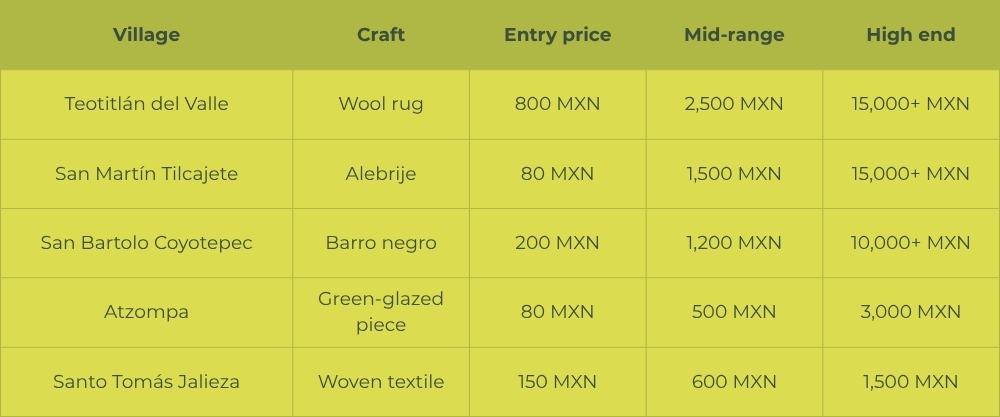
Prices in the city are 20 to 50 percent higher than at source for comparable pieces, and authenticity is harder to verify. Buying at the workshop is better for you and substantially better for the artisan.
Bookable tours
These are the formats we point travelers toward, and each one slots neatly into a wider set of Oaxaca tours worth booking in 2026.
- Teotitlán Weaving and Natural Dye Workshop (Airbnb Experiences): Half to full day with a specific family, natural dye demonstration included. About $55 to $90 USD per person.
- Oaxaca Artisan Villages Full-Day Circuit (GetYourGuide): Group format, 3 to 4 villages, shared van. About $60 to $100 USD per person.
- Private Artisan Circuit with Driver-Guide (Viator): 5 to 6 villages, private vehicle, workshop contacts arranged. About $150 to $220 USD for the vehicle.
- Custom Artisan Day with Pre-Arranged Family Visits (Rutopía): We arrange access to specific families in each village, coordinate schedules, and handle the logistics. Contact us for current pricing.
FAQ
Can I bargain at the workshops? Gently, and only modestly. Artisan pricing already reflects labor more transparently than most crafts markets; aggressive bargaining is considered disrespectful and undercuts the value of the work. Asking "is there a better price for two pieces?" is fine. Offering half the stated price is not.
Is it better to visit with a guide or independently? For Teotitlán and San Bartolo Coyotepec, you can go independently by colectivo and find workshops without difficulty. For San Martín Tilcajete and Santo Tomás Jalieza, a guide with existing family connections produces a substantially better experience than arriving cold. For a full multi-village day, a private driver-guide handles logistics that are genuinely complicated to self-manage.
What should I do if I'm buying a large piece to take home? Ask the workshop whether they ship; many established Teotitlán weavers and Tilcajete alebrije carvers have experience shipping internationally and can advise on packaging and customs declarations. Barro negro pieces are fragile and benefit from professional packing if you're taking them as luggage.
Are these villages touristy? Some workshops have become accustomed to visitors and feel polished. The villages themselves are working communities where artisan production is the primary economy, not a performance for visitors. The artisans who welcome you into their workspace are doing so as a business transaction; treating it as such, with genuine interest and fair purchasing, keeps the dynamic healthy
Looking for more Mexico travel resources? Be sure to check out:
Written by
Design your trip to Mexico with a local travel designer. Unique activities and lodging, 100% tailor-made and stress-free.
.webp)
Related posts
Duration:
Trip duration
Days
Rutopia WSA Winner
Rutopia is WSA "Culture & Tourism" Winner 2021 and is proud to share this success next to other international and innovative initiatives.
Read more
Duration:
Trip duration
Days
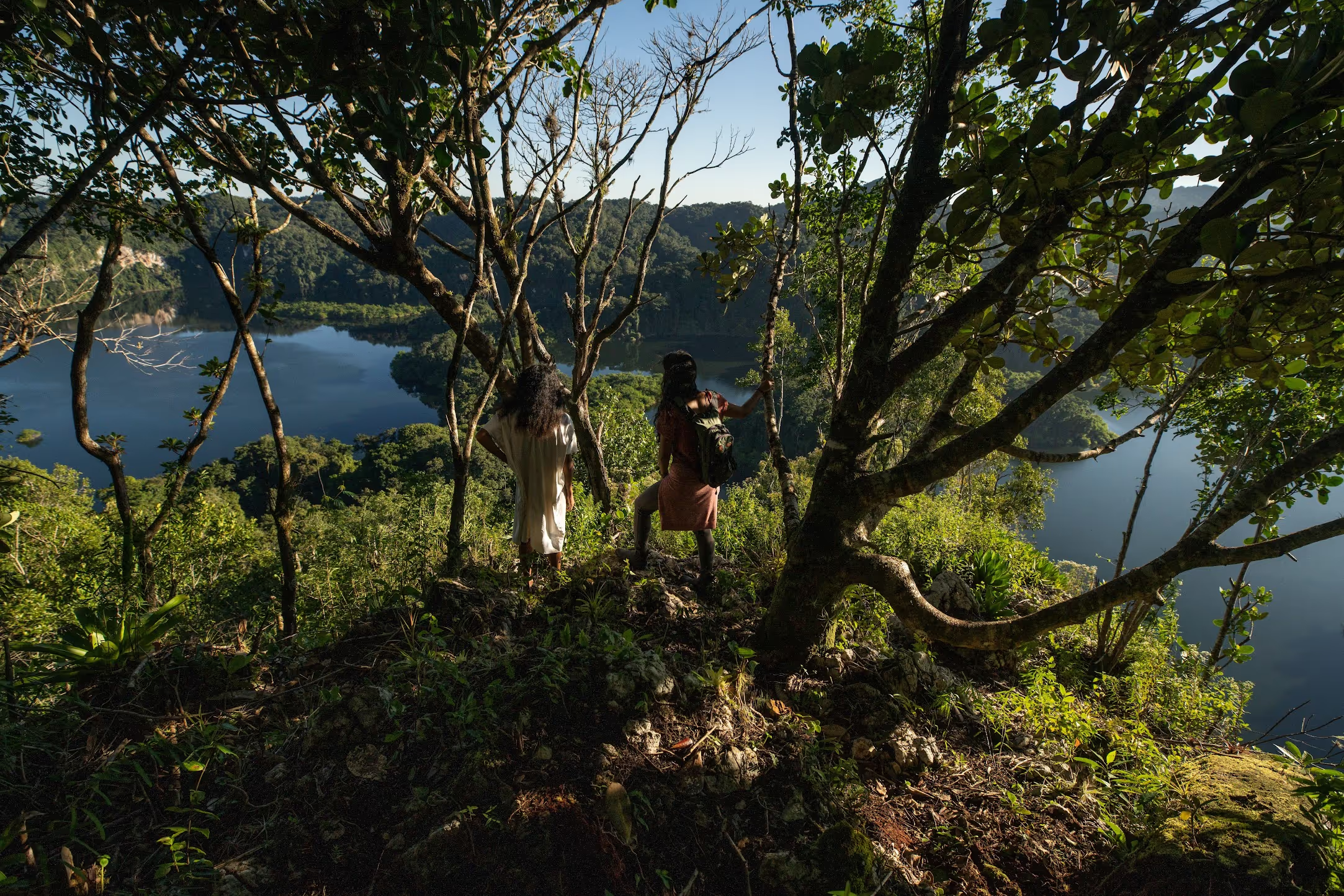
Chiapas Jungle
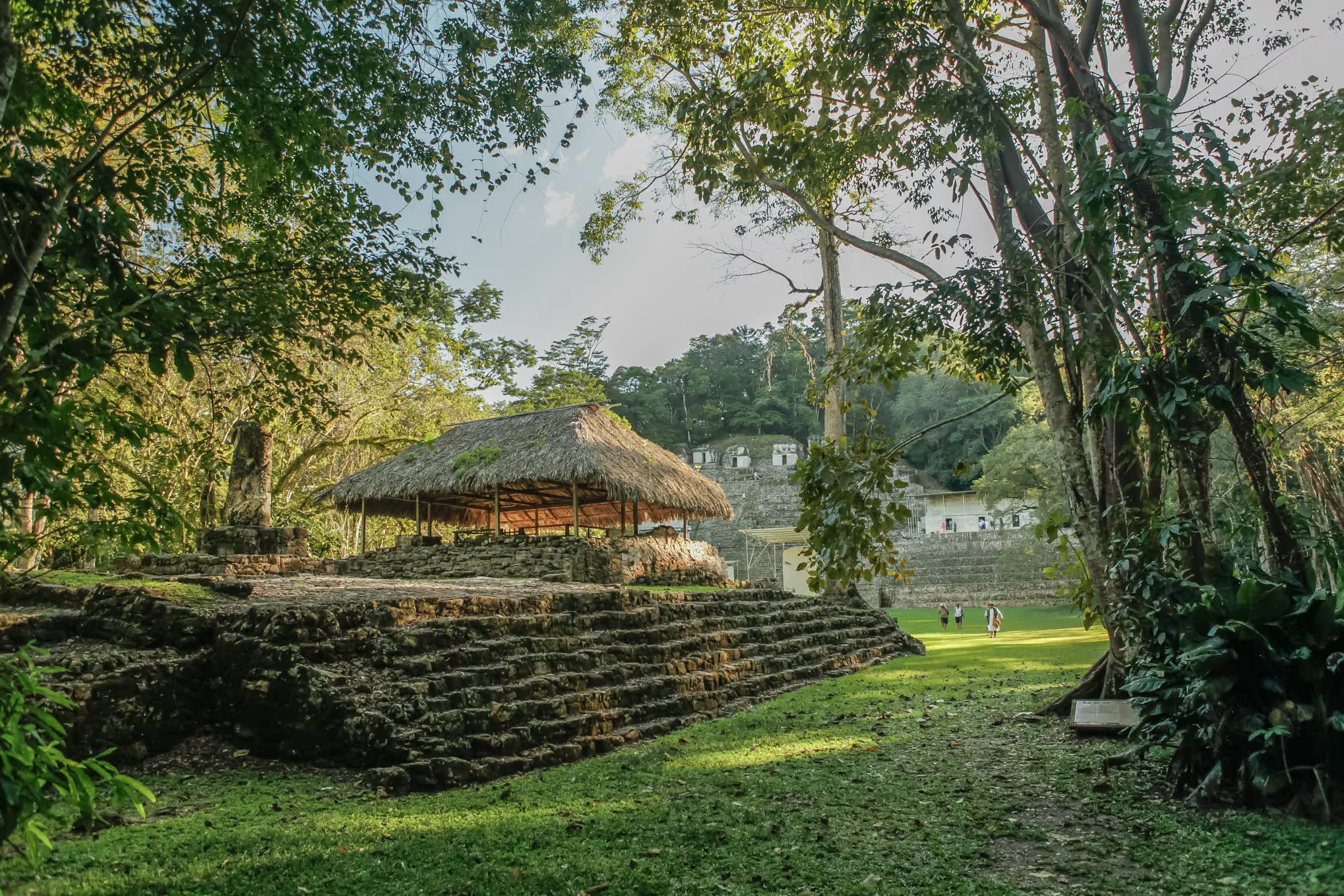
The Chiapas jungle, better known as the Lacandon jungle, is located in Chiapas. This magical place is one of the last lungs of the planet.
Read more

Duration:
Trip duration
Days
Blue Mushroom Forest
Why the blue mushroom forest? This place has a great variety of plants and animals, but what is most abundant are the mushrooms.
Read more
Join us on this
journey
Plan your trip with usjourney
Join our newsletter to stay up to date on features and releases.
Oups ! Une erreur s'est produite lors de l'envoi du formulaire.
Ready to experience the real Mexico?
Travel with local experts and get hangds-on supoort every step of the way... from planning to arrival.

Your Travel Companion in Mexico, 24/7
We're with you from arrival to departure via WhatsApp for anything you need.
Trusted by thousand of travelers with a 4.9 rating on Google