Personalizar mi viaje


Guía completa para visitar Hierve el Agua en 2026
Guía para visitar Hierve el Agua en 2026: cómo llegar, costos reales, mejores horarios y actualizaciones sobre bloqueos en la carretera. Consejos prácticos de nuestro equipo de viajes en Oaxaca.

Contenido
Destacan nuestro trabajo



Viajes únicos en México.
Hecho a medida para ti.
Solicita tu viajeHecho a medida para ti.
Deja que un guía local te ayude a planificar tu viaje a México
Comience un viaje a medidaGuía completa para visitar Hierve el Agua en 2026
Meta descripción: Guía para visitar Hierve el Agua en 2026: cómo llegar, costos reales, mejores horarios y actualizaciones sobre bloqueos en la carretera. Consejos prácticos de nuestro equipo de viajes en Oaxaca.
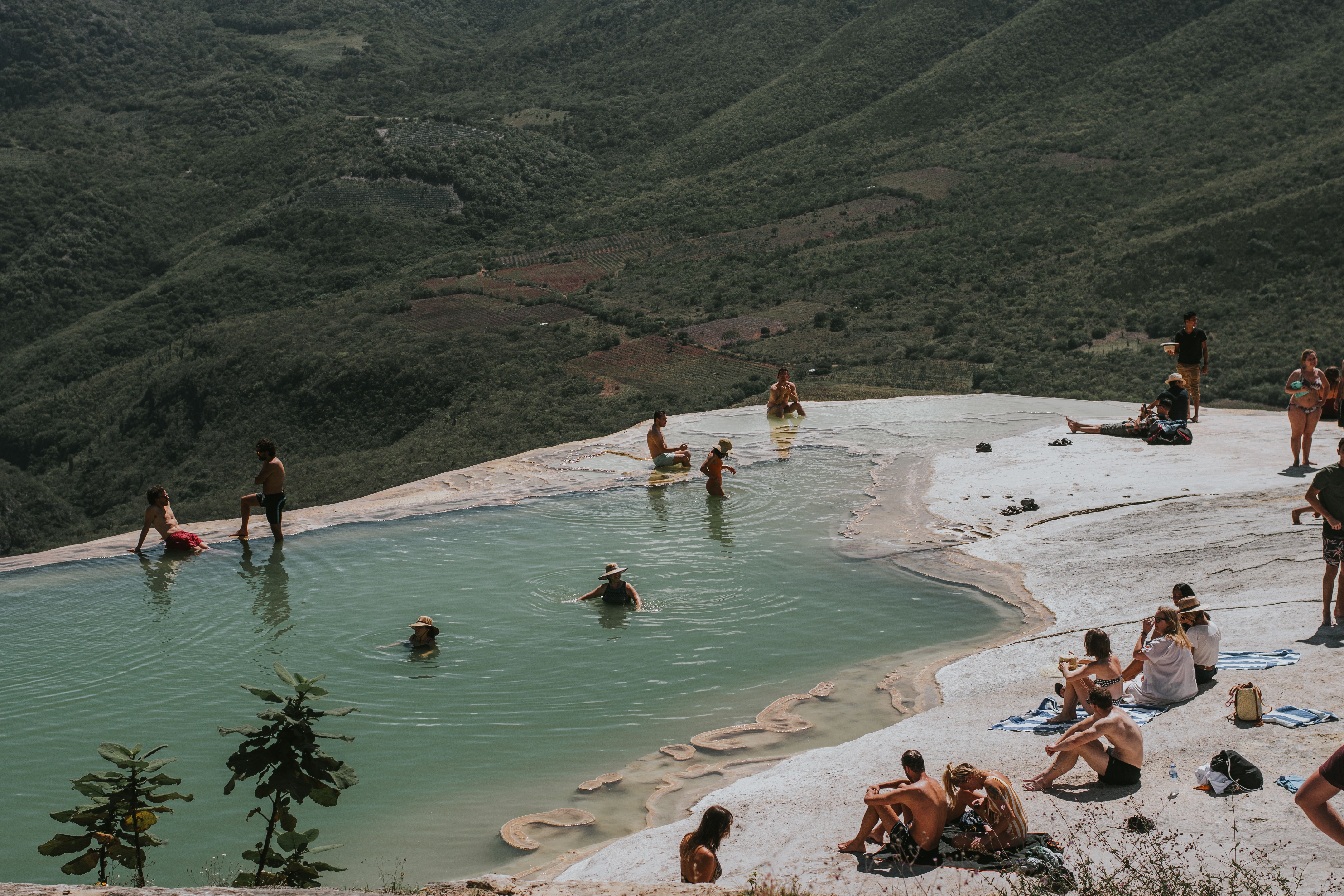
Hierve el Agua es un conjunto de cascadas petrificadas que se despliegan sobre el borde de un acantilado en la Sierra Madre del Sur, a unos 65 kilómetros al este de la ciudad de Oaxaca. El nombre hace referencia a cómo el agua, saturada de minerales, brota burbujeante de la roca, no a su temperatura. En la parte superior hay dos pozas naturales de tipo infinito. La vista desde la más grande, que domina el valle, es una de las escenas más extraordinarias y serenas de México. Sin embargo, llegar allí requiere un poco más de planificación de lo que admiten la mayoría de las guías. Para un viaje que incluya Hierve el Agua como parte de un itinerario más amplio por Oaxaca, comienza con nuestra página de tours en Oaxaca.
Qué es realmente Hierve el Agua
Hierve el Agua es una formación geológica: durante miles de años, agua de manantial carbonatada se ha filtrado por el borde del acantilado, depositando carbonato de calcio a su paso. El resultado es una serie de cascadas congeladas de tonos gris pálido y blanco que descienden por la ladera, pero que son totalmente sólidas. En la cima, los manantiales alimentan dos pozas; la más grande está situada justo al borde del precipicio, ofreciendo una vista del valle que se extiende por kilómetros.
El sitio ha sido gestionado durante décadas por la comunidad zapoteca local de San Isidro Roaguía. Las tarifas de entrada se destinan a la comunidad, y la infraestructura —incluyendo las pozas, el sendero hacia el mirador inferior y las instalaciones básicas— es mantenida localmente. No es un parque nacional bajo la administración del INAH, lo que significa que las normas de acceso las establece la comunidad y no el gobierno federal. Esta distinción es más importante de lo que parece, ya que es la razón principal por la que ocurren los bloqueos en la carretera.
Para conocer el contexto de Hierve el Agua dentro de la oferta turística de Oaxaca, el centro de tours principales en Oaxaca cubre todas las experiencias clave de la región.
Cómo llegar: colectivo, tour o coche privado
Existen tres opciones, cada una con sus pros y contras.
Colectivo compartido desde Mitla: La opción más económica. Desde la ciudad de Oaxaca, toma un autobús de segunda clase o una camioneta colectiva hacia Mitla (unos 45 kilómetros, aproximadamente 1 hora) y luego cambia a una camioneta tipo pickup que recorre el camino de montaña hasta Hierve el Agua cuando se llena. Tiempo total por trayecto: de 1.5 a 2.5 horas, dependiendo de las esperas. Costo: entre 80 y 120 MXN (4 a 6 USD) por trayecto. Es la forma en que viajan los locales. El camino está pavimentado pero es estrecho, y el tramo de la camioneta no es para viajeros que busquen comodidades.
Tour organizado desde la ciudad de Oaxaca: La opción más común para los visitantes. Los tours suelen durar de 8 a 10 horas y combinan Hierve el Agua con el circuito del valle de Tlacolula: el árbol del Tule (un ahuehuete de 2,000 años con uno de los troncos más anchos del mundo), las ruinas de Mitla, una parada en un productor de mezcal o textiles en Teotitlán del Valle, y finalmente Hierve el Agua como destino principal. Los precios de los tours grupales oscilan entre 450 y 900 MXN (22 a 45 USD) por persona. Los tours privados desde Oaxaca con conductor-guía cuestan entre 3,000 y 4,500 MXN (150 a 225 USD) por vehículo, no por persona [VERIFICAR ANTES DE PUBLICAR: confirmar los rangos de precios privados actuales].
Nota importante: En Hierve el Agua, los guías no acompañan a los visitantes dentro del sitio. Esta normativa ha sido establecida por la comunidad local que administra el área. Antes de entrar, tu guía te proporcionará toda la información necesaria sobre la historia del lugar, su importancia geológica, las rutas de senderismo recomendadas, los puntos de encuentro y el tiempo disponible para tu visita.
Coche privado (conducción propia): Es posible, pero no se recomienda para quienes visitan Oaxaca por primera vez. El camino de Mitla a Hierve el Agua es un tramo de montaña donde los bloqueos de las comunidades locales pueden detener el tráfico sin previo aviso. Contratar a un conductor local que conozca la situación actual vale la pena por el costo adicional.
Bloqueos y acceso: lo que debes saber para 2026
Esta es la sección que la mayoría de las guías de viaje omiten, y es la más importante para tu planificación.
El acceso a Hierve el Agua ha sufrido interrupciones periódicas desde 2018 debido a disputas constantes entre la comunidad de San Isidro Roaguía (que administra el sitio) y las comunidades vecinas por el control de la carretera de acceso y el reparto de ingresos. Los bloqueos han cerrado el sitio durante semanas o meses; el cierre prolongado más reciente del que tenemos constancia fue en 2023-2024 [VERIFICAR ANTES DE PUBLICAR: confirmar con la red de socios de Rutopía Oaxaca si el sitio es accesible en 2026 y si existen restricciones de acceso actuales].
La implicación práctica: verifica siempre el acceso al sitio durante la semana previa a tu visita. Cualquier operador turístico o conserje de hotel de confianza en Oaxaca conocerá la situación actual. Si reservas un tour, pregunta directamente al operador si han confirmado el acceso antes de realizar el pago.
Cuando el sitio está abierto, funciona con normalidad y la experiencia es excelente. La incertidumbre es real, pero se puede gestionar contando con un contacto local.
Las mejores horas para visitar
Intenta llegar entre las 9:00 y las 10:00 a. m. Las pozas están en su mejor momento antes del calor del mediodía, la luz es más suave para apreciar la vista del acantilado y la afluencia de los autobuses turísticos que vienen de la ciudad de Oaxaca suele alcanzar su punto máximo entre las 11:00 a. m. y la 1:00 p. m.
Si llegas a media mañana con un guía privado que conozca el lugar, podrás estar en el sendero del mirador inferior antes de que la mayoría de los grupos turísticos hayan salido de la ciudad de Oaxaca. Esos 90 minutos extra marcan una diferencia notable en la experiencia.
Las tardes vuelven a ser más tranquilas después de las 2:00 p. m., cuando los grupos turísticos regresan a la ciudad. Si vas a combinar Hierve el Agua con una parada al mediodía en Tlacolula o Teotitlán, considera invertir el orden habitual: ve primero a Hierve el Agua y deja el circuito del valle para el regreso.
Costos de entrada
La entrada a Hierve el Agua la establece la comunidad local y cuesta aproximadamente entre 50 y 80 MXN por persona (de 2.50 a 4 USD) [VERIFICAR ANTES DE PUBLICAR: confirmar la tarifa de entrada comunitaria actual; las tarifas se fijan localmente y pueden cambiar]. Este pago es independiente del costo de cualquier tour y se realiza en la entrada.
El estacionamiento para vehículos particulares cuesta aproximadamente entre 30 y 50 MXN (de 1.50 a 2.50 USD). Hay pequeños puestos de comida y bebida en la entrada, además de vendedores a lo largo del sendero. Los precios son justos para los estándares de Oaxaca.
Qué llevar
Traje de baño. Las pozas en la parte superior son el atractivo principal y querrás meterte. Vale la pena llevar una toalla, protector solar y sandalias o calzado acuático con buen agarre; los depósitos minerales alrededor de las pozas pueden ser resbaladizos. Lleva más agua de la que crees necesitar, ya que la altitud y el sol deshidratan más rápido de lo esperado. El sitio se encuentra a unos 1,700 metros de altitud, un poco más alto que la ciudad de Oaxaca, y la zona abierta recibe sol directo desde media mañana.
Si planeas recorrer el sendero inferior hacia el mirador de la cascada petrificada más grande, usa calzado con suela adecuada. No es una caminata técnica, pero es un descenso rocoso y el regreso es cuesta arriba.
Cómo combinar Hierve el Agua con otras paradas
El circuito estándar del valle de Tlacolula es la combinación más natural y abarca puntos de interés genuinos en una ruta geográfica lógica: el árbol del Tule (a solo 10 km de la ciudad de Oaxaca), la zona arqueológica de Mitla (a unos 45 km), una parada en Teotitlán del Valle o San Marcos Tlapazola para ver textiles o mezcal, y finalmente Hierve el Agua como cierre del día antes de regresar.
El mercado dominical de Tlacolula es uno de los mercados indígenas más grandes y auténticos de Oaxaca, y organizar tu circuito en domingo hace que el día sea mucho más enriquecedor. Esto significa ir temprano a Hierve el Agua, visitar el mercado por la tarde y regresar a la ciudad con tiempo para cenar.
Para conocer a fondo los pueblos artesanales de esta ruta, el Guía de los pueblos artesanales de Oaxaca cubre Teotitlán, San Martín Tilcajete y Atzompa con el nivel de detalle necesario para que decidas si merece la pena hacer una parada.
La guía de Monte Albán es la otra gran opción de excursión de un día desde la ciudad de Oaxaca, y ambas no se combinan bien en una sola jornada. Monte Albán requiere una mañana, Hierve el Agua requiere un día entero.
Tours disponibles para reservar
Opciones en diversas plataformas, con precios para 2026.
- Excursión de un día al Valle de Tlacolula con Hierve el Agua (GetYourGuide): Día completo, grupo compartido, generalmente de 8 a 10 personas. Incluye El Tule, Mitla, Teotitlán y Hierve el Agua. Aproximadamente de 35 a 60 USD por persona.
- Tour privado de un día a Hierve el Agua con conductor-guía (Viator): Ritmo personalizado, con más o menos paradas según tus preferencias. Alrededor de 150 a 220 USD por vehículo (hasta 4-5 personas).
- Tour privado por los Valles Centrales de Oaxaca + Hierve el Agua (Rutopía): Adaptado a tu horario y a la confirmación de acceso. Verificamos el estado del sitio antes de cada reserva. Contáctanos para conocer los precios actuales.
Resumen de precios
Looking for more Mexico travel resources? Be sure to check out:
- Los mejores tours en Oaxaca para reservar en 2026
- Guía de tours por los pueblos artesanales de Oaxaca en 2026
- Guía completa de tours a Monte Albán en 2026
- Lo que debes saber sobre los paquetes de itinerarios en Oaxaca para 2026
- Cómo planificar tours de naturaleza en Oaxaca en 2026
- Los mejores tours en Oaxaca para familias en 2026
Escrito por
Design your trip to Mexico with a local travel designer. Unique activities and lodging, 100% tailor-made and stress-free.
.webp)
Publicaciones relacionadas
Duration:
Blog title heading will go here
Days
Holbox Tours And Whale Shark Season In 2026
Holbox tours and whale shark season: permit windows, ethical operators and Cabo Catoche snorkel add-ons. 2026 booking tips from our Yucatán team.
Leer más

Duration:
Blog title heading will go here
Days
Museum of Anthropology
Uno de los museos más grandes e icónicos de la Ciudad de México es el Museo Nacional de Antropología e Historia. Un espacio único en el mundo.
Leer más

Duration:
Blog title heading will go here
Days
Guía completa para visitar el Museo Frida Kahlo en 2026
Guía del Museo Frida Kahlo: el truco de las entradas, qué combinar en Coyoacán, visitas privadas frente a individuales y el mejor momento del día. Consejos de nuestro equipo en Ciudad de México para 2026.
Leer más
Únete a nosotros sobre esto
viaje
Planifica tu viaje con nosotrosviaje
Únete a nuestro newsletter para mantenerte al tanto de novedades y consejos para tus viajes.
¡Vaya! Se ha producido un error al enviar el formulario.
Ready to experience the real Mexico?
Travel with local experts and get hangds-on supoort every step of the way... from planning to arrival.

Your Travel Companion in Mexico, 24/7
We're with you from arrival to departure via WhatsApp for anything you need.
Trusted by thousand of travelers with a 4.9 rating on Google