Personalizar mi viaje


Holbox Tours And Whale Shark Season In 2026
Holbox tours and whale shark season: permit windows, ethical operators and Cabo Catoche snorkel add-ons. 2026 booking tips from our Yucatán team.

Contenido
Destacan nuestro trabajo



Viajes únicos en México.
Hecho a medida para ti.
Solicita tu viajeHecho a medida para ti.
Deja que un guía local te ayude a planificar tu viaje a México
Comience un viaje a medidaIsla Holbox sits at the northwest tip of the Yucatán Peninsula, a narrow sand island where paved roads do not exist and golf carts replace cars. Every summer, the warm, plankton-rich waters off its northeastern cape draw the largest gathering of whale sharks recorded anywhere on earth. Browse our Mexico tours packages to see how Holbox fits into a longer Yucatán trip.
Quick Summary
- Isla Holbox is a car-free island off the northwest Quintana Roo coast, reached by a 30-minute ferry from Chiquilá
- Cancún to Chiquilá takes roughly 2.5 hours by car or ADO bus; ferry crossing costs 330 MXN ($15 USD) each way
- Whale shark season runs June through September; peak feeding activity at Cabo Catoche falls in July and August
- Whale sharks near Cabo Catoche gather in groups that can exceed 400 individuals, the largest aggregation in the world per scientific surveys
- Mexico's PROFEPA agency restricts whale shark tours to licensed operators only; regulations cap each boat at eight snorkelers per shark
- Touching sharks, using flash photography, and approaching from the front are prohibited under federal law
- A licensed whale shark tour costs roughly 2,000–2,800 MXN ($100–140 USD) per person
- Beyond whale sharks, Holbox offers bioluminescent plankton (June–September), flamingo lagoons, and spotted eagle rays
- July–August is peak season: boutique hotel rooms run 3,500–6,000 MXN per night ($175–300 USD) and beaches are crowded
- Tailor-made Yucatán itineraries including Holbox start from $3,000 per person; a 30% deposit is required 30 days before arrival
Getting to Holbox
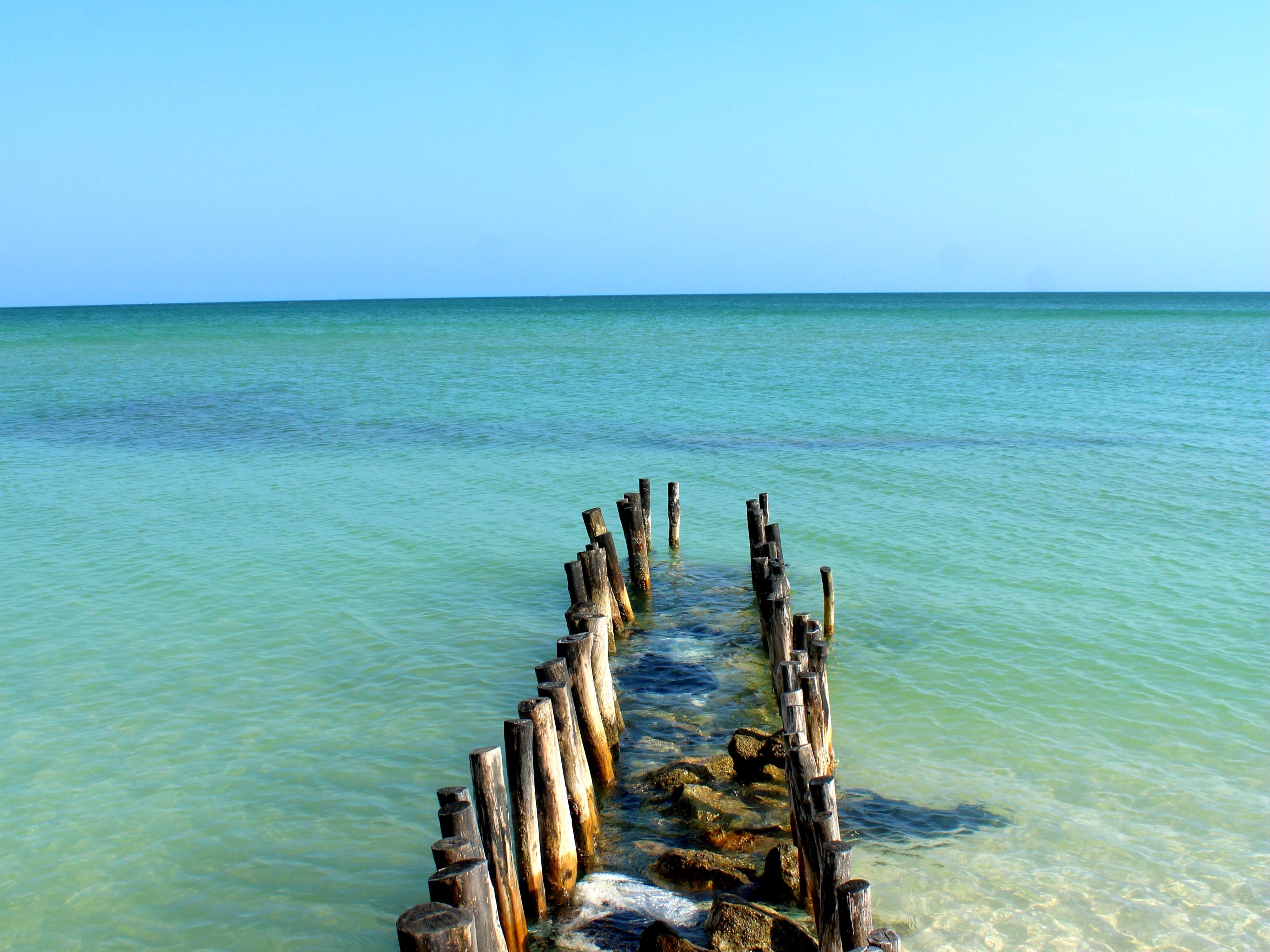
There are no flights to Holbox and no bridge. Every visitor arrives the same way: overland to the coastal town of Chiquilá, then across the Yalahau Lagoon by ferry.
From Cancún, the drive to Chiquilá is approximately 2.5 hours along Hwy 180 and Hwy 5. ADO buses depart from the Cancún bus terminal and reach Chiquilá in a similar timeframe, with connections timed loosely around ferry departures. Ferries run regularly throughout the day, take about 30 minutes, and cost 330 MXN ($15 USD) each way. If you have a day to spare, the overland route can fold in a colonial stop like Valladolid before you reach the coast.
Pro tip: Most shared shuttles to Chiquilá are fifteen-passenger vans with the middle row knees-to-seatback. Pay the small upcharge for a private transfer from Cancún if you are taller than 5'10" — your lower back will thank you before you even reach the water.
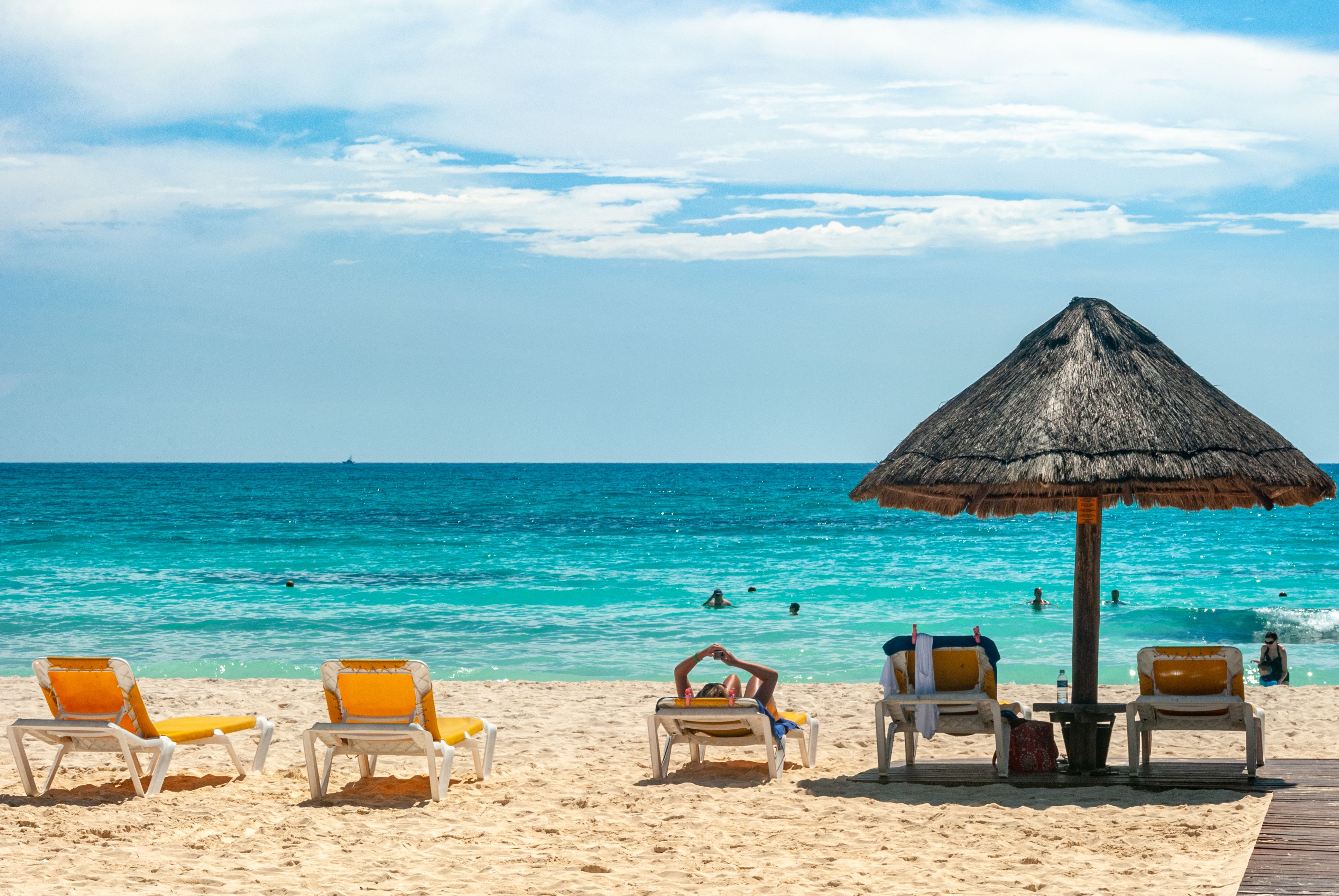
Once on the island, the town of Holbox is compact and walkable. Check your hotel's location in relation to the Holbox ferry terminal. Some hotels outside the town centre can be up to a 40-minute walk away, which can be uncomfortable in the tropical heat, especially with luggage. Golf-cart taxis are easy to find as you exit the ferry terminal; payment is generally in cash. Golf cart rentals are the standard way to reach more distant beaches and lagoon access points. There are no paved roads and no cars, which is part of what keeps the island feeling unhurried, at least outside of high season.
Whale Shark Season: Timing Your Visit
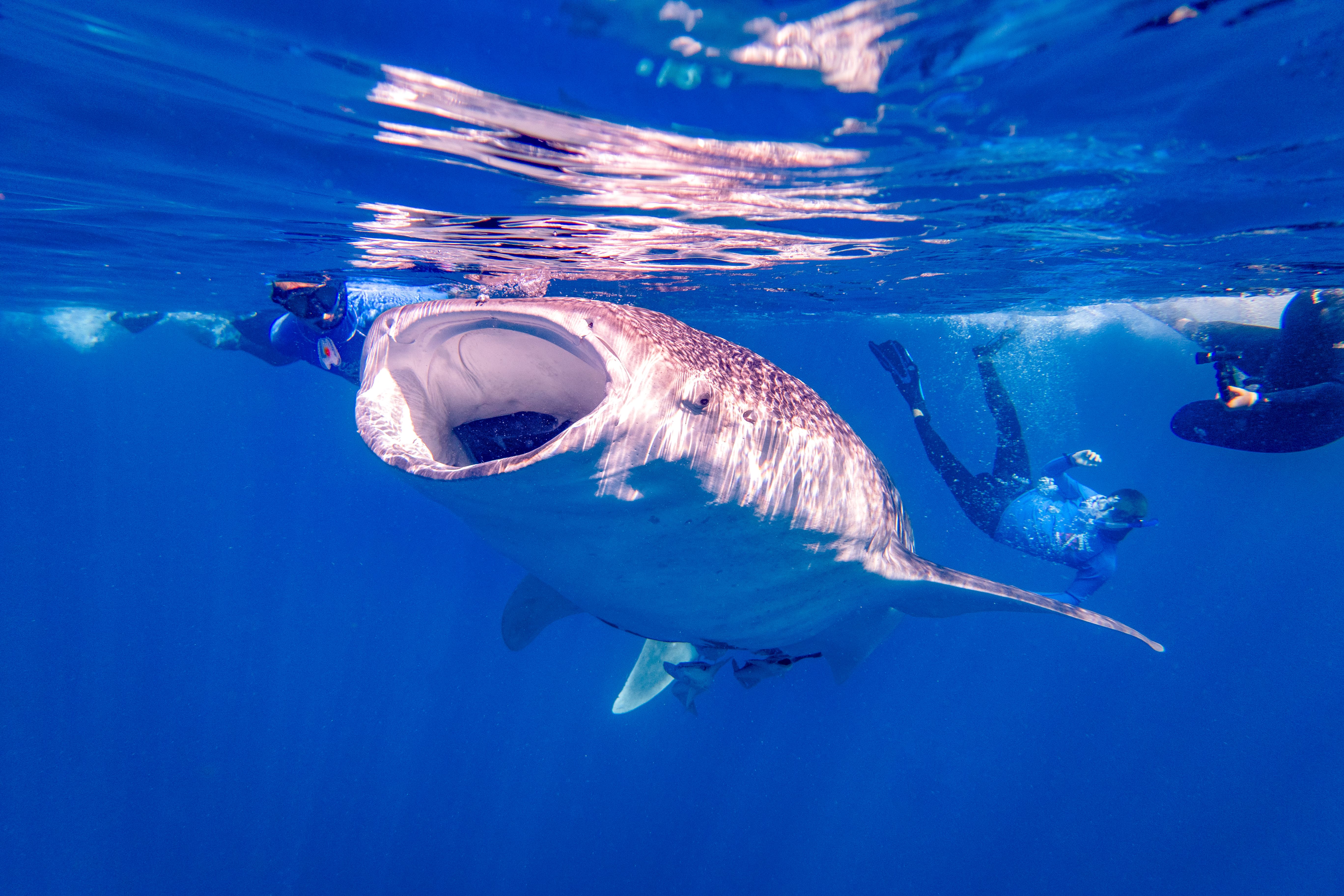
Whale sharks appear in the waters around Holbox from roughly June through September each year. The season peaks in July and August, when the greatest concentrations of plankton accumulate at Cabo Catoche and the shark numbers are highest.
June: Early season. Sharks are present but in smaller numbers, the island is not yet overwhelmed, and hotel prices are still manageable. A good option if you want a genuine encounter without the August crowds.
July and August: Peak season in every sense. Whale shark numbers are at their highest, sometimes exceeding 400 individuals at the feeding grounds simultaneously. The island is also at its most crowded, most expensive, and hottest. July and August also fall within the rainy season. Heavy showers can leave Holbox's sandy streets flooded and muddy, and occasional power cuts may occur during storms or periods of high demand.
September: The season tapers off. Numbers are lower than August but crowds thin noticeably, and some operators report excellent encounters in early September before the sharks move on.
October onward: Whale sharks are gone. The island enters what locals consider its most pleasant season, with quieter beaches, lower prices, and the same bioluminescent plankton that make night swims memorable through early October.
Cabo Catoche: Where the Giants Feed
Cabo Catoche is the northeastern tip of the Yucatán Peninsula, sitting roughly 35 kilometers northeast of Holbox. Two ocean currents converge at the cape, upwelling cold, nutrient-rich water that drives enormous blooms of fish eggs, small crustaceans, and phytoplankton at or near the surface.
Whale sharks are filter feeders. They do not hunt. They swim slowly with their mouths open, straining hundreds of liters of water per hour to extract the microscopic organisms concentrated at the cape. Scientific surveys have counted gatherings exceeding 400 individuals here, making it one of the largest aggregations on record anywhere in the world.
The boat ride from Holbox to the feeding grounds takes one to two hours depending on where the sharks are concentrated that day. Spotters look for the distinctive dorsal fin breaking the surface or the shadow of a large body just beneath it. During peak season the sharks are usually not hard to find, moving slowly in the surface layer, unconcerned with the boats circling at a respectful distance.
What the PROFEPA Permit System Actually Means for You
Mexico's federal environmental enforcement agency, PROFEPA, regulates whale shark tourism at Cabo Catoche under rules developed specifically because uncontrolled tourism was causing real harm. Key requirements for licensed operators include:
- A maximum of eight snorkelers per individual shark at any one time
- No touching the sharks under any circumstances
- No flash photography
- Snorkelers must enter the water in groups of two on a rotation, not all at once
- Guides must be trained and certified
- Only biodegradable sunscreen and products allowed in the water
- Boats must approach from the side or rear, never cutting across the shark's path
These are federal regulations enforced by PROFEPA inspectors who conduct random checks at the feeding grounds during peak season. Licensed operators know they can lose their certification permanently for violations.
The permit system matters to you as a traveler because it directly determines the quality of your encounter. When operators crowd sharks or allow too many people in the water at once, the sharks dive and disappear. Licensed boats follow the protocol, snorkelers enter two at a time, and the shark swims toward and past you at its own pace.
Pro tip: Before you pay a deposit, ask the operator to show you their PROFEPA certification number. Any legitimate operator will have it ready. If they hesitate or change the subject, book elsewhere.
How to Spot an Ethical Operator
The simplest test is the permit question above. Beyond that, a few practical indicators:
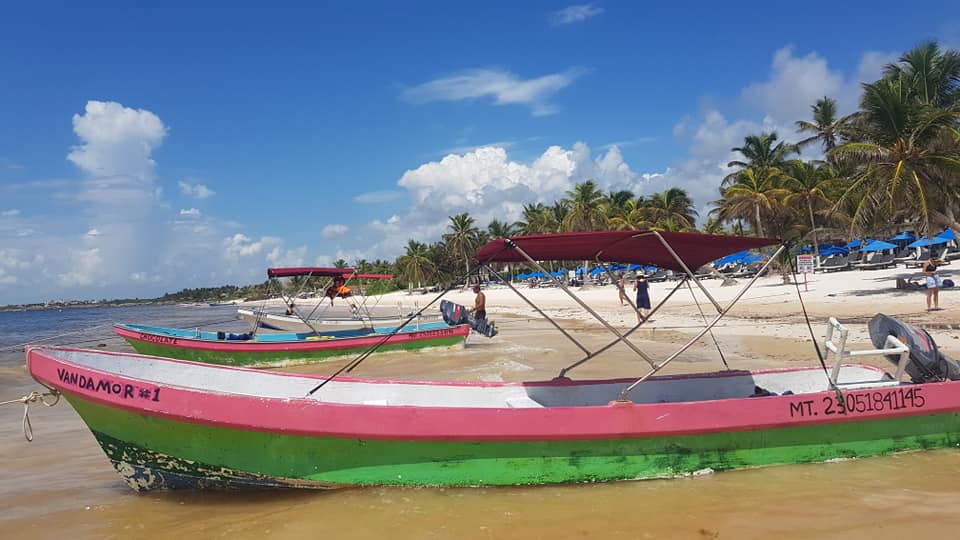
Boat size: Licensed operators use smaller pangas or lancha-style boats that carry eight to twelve passengers. If a company advertises a whale shark tour on a large catamaran with thirty seats, ask specifically how they manage the eight-snorkeler limit.
Group size caps: Reputable operators will tell you upfront that they cap groups at eight snorkelers per shark and rotate entry. If a company does not mention this or implies everyone enters at once, that is a warning sign.
Price: Whale shark tours from Holbox run 2,000–2,800 MXN ($100–140 USD) per person with licensed operators. Significantly cheaper offers often mean unlicensed boats, more aggressive approaches, and worse encounters.
Communication before booking: Good operators answer questions about the protocol in detail, explaining the rotation system, the no-touching rule, and what happens if conditions are poor. If pre-booking communication is vague or just a price quote, look further.
What to Expect on a Whale Shark Tour
Most tours depart from Holbox town dock between 7 and 9 a.m. The boat ride to Cabo Catoche takes one to two hours, and on the way out the guide will explain the protocol, assign snorkelers to rotation groups, and distribute equipment.
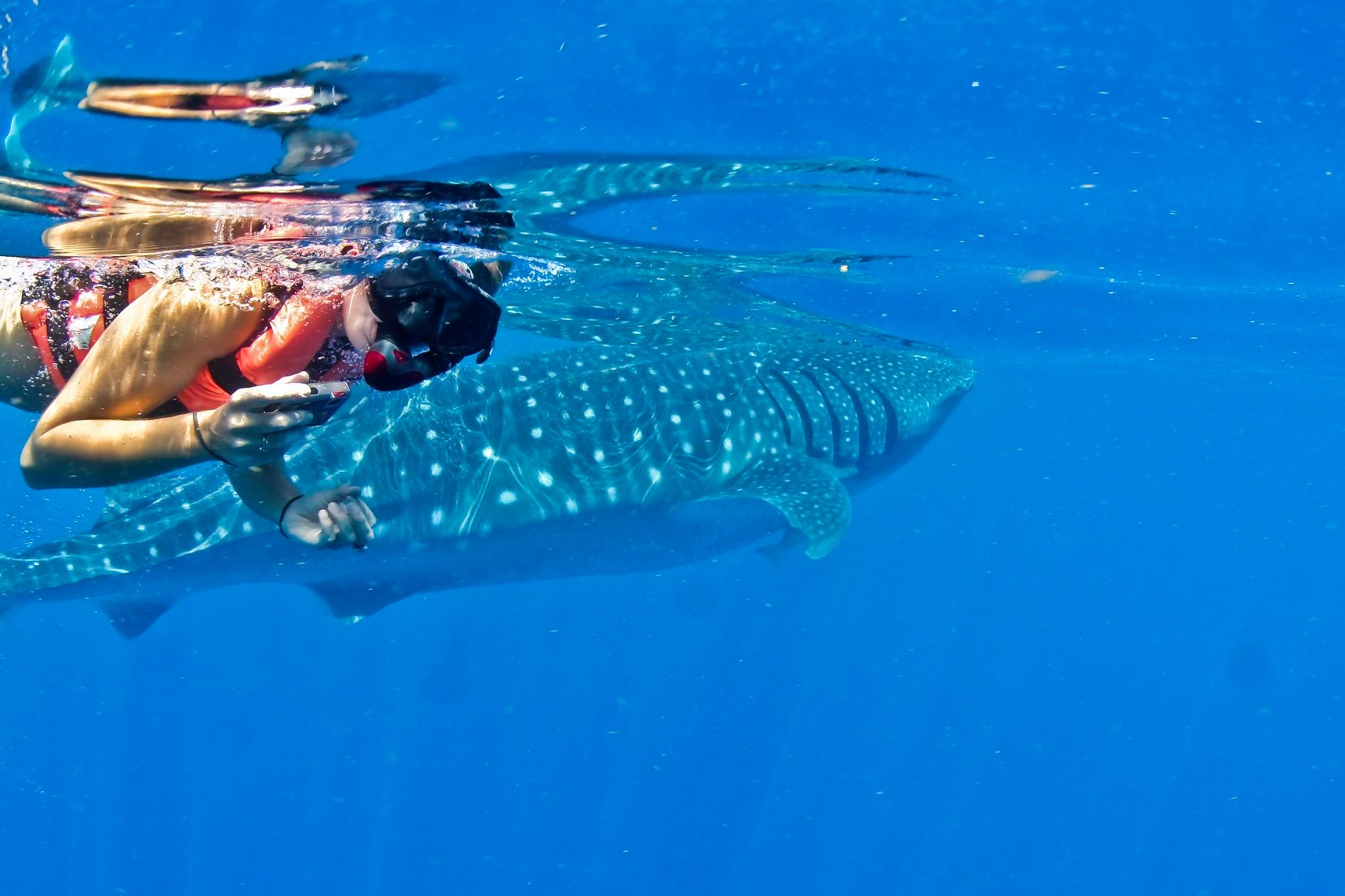
At the feeding grounds, the guide enters the water first to confirm the shark's direction and depth. Then the first pair of snorkelers enters. You slide in, get positioned, and the whale shark continues moving in the direction it was already going while you happen to be in that path. The sharks are 8 to 12 meters long; seeing one at close range underwater, filtering water with a mouth that opens wider than your arm span, is disorienting in the best way.
Each rotation lasts a few minutes, then you are back on the boat and the next pair goes in. Most tours allow two or three rotations per person depending on how many sharks are present and how cooperative they are on that particular day.
The return trip takes another hour or two. Many tours stop at Yalahau Lagoon on the way back, a freshwater spring surrounded by mangroves that offers a cool rinse and a notable contrast to the open ocean you just left.
At Rutopía, we offer a more complete and personalized experience than the standard whale shark tours departing from Holbox. The day begins earlier, at 6:30 a.m., with breakfast, a full briefing, and time to meet your local guide before boarding the boat. In addition to searching for and swimming alongside whale sharks, the itinerary includes opportunities to spot dolphins, rays, turtles, flying fish, and other marine life. On the return journey, you will also stop at a small reef for snorkeling before reaching Santa Paula, where you can swim, relax, and enjoy freshly prepared ceviche. The experience lasts around eight hours, with a return to Holbox between 2:00 and 4:00 p.m.
A Story About Swimming Alongside a Whale Shark
We book whale shark tours through a PROFEPA-licensed operator in Holbox whose lead guide, Capitán Enrique, has been taking groups to Cabo Catoche since 2008. He is the kind of guide who does not raise his voice. When he briefs the group before the first entry, he speaks quietly and everyone leans in.
His standard line before snorkelers enter the water: "You swim alongside them, you don't chase them. The shark decides if you stay."
On one morning in late July, his boat located a shark near the surface about forty minutes into the search. A pair of snorkelers slid in, and the shark, around ten meters by the guide's estimate, moved at its unhurried pace and passed within two meters of the swimmers. One of them, a traveler from Mexico City who had booked the trip three times before, described it afterward as the only thing she had done in her adult life that made her feel genuinely small. Not afraid. Just accurately sized.
Capitán Enrique has turned down groups that exceeded his eight-snorkeler cap, even when it cost him the booking. His view is that the protocol is not a constraint on the experience. It is the reason the experience is still worth having.
Holbox Beyond the Whale Sharks
The whale shark season is the reason most visitors come, but the island has enough to fill two or three days without setting foot on a boat, and it is one of the more distinctive stops across our best Yucatán tours lineup for 2026.
Bioluminescent plankton: From roughly June through September, the waters around Holbox contain high concentrations of dinoflagellates that emit blue-green light when disturbed. Night swims and kayak trips during this period are genuinely spectacular, and the effect is strongest on moonless nights. Most tour operators on the island offer guided bioluminescence tours.
Flamingo lagoons: Punta Cocos, accessible by boat from the island's northern shore, hosts a seasonally large flamingo population — smaller than the colony you will find at Río Lagartos on the north coast, but far easier to reach from the island. The birds feed in the shallow lagoon, particularly around sunset when the light is most dramatic.
Spotted eagle rays: The waters around Holbox, particularly in the lagoon and near the sandbar at Punta Mosquito, regularly hold spotted eagle rays. These are not a scheduled tour attraction; you encounter them snorkeling or wading in shallow water.
The town itself: Holbox town has a central plaza, a handful of good seafood restaurants, and a sandy main street lined with small shops. The island's character is deliberately low-key, with no chain hotels and no traffic lights. The pace, even in high season, is slower than almost anywhere else on the Yucatán coast.
Honest Cost Reality for Peak Season
This island has gotten expensive. The combination of growing international visibility and limited accommodation stock has pushed prices at the upper end of what you might expect for a Mexican beach destination.
In July and August, boutique hotel rooms routinely run 3,500–6,000 MXN per night ($175–300 USD). Budget options exist but book out weeks or months in advance; our how to book Yucatán tours for 2026 travel guide covers when peak-season slots open and how far ahead to lock them in. Combining accommodation with a whale shark tour at 2,000–2,800 MXN and meals puts daily costs at roughly $400–500 USD per person during peak season.
Tailor-made Yucatán itineraries that include Holbox start from $3,000 per person. A 30% deposit is required 30 days before arrival, which matters for July and August bookings because peak-week slots move quickly once they open in spring.
If you are flexible on timing, October and November offer the same island at a fraction of the cost and a fraction of the crowds. The whale sharks are gone, but the bioluminescence often lingers into early October, and the overall experience of the place is quieter and more comfortable. Either way, Holbox is one of the signature stops in our guide to the best Yucatán tours for 2026.
Bookable Tours
Whale Shark Snorkel at Cabo Catoche — A full-day trip from Holbox town to the Cabo Catoche feeding grounds with a PROFEPA-licensed operator, including equipment, guide, and typically a stop at Yalahau Lagoon. Runs 2,000–2,800 MXN per person. Available June through September; best booked two to four weeks in advance for July dates.
Bioluminescent Plankton Night Tour — An evening kayak or swimming tour in the waters around Holbox when dinoflagellate concentrations are high. Best June through early October on dark nights. Usually runs 600–900 MXN per person and takes two to three hours.
Flamingo and Sunset Lagoon Tour — A boat trip to see flamingos in their feeding lagoon, timed for late afternoon light. One to two hours, available year-round; bird numbers vary by season.
Combined Holbox + Yucatán Package — Rutopía builds multi-day trips that include Holbox alongside cenote swims and the ruins at Chichén Itzá.
For the full picture, see our Yucatán tours guide or the ready-made Yucatán itinerary packages for 2026. You can also browse Mexico tours packages to start planning.
Wondering whether a private boat or group tour is the right fit for your group? Our Yucatán private tours vs group tours guide walks through the trade-offs in detail.
FAQ
When is whale shark season at Holbox? The official season runs June through September, with peak concentrations of whale sharks at the Cabo Catoche feeding grounds in July and August. Scientific surveys have recorded gatherings exceeding 400 individuals at the cape during peak weeks.
How far is Cabo Catoche from Holbox? Cabo Catoche sits approximately 35 kilometers northeast of Holbox. The boat ride from the island takes one to two hours depending on sea conditions and where the sharks are feeding on a given day.
Do I need to be a strong swimmer to do a whale shark tour? You need to be comfortable in open water and able to swim with a snorkel for short periods. The sharks are filter feeders and completely harmless to humans. Life jackets are available and guides are in the water with you. Because visibility is often reduced by the plankton bloom and the open-water setting can feel intense, extra caution is recommended for younger travelers and teenagers who are not confident in deep water — our best Yucatán tours for families in 2026 guide covers which water activities suit which ages.
What does a whale shark tour cost? Licensed operators on Holbox charge roughly 2,000–2,800 MXN ($100–140 USD) per person for a full-day whale shark tour. Tours that are significantly cheaper than this range are worth scrutinizing for PROFEPA certification.
How do I know if an operator is licensed? Ask for their PROFEPA certification number before you pay. Legitimate operators will provide it without hesitation. Mexico's PROFEPA agency (gob.mx/profepa) oversees whale shark tour licensing.
Can I touch the whale sharks? No. Touching whale sharks is prohibited under PROFEPA regulations. The point is to swim alongside them as they move through the water, not to interact with them.
How do I get from Cancún to Holbox? Drive or take an ADO bus from Cancún to Chiquilá (approximately 2.5 hours), then take the ferry across Yalahau Lagoon to Holbox (approximately 30 minutes).
Is Holbox good to visit outside whale shark season? Yes. October and November are quieter, cooler, and significantly less expensive. The bioluminescent plankton often persists into early October, and the island's lagoons and wildlife are accessible year-round. If your main goal is whale sharks, you need to come between June and September.
What else can I do in Holbox besides whale shark tours? Night bioluminescence swims, flamingo lagoon trips, snorkeling with spotted eagle rays, and exploring the car-free town. It is a strong two- to three-day destination even outside whale shark season.
Is Holbox expensive? In July and August, yes. Boutique hotel rooms run 3,500–6,000 MXN per night ($175–300 USD), and combining accommodation, a whale shark tour, and meals puts daily costs at around $400–500 USD per person during peak season. Prices drop substantially in shoulder and low season.
Looking for more Mexico travel resources? Be sure to check out:
Escrito por
Design your trip to Mexico with a local travel designer. Unique activities and lodging, 100% tailor-made and stress-free.
.webp)
Publicaciones relacionadas
Duration:
Blog title heading will go here
Days
que-hacer-en-la-ciudad-de-mexico-en-enero-actividades-y-eventos-recomendados
Descubre las mejores actividades y eventos en la Ciudad de México durante enero. Desde festivales culturales hasta experiencias únicas, ¡haz de tu visita una aventura inolvidable!
Leer más

Únete a nosotros sobre esto
viaje
Planifica tu viaje con nosotrosviaje
Únete a nuestro newsletter para mantenerte al tanto de novedades y consejos para tus viajes.
¡Vaya! Se ha producido un error al enviar el formulario.
Ready to experience the real Mexico?
Travel with local experts and get hangds-on supoort every step of the way... from planning to arrival.


Your Travel Companion in Mexico, 24/7
We're with you from arrival to departure via WhatsApp for anything you need.
Trusted by thousand of travelers with a 4.9 rating on Google