Personnaliser mon voyage


Les meilleurs circuits d'aventure au Mexique à réserver en 2026
Les meilleurs circuits d'aventure au Mexique pour 2026 : treks dans la jungle du Chiapas, cénotes du Yucatán, randonnées dans la Sierra d'Oaxaca et surf sur la côte Pacifique. Tarifs, rythmes et sélection d'opérateurs.


Contenu
Ils mettent en valeur notre travail



Des voyages uniques au Mexique.
Fait sur mesure pour vous.
Demandez votre voyageFait sur mesure pour vous.
Laissez un guide local vous aider à planifier votre voyage au Mexique
Commencez un voyage sur mesureEn bref : les circuits d'aventure au Mexique
- Quatre types d'aventure : Aquatique (plongée en cénotes, snorkeling avec les requins-baleines, kayak à Bacalar), jungle et ruines (Palenque, canyon du Sumidero, forêt tropicale lacandon), montagne (randonnée dans la Sierra Norte, observation ornithologique en forêt de nuages, acclimatation à l'altitude), littoral (Holbox, surf sur le Pacifique, kayak dans la mer de Cortés).
- Fourchette de prix : 1 900 $ à 4 800 $ par personne pour un séjour axé sur l'aventure de 7 à 14 jours, milieu de gamme. Les formats en petit groupe sont plus abordables.
- Durée idéale : 7 à 8 jours pour explorer une région. Douze à 14 jours pour en combiner deux.
- La question du guide : Un guide local spécialisé transforme votre expérience sur n'importe quel itinéraire de plusieurs jours. La Sierra Norte en est l'exemple le plus frappant : un naturaliste zapotèque expert en ornithologie peut vous faire découvrir douze espèces endémiques en une matinée, là où une randonnée en solo n'en révélerait aucune en une semaine.
- Le Mexique a accueilli 42,2 millions de visiteurs internationaux en 2023, selon le SECTUR (Secrétariat au tourisme du Mexique), et les formats de tourisme d'aventure et de nature connaissent une croissance plus rapide que tout autre segment depuis 2021.
- Délai de réservation : 5 à 7 mois pour les activités en haute saison (requins-baleines de juin à septembre, Día de Muertos). Deux à trois mois pour les itinéraires d'aventure classiques.
Si vous souhaitez que notre équipe conçoive un itinéraire d'aventure adapté à vos terrains de prédilection, commencez par consulter notre page dédiée aux circuits et séjours au Mexique.
Le Mexique est bien plus vaste que ce que la plupart des voyageurs imaginent. Le pays offre une diversité géographique exceptionnelle, allant de la jungle au niveau de la mer à Palenque aux volcans culminant à plus de 5 000 mètres près de Mexico, des cénotes des Caraïbes aux spots de surf du Pacifique. Une telle variété d'aventures est rare pour un seul et même pays.
Ce que couvrent nos circuits d'aventure au Mexique

Le tourisme d'aventure au Mexique se décline en quatre catégories. Activités aquatiques : plongée et snorkeling dans les cénotes du Yucatán, nage avec les requins-baleines au large d'Holbox (de juin à septembre), kayak sur la Laguna de Bacalar, surf sur les vagues du Pacifique à Puerto Escondido ou à Todos Santos en Basse-Californie. Jungle et ruines : randonnée vers Palenque à l'aube avant l'arrivée des bus touristiques, balades en panga dans le canyon du Sumidero au Chiapas, treks de plusieurs jours près de la forêt tropicale lacandone, à proximité de la frontière guatémaltèque. Montagne : randonnée et observation ornithologique dans la forêt de nuages de la Sierra Norte à Oaxaca, randonnées d'acclimatation à l'altitude vers les champs de glace de l'Iztaccíhuatl au-dessus de Mexico, circuits en VTT dans les hautes terres de la Sierra Madre. Littoral : kayak de mer à Los Cabos, excursions en paddle dans la réserve de biosphère de Sian Ka'an dans le Yucatán, observation de la bioluminescence à Puerto Escondido — un phénomène naturel nocturne causé par des micro-organismes — rafting pour débutants à Huatulco, et croisières à la voile dans la mer de Cortés.
Mais la catégorie importe moins que le guide. Notre aperçu des meilleurs circuits au Mexique en 2026 explique comment le format aventure s'articule avec les styles de voyages culturels et privés pour différents types de voyageurs.
Les meilleures régions pour des circuits d'aventure au Mexique par type

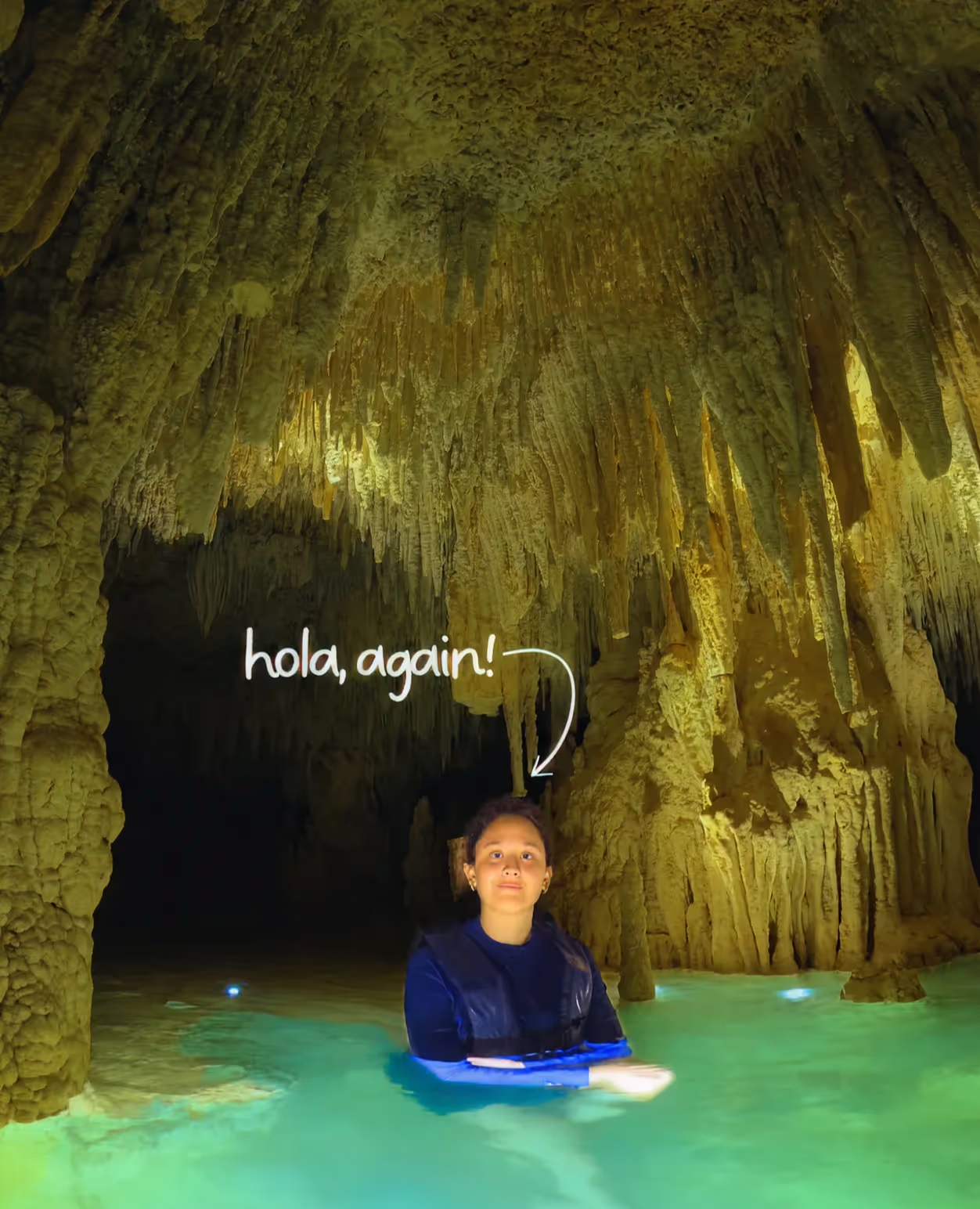
Yucatán : eau et ruines. Le réseau de cénotes de la région constitue l'un des plus grands systèmes de plongée au monde. Le Sistema Sac Actun, la plus longue grotte inondée connue au monde, s'étend sous toute la péninsule. Les cénotes de surface comme Ik Kil et le groupe de Homún sont accessibles aux amateurs de snorkeling. Une certification en plongée souterraine vous ouvre un monde totalement différent sous la surface. Ajoutez à cela une sortie en kayak à Sian Ka'an, une journée avec les requins-baleines à Holbox (selon la saison) et Chichén Itzá au lever du soleil pour une semaine d'aventure complète dans le Yucatán. Consultez notre itinéraire de circuit à Mexico et dans le Yucatán pour découvrir comment combiner ces deux destinations.
Explorez le côté sauvage de Chemuyil lors d'une balade à vélo à travers les sentiers de la jungle et les cénotes. Guidée par des habitants de la communauté, cette expérience comprend du vélo, de la baignade dans des cénotes aux eaux cristallines et des moments privilégiés en pleine nature sur la Riviera Maya. Une excellente option pour les voyageurs en quête d'une expérience active et différente, loin des zones les plus touristiques.
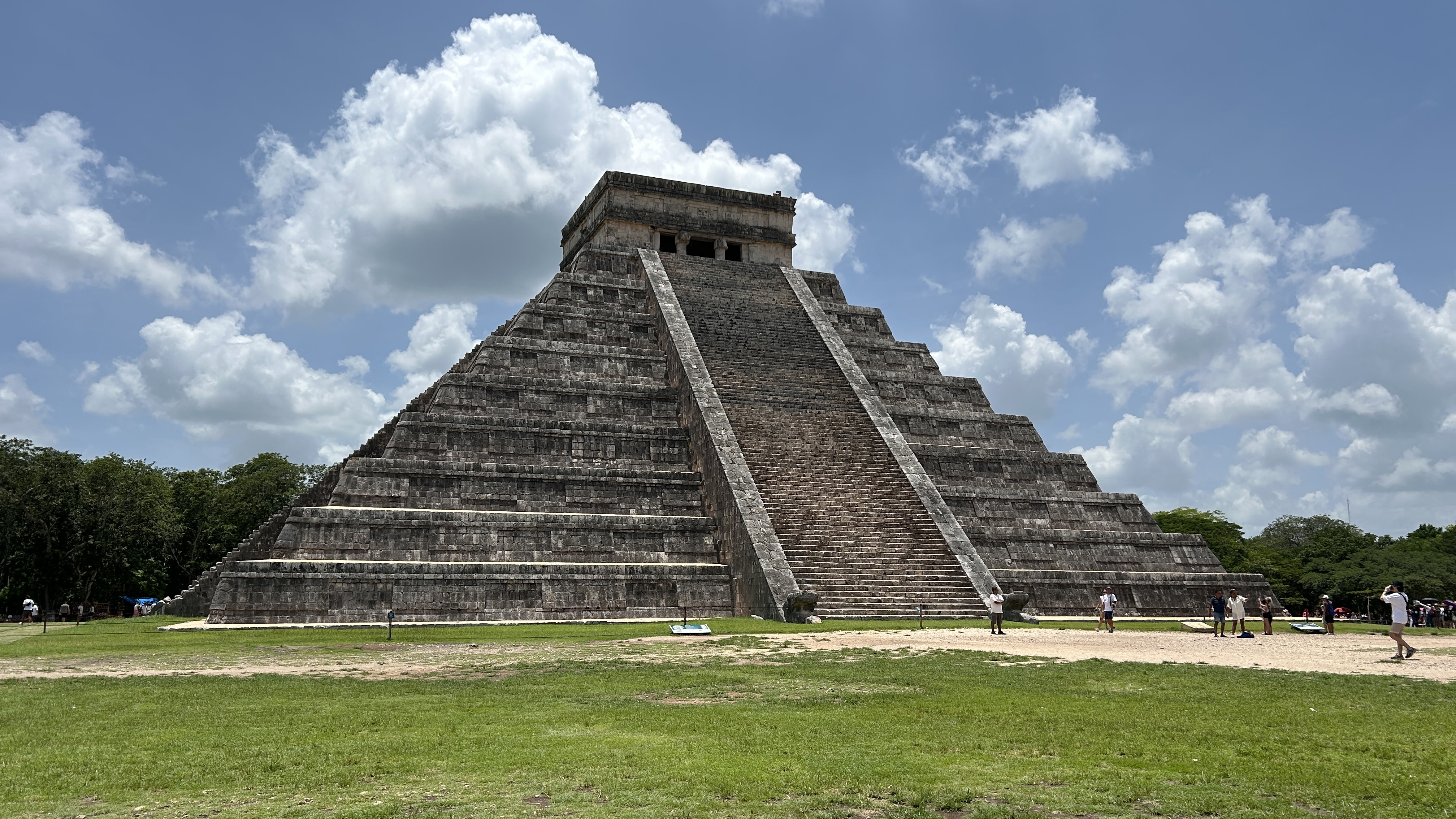
Vous pouvez également faire du vélo à Cobá sur la route entre Tulum et Valladolid. C'est le moyen le plus efficace de profiter de votre trajet entre deux villes. Explorer Cobá à vélo vous permet de découvrir la jungle luxuriante du Yucatán et d'admirer l'une des pyramides les plus hautes de la région, qu'il est encore possible de gravir. Vous pouvez combiner cette expérience avec une sortie en kayak à Punta Laguna et vous rafraîchir dans un cénote aux eaux cristallines,
Chiapas : jungle et rivière. Le canyon du Sumidero est une gorge de 1 000 mètres de profondeur qui s'apprécie idéalement en bateau au niveau de l'eau, avec ses parois de basalte qui se referment au-dessus de vous et ses crocodiles visibles sur les rives. Les ruines de Palenque sont nichées au cœur d'une forêt tropicale vivante. La zone archéologique borde le bassin versant de l'Usumacinta, et les singes hurleurs se déplacent dans la canopée pendant votre visite du site. Pour le contexte culturel et naturel de ces itinéraires, cet article détaille les expériences communautaires qui se marient parfaitement avec vos journées actives. Découvrez l'itinéraire complet du Chiapas dans notre circuit Oaxaca et Chiapas.
Oaxaca : montagnes, forêts de nuages et aventures côtières. Les Pueblos Mancomunados de la Sierra Norte proposent des circuits de randonnée et de VTT sur plusieurs jours, reliant huit communautés zapotèques situées entre 2 500 et 3 200 mètres d'altitude. À cette hauteur, la forêt de nuages abrite plus de 400 espèces d'oiseaux, dont plusieurs sont endémiques à Oaxaca. Pour en savoir plus sur les initiatives de conservation communautaire, consultez notre guide des écotours au Mexique.
Vivez une aventure palpitante à Huatulco, alliant nature et adrénaline. Parcourez des sentiers pittoresques en quad au cœur d'une végétation luxuriante, puis profitez d'une descente en rafting sur la rivière Copalita. Cette activité est idéale pour les voyageurs en quête d'une manière active et amusante d'explorer les paysages naturels de la côte d'Oaxaca.
Basse-Californie : littoral et vie marine. Kayak de mer dans la mer de Cortés, observation des baleines grises dans la lagune de San Ignacio (de janvier à avril), surf sur les vagues du Pacifique à Todos Santos. Un Mexique bien différent du sud, où le format en petit groupe est souvent plus adapté que le privé pour les expéditions en kayak sur plusieurs jours.
Expériences incontournables autour desquelles planifier votre voyage

Récit d'une matinée ornithologique dans la Sierra Norte : Don Ernesto Pablo Martínez guide les visiteurs sur les sentiers de la forêt de nuages au-dessus de Benito Juárez, dans les Pueblos Mancomunados, depuis plus de quinze ans. Son tarif journalier est de 850 MXN (environ 43 USD), auxquels s'ajoute le droit d'entrée communautaire. Par une matinée d'hiver, dans la forêt de chênes et de pins à 3 000 mètres d'altitude, il a repéré un trogon montagnard au chant en quarante secondes au cœur de la canopée dense. À 10 heures, le groupe avait déjà observé douze espèces rares : la chachalaca d'Oaxaca, le bruant à sourcils blancs, une paruline à ailes peintes et neuf autres. Une telle matinée exige l'expertise de quelqu'un qui arpente ces sentiers chaque semaine depuis quinze ans. Consultez notre guide des itinéraires guidés au Mexique pour savoir comment intégrer une journée dans la Sierra Norte à un itinéraire plus long à Oaxaca.
Autres expériences autour desquelles structurer un itinéraire d'aventure :
- Snorkeling avec les requins-baleines à Holbox (juin à septembre) : Par CONABIO, le rassemblement au large d'Isla Holbox est l'un des plus importants au monde. Les bateaux partent tôt le matin avec des groupes de six personnes. Nagez aux côtés d'un requin de 10 mètres pendant quinze minutes et votre sens des proportions sera totalement bouleversé. Réservez deux à trois mois à l'avance pour juillet.
- Snorkeling dans les cénotes, région de Tulum : Le Sistema Dos Ojos et le Gran Cenote sont accessibles aux snorkelers sans formation technique. Des passages de grottes illuminés par des rayons de soleil. À faire dès l'ouverture.
- Excursion en panga dans le canyon du Sumidero, Chiapas : Une balade fluviale de 35 km au pied d'un canyon aux parois abruptes. Le nombre de crocodiles n'est pas une métaphore. Vous en verrez entre dix et vingt. Idéal en excursion d'une demi-journée depuis San Cristóbal.
- Circuit VTT dans la Sierra Norte : Trois à cinq jours entre les villages Mancomunados sur des sentiers de forêt de nuages. La location de vélos et les cartes des sentiers sont disponibles à Llano Grande, et la coopérative locale peut vous organiser les services d'un guide.
Conseil d'expert : Pour la saison des requins-baleines à Holbox, les meilleurs bateaux sont ceux des pêcheurs locaux qui ont reconverti leurs pangas, plutôt que les flottes venant de Cancún. Les bateaux locaux partent plus tôt, accueillent des groupes plus restreints et les capitaines savent exactement où les requins se nourrissent durant la semaine. Nos partenaires peuvent réserver ces sorties directement pour vous.
Combien coûtent les circuits d'aventure au Mexique
Les coûts varient davantage pour les circuits d'aventure que pour les circuits culturels, car le type d'activité détermine le format du groupe.
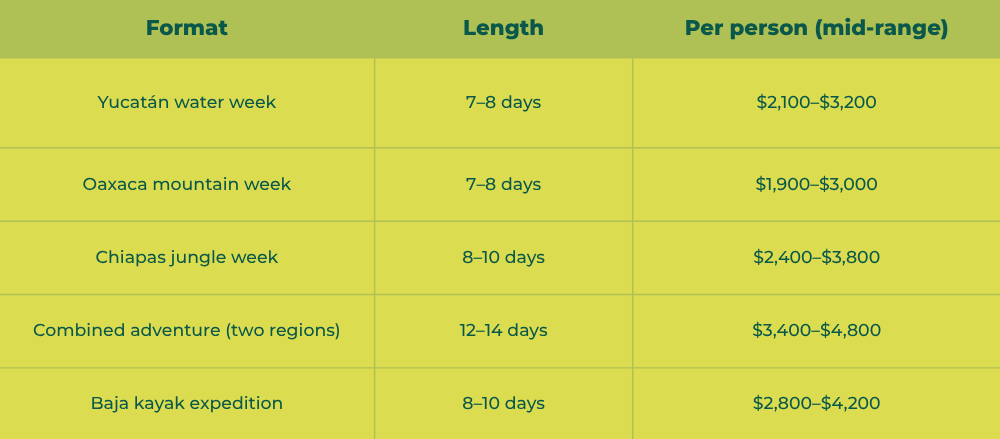
Les prix ci-dessus sont par personne, en format guide privé, hors vols internationaux (400 à 900 $ depuis les principaux hubs nord-américains). Les pourboires pour un guide d'aventure spécialisé se situent entre 900 et 1 500 MXN (environ 45 à 75 USD) par personne et par jour. Comparatif complet des coûts dans notre guide transparent sur le coût des circuits au Mexique.
Conseil d'expert : L'option de randonnée de refuge en refuge dans la Sierra Norte coûte entre 600 et 900 MXN (environ 30 à 45 USD) par personne et par nuit, repas inclus. C'est une fraction du prix demandé par les agences de voyages organisés pour un terrain similaire, et l'argent reste au sein des communautés zapotèques qui entretiennent les sentiers. Notre guide du tourisme durable explique pourquoi ce modèle fonctionne.
Comment choisir un voyagiste d'aventure au Mexique
Trois questions pour distinguer les opérateurs qui organisent ces voyages de ceux qui ne font que les revendre.
- Qui est votre guide sur place ? Un opérateur basé à Mexico qui réserve un guide à Palenque via un sous-traitant n'est pas la même chose qu'un opérateur ayant un membre d'équipe attitré sur le site. Demandez le nom et le parcours du guide prévu pour votre itinéraire. Rutopía est une entreprise certifiée B Corp travaillant avec des partenaires locaux qui sont les contacts désignés pour chaque activité.
- Quelle est la taille maximale des groupes pour les activités sportives ? Six personnes maximum pour la plongée en grotte et les randonnées techniques. Au-delà de huit personnes sur un bateau pour observer les requins-baleines, l'expérience perd beaucoup de sa qualité. Les opérateurs qui ne peuvent pas vous donner de chiffre n'en ont tout simplement pas.
- Quel est le protocole de sécurité ? Tout voyagiste d'aventure sérieux doit disposer d'un protocole d'urgence écrit pour chaque type d'activité : itinéraires d'évacuation, ratios guide/voyageur et plans de secours en cas de changement des conditions. Demandez-le par écrit. Un professionnel vous le fournira. Un revendeur vous enverra une brochure publicitaire.
Si vous hésitez entre aventure et culture pour votre premier voyage, consultez notre guide des meilleurs circuits au Mexique pour une première visite. Pour des idées d'aventures adaptées aux enfants, notre guide des circuits en famille au Mexique détaille les expériences adaptées à chaque âge.
Circuits d'aventure au Mexique réservables
.jpg)
- Rutopía : Aventure sur mesure à Oaxaca et au Chiapas, 14 jours. Observation ornithologique dans la Sierra Norte, canyon du Sumidero, Palenque à l'aube, nuits en cabanes communautaires. À partir de 3 400 $ par personne. Planifiez votre itinéraire d'aventure avec notre équipe
- G Adventures : Yucatán Actif. Expédition en petit groupe de 8 jours : cénotes, jungle, ruines et une journée de kayak. À partir de 1 350 $ par personne. Voir sur Viator
- Intrepid Travel : Kayak de mer en Basse-Californie. Expédition en petit groupe de 8 jours dans la mer de Cortés. À partir de 2 450 $ par personne. Voir sur GetYourGuide
- Airbnb Experiences : Randonnée dans la Sierra Norte avec un guide zapotèque. Circuit d'une journée complète dans les Pueblos Mancomunados, option observation d'oiseaux. À partir de 65 USD. Voir sur Airbnb Experiences
FAQ sur les circuits d'aventure au Mexique
Quelles sont les meilleures activités d'aventure au Mexique ?
Les cinq plus emblématiques : plongée avec tuba dans les cénotes (Yucatán), nage avec les requins-baleines (Holbox, de juin à septembre), randonnée dans la forêt de nuages avec un guide ornithologue (Sierra Norte), excursion en panga dans le canyon du Sumidero (Chiapas) et VTT sur plusieurs jours (Pueblos Mancomunados). Pour une comparaison complète des formats, consultez notre aperçu des meilleurs circuits au Mexique.
Quelle est la meilleure période pour un circuit d'aventure au Mexique ?
Tout dépend de l'activité. Requins-baleines : de juin à septembre à Holbox. Observation des baleines grises en Basse-Californie : de janvier à avril. Randonnée dans la Sierra Norte : de novembre à avril (saison sèche, sentiers dégagés). Cénotes : toute l'année, bien que la visibilité sous l'eau soit optimale de décembre à avril. La visibilité de la bioluminescence dépend des phases lunaires et des conditions naturelles ; nous vous recommandons donc de consulter votre spécialiste voyage pour connaître les meilleures dates. Détails complets dans notre guide de la saisonnalité au Mexique.
Le Mexique est-il sûr pour le tourisme d'aventure ?
Oui, sur les itinéraires que nous proposons. Le Yucatán, l'Oaxaca et le centre du Chiapas présentent des niveaux de sécurité élevés pour les voyageurs suivant des itinéraires d'aventure classiques. Une mise en garde importante : vérifiez toujours le protocole de sécurité et le plan d'évacuation d'urgence de l'opérateur avant de réserver des activités techniques. Analyse régionale complète dans notre guide de sécurité au Mexique.
Puis-je combiner aventure et expériences culturelles lors d'un même voyage ?
Oui, c'est d'ailleurs ainsi que notre équipe conçoit ses meilleurs itinéraires. Une matinée d'ornithologie dans la Sierra Norte peut précéder un après-midi au marché dominical de Tlacolula. Palenque et le canyon du Sumidero ne sont qu'à deux heures de route l'un de l'autre. Notre guide des circuits culturels au Mexique montre comment la dimension culturelle enrichit les itinéraires d'aventure.
Quel est le niveau physique requis pour les circuits d'aventure au Mexique ?
Cela varie. La plongée avec tuba dans les cénotes et le canyon du Sumidero sont accessibles à la plupart des niveaux de forme physique. Le circuit de la Sierra Norte, à 3 000 mètres d'altitude, exige une bonne condition cardiovasculaire et une acclimatation à l'altitude. Les ascensions de l'Iztaccíhuatl nécessitent une expérience préalable en alpinisme. Notre équipe adapte l'itinéraire à votre condition physique réelle.
Quelle est la différence entre un circuit d'aventure au Mexique et un écotour ?
Les circuits d'aventure sont axés sur l'activité (vous pratiquez une discipline physique : plongée, randonnée, kayak). Les écotours sont axés sur l'accès (vous visitez des écosystèmes accompagnés d'un guide formé à la conservation). De nombreux itinéraires au Mexique combinent les deux. Consultez notre article sur les écotours au Mexique axés sur la nature pour découvrir la distinction en pratique.
Combien de temps à l'avance dois-je réserver un circuit d'aventure au Mexique ?
Quatre à six mois pour les activités en haute saison (requins-baleines, baleines grises, Día de Muertos). Deux à trois mois pour la plupart des itinéraires en basse saison. Consultez notre guide complet des périodes de réservation au Mexique.
Que doit inclure le prix d'un circuit d'aventure au Mexique ?
Un guide privé ou naturaliste, le transport dans le pays, l'hébergement (des cabanes communautaires aux hôtels de charme selon l'itinéraire), les frais d'entrée dans les zones naturelles et un protocole d'urgence écrit pour chaque activité. Les vols internationaux et l'assurance voyage sont presque toujours facturés séparément. Consultez notre guide des forfaits vacances au Mexique pour voir à quoi ressemblent les tarifs groupés par rapport aux tarifs séparés.
Looking for more Mexico travel resources? Be sure to check out:
- Les meilleurs circuits au Mexique en 2026 : Comparatif de tous les formats
- Écotours au Mexique : Expériences axées sur la nature dans les régions les plus sauvages
- Itinéraire de circuit à Oaxaca et au Chiapas : Jungle, canyon et forêt de nuages
- Itinéraire de circuit à Mexico et dans le Yucatán : Des ruines à la côte
- Combien coûtent les circuits au Mexique ? Une analyse en toute transparence
- Quand réserver vos circuits au Mexique : Saisonalité par région
Rédigé par
Design your trip to Mexico with a local travel designer. Unique activities and lodging, 100% tailor-made and stress-free.
.webp)

Rejoignez-nous à ce sujet
voyage
Planifiez votre voyage avec nousvoyage
Inscrivez-vous à notre newsletter pour être tenu au courant des nouveautés.
Oups ! Une erreur s'est produite lors de l'envoi du formulaire.
Ready to experience the real Mexico?
Travel with local experts and get hangds-on supoort every step of the way... from planning to arrival.


Your Travel Companion in Mexico, 24/7
We're with you from arrival to departure via WhatsApp for anything you need.
Trusted by thousand of travelers with a 4.9 rating on Google