Personnaliser mon voyage


Les meilleures visites à pied de Mexico pour les voyageurs en 2026
Visites à pied de Mexico par quartier : Centro Histórico, Roma-Condesa, Coyoacán et San Ángel. Itinéraires 2026 conçus par l'équipe de voyage CDMX de Rutopía.


Contenu
Ils mettent en valeur notre travail



Des voyages uniques au Mexique.
Fait sur mesure pour vous.
Demandez votre voyageFait sur mesure pour vous.
Laissez un guide local vous aider à planifier votre voyage au Mexique
Commencez un voyage sur mesureMexico est à la fois l'une des meilleures villes au monde pour la marche et l'une des plus déroutantes. La meilleure, car chaque quartier offre une telle densité d'architecture, d'histoire, d'art urbain, de gastronomie et de vie sociale qu'il récompense cette attention lente et flâneuse que seule la marche permet. Déroutante, car la ville est immense, les quartiers sont éloignés les uns des autres et la circulation entre eux n'est pas adaptée aux piétons. L'approche pratique : choisissez un quartier et explorez-le en profondeur, plutôt que d'essayer d'en parcourir plusieurs à pied. Une excellente visite à pied du Centro Histórico vous en apprendra plus sur le Mexique qu'une visite précipitée de six quartiers. Pour une journée de marche intégrée à votre voyage à Mexico, notre équipe adapte le quartier à vos centres d'intérêt.
Comment fonctionnent les visites à pied dans la géographie de Mexico
Il est préférable de considérer les quartiers de Mexico comme des destinations distinctes, car c'est précisément ce qu'ils sont. Le Centro Histórico et Coyoacán sont distants de 14 km. Roma Norte et le Centro sont séparés de 5 km. Ces distances ne sont pas praticables à pied à l'échelle de la ville ; elles le sont uniquement au sein de chaque quartier.
Une visite à pied bien conçue à Mexico couvre un quartier en 2 à 3 heures, en explorant en profondeur les rues, les bâtiments et la vie sociale de cette zone spécifique. Le transport entre les quartiers se fait en métro, en Metrobus ou en Uber. La marche est l'expérience ; le trajet entre les quartiers n'est que de la logistique.
Cela signifie également qu'une visite « des points forts » couvrant quatre districts en une seule journée ne donne qu'une vision superficielle de chacun d'eux. Un quartier, bien exploré, a bien plus de valeur. Les voyageurs qui effectuent une marche ciblée dans le Centro le premier jour et une autre à Coyoacán le troisième jour repartent avec une compréhension plus cohérente de la ville que ceux qui traversent six quartiers en voiture en une seule matinée.
Centro Histórico : la marche la plus immersive de Mexico
Le Centro Histórico est le territoire de marche le plus riche de Mexico pour la simple raison qu'il concentre la plus grande superposition historique. Le centre cérémoniel aztèque (Templo Mayor) est excavé à côté du Zócalo ; la cathédrale coloniale a été construite avec les pierres des temples démantelés ; le Palacio Nacional, où les fresques de Diego Rivera recouvrent les murs de la cage d'escalier, a été érigé sur les ruines du palais de Moctezuma.
Une marche ciblée dans le Centro comprend :
Le Zócalo lui-même — 46 000 mètres carrés de place ouverte, bordée par la cathédrale métropolitaine, le Palacio Nacional et l'hôtel de ville, où le drapeau national est hissé et abaissé par l'armée à l'aube et au crépuscule. Comprendre l'histoire politique et spatiale du Zócalo (qui constitue l'espace public central de ce site depuis le centre cérémoniel aztèque, en passant par la période coloniale jusqu'à nos jours) nécessite un guide.
Zone archéologique du Templo Mayor : les vestiges excavés du temple principal aztèque, découverts en 1978, adjacents au Zócalo. L'entrée est distincte de celle du Zócalo (aucun droit d'entrée n'est requis pour la place). Le musée du Templo Mayor, rattaché au site, abrite les artefacts aztèques les plus significatifs de la ville, dont le disque de Coyolxauhqui.
Intérieur du Palacio Nacional : ouvert au public sans droit d'entrée (un passeport ou une pièce d'identité peut être demandé à l'entrée). L'œuvre de Rivera, « Épopée du peuple mexicain à travers son histoire », recouvre l'escalier principal de fresques qui retracent l'histoire du pays, de l'époque précolombienne jusqu'à la Révolution. La plupart des visiteurs y passent 20 minutes ; une heure en compagnie d'un guide capable de décoder les panneaux offre une expérience tout autre.
Les rues au nord-est du Zócalo (República de Uruguay, Mesones, El Salvador) : un patrimoine architectural colonial, un commerce de marché traditionnel, le quartier de l'imprimerie et des stands de nourriture installés au même endroit depuis des générations.

Durée: 2,5 à 3 heures pour une promenade ciblée dans le Centro. 4 à 5 heures si l'on inclut une visite approfondie du musée du Templo Mayor.
Chez Rutopia, nous invitons également les voyageurs à découvrir le centre historique de Mexico à travers les yeux d'un local : un guide mexicain qui vit dans la capitale et sait révéler la ville au-delà de son image de carte postale. Cette expérience est conçue pour ceux qui souhaitent ressentir le Mexique authentique, et non sa version touristique, afin de comprendre comment l'histoire, le quotidien, les traditions et les détails cachés s'entremêlent au cœur de la ville.
Ce qui distingue cette expérience d'une visite guidée traditionnelle, c'est la manière dont elle invite les voyageurs à lire le centre historique de Mexico comme une chronologie vivante plutôt que comme une simple liste de monuments. Ici, la cathédrale métropolitaine, le Palais national, les ruines antiques et les rues coloniales ne sont pas seulement des étapes sur le chemin ; ils deviennent les strates d'une histoire qui relie le passé aztèque au rythme du Mexique moderne.
La promenade va également au-delà de l'évidence. Aux côtés des monuments emblématiques de la ville, les voyageurs sont guidés vers de petits détails locaux, des recoins cachés et des trésors du quotidien qui passent souvent inaperçus lors des visites classiques. Cela confère à l'expérience un rythme plus intime et humain, au plus proche de la manière dont les habitants ressentent et parcourent leur ville.
Une simple dégustation d'une boisson locale appréciée (l'atole) ajoute une dimension supplémentaire à la visite. C'est l'occasion de faire une pause, d'observer et de s'imprégner de l'énergie du centre historique à travers ses sons, ses saveurs et sa vie de rue. Plutôt que de simplement apprendre des faits sur la ville, les voyageurs sont invités à en vivre l'atmosphère de l'intérieur.
Roma Norte et Condesa : la promenade design et gastronomique
Le circuit à pied Roma-Condesa est organisé autour d'un siècle différent : le XXe plutôt que le XVIe. Ces deux quartiers se sont développés durant le Porfiriato (la dictature modernisatrice de 30 ans de Porfirio Díaz, qui prit fin en 1910) et les décennies suivantes, se remplissant d'immeubles d'appartements Art nouveau, Art déco et fonctionnalistes, de parcs et de cette culture des cafés qui définit encore aujourd'hui le secteur.
La promenade couvre :
Le Parque México à Condesa : ce parc ovale est le cœur du quartier, entouré d'une ceinture d'immeubles art déco et bordé de sentiers de jogging, de chiens en promenade et de cette énergie urbaine décontractée qui explique pourquoi tout le monde veut vivre ici.
L'Avenida Ámsterdam : une boucle piétonne bordée de cafés ombragés et de boutiques qui encercle le Parque México. Une promenade ici est l'expérience incontournable de Condesa.
L'Álvaro Obregón à Roma Norte : un large boulevard central animé par ses marchés du samedi matin, ses cyclistes le week-end et une concentration de restaurants et de cafés qui a fait la renommée internationale de la scène gastronomique de Roma.
Le street art à Roma Sur : moins embourgeoisé, le quartier de Roma Sur conserve d'importantes fresques murales sur les façades, réalisées par des artistes de renom ou des collectifs locaux. Un guide qui sait quels murs observer et ce qu'ils racontent fait toute la différence entre simplement passer devant une œuvre et la comprendre.
Durée: 2 à 3 heures pour un tour du quartier. Peut être prolongé par une expérience culinaire — cette balade se marie parfaitement avec une visite gastronomique.

Coyoacán : la balade au cœur du village
La dynamique des visites à pied à Coyoacán diffère de celle du Centro ou de Roma, car le quartier possède une structure plus intime, semblable à celle d'un village. Le centre historique de Coyoacán — la place, l'église, le marché et les rues adjacentes — se parcourt en 45 minutes. La richesse de la visite réside dans les étapes choisies et l'histoire qu'elles renferment.
Le circuit complet à pied de Coyoacán combine la découverte du quartier avec le musée Frida Kahlo (entrée sur réservation, à réserver séparément), le musée Léon Trotsky (aucune réservation nécessaire) et l'Anahuacalli pour une excursion d'une demi-journée. Le guide du musée Frida Kahlo détaille les modalités de réservation ; cet article se concentre sur le contexte du quartier.
Incontournables : Jardín Centenario et Jardín Hidalgo : les deux places jumelles qui forment le cœur de Coyoacán, reliées par une courte rue piétonne. Marché artisanal le dimanche, calme des cafés en semaine. Église San Juan Bautista : édifice du XVIe siècle situé sur la place principale. L'ancienne demeure de La Malinche (traductrice et compagne autochtone d'Hernán Cortés) — l'attribution du bâtiment est contestée, mais le récit qui l'entoure fait partie intégrante de l'histoire de Coyoacán.
Durée: 2 à 3 heures pour la promenade dans le quartier seul ; 4 à 5 heures si vous incluez les deux musées.
San Ángel : pavés coloniaux et marché du samedi
San Ángel est le quartier le plus manifestement colonial de Mexico. Ses haciendas et demeures des XVIe et XVIIe siècles ont été transformées en restaurants, galeries et résidences, reliées par des rues pavées qui semblent totalement isolées de la mégalopole urbaine environnante. Le quartier est particulièrement agréable le samedi, lorsque le Bazar del Sábado (marché du samedi) investit la Plaza San Jacinto avec ses artisans proposant des créations de qualité.
Le circuit à pied est court — le centre historique se parcourt en 90 minutes — mais extrêmement plaisant. Le Museo de El Carmen (un ancien couvent carmélite abritant de l'art colonial et des momies dans sa crypte) se trouve sur le parcours et mérite une visite de 45 minutes. Les terrasses des restaurants qui bordent les rues de San Ángel comptent parmi les meilleurs endroits pour déjeuner en plein air à Mexico.
Durée: 2 à 3 heures en incluant le Bazar et le musée. À combiner idéalement avec Coyoacán pour une journée complète dans le sud de la ville.
Polanco : galeries, musées et bordure de Chapultepec
Polanco est le moins traditionnel des quartiers de Mexico propices à la marche. Développé au milieu du XXe siècle comme un quartier résidentiel haut de gamme, il présente une structure en damier et de larges trottoirs qui reflètent cette planification. Ce qui lui manque en profondeur historique, il le compense par sa concentration d'institutions culturelles.
Le circuit à pied de Polanco s'articule autour de :
Museo Soumaya (Plaza Carso) : Le musée aux courbes distinctives recouvertes de tuiles en aluminium, conçu par Fernando Romero et financé par Carlos Slim. Entrée gratuite. Ses collections comprennent la plus grande sélection de sculptures d'Auguste Rodin en dehors de la France, ainsi que de l'art colonial mexicain, des pièces précolombiennes et des maîtres européens du XIXe siècle. L'architecture elle-même vaut le détour, même sans entrer.
Museo Jumex (adjacent au Soumaya) : Collection d'art contemporain et programmation internationale. Entrée payante.
Avenida Presidente Masaryk : l'artère du luxe à CDMX, piétonne le dimanche. Marques internationales, créateurs de bijoux locaux et terrasses de restaurants.
Lisière du parc de Chapultepec : le parc en lui-même est abordé dans le guide des visites artistiques et culturelles (château de Chapultepec, musée national d'anthropologie). Une promenade dans la première section du parc (la zone principale où le château est visible en hauteur) est accessible depuis Polanco et ne nécessite pas de visite guidée.
Durée: 2 à 3 heures pour le circuit de Polanco incluant les deux musées. Le parc ajoute 1 à 2 heures supplémentaires.

Tlatelolco : la promenade que la plupart des touristes manquent
Tlatelolco se situe à 3 km au nord du Zócalo et figure rarement sur les itinéraires touristiques. On y trouve l'un des espaces publics les plus importants de l'histoire du Mexique : la Plaza de las Tres Culturas. Les ruines aztèques du centre commercial de Tlatelolco (une cité marchande alliée à Tenochtitlán avant d'être conquise par celle-ci) y côtoient une église de l'époque coloniale et un ensemble résidentiel des années 1960 — trois civilisations sur une seule place.
Le site est également le théâtre du massacre de Tlatelolco en 1968 : le 2 octobre 1968, dix jours avant les Jeux olympiques de Mexico, le gouvernement mexicain a ouvert le feu sur une manifestation étudiante sur la place. Le bilan des victimes varie de quelques dizaines à plusieurs centaines ; la vérité sur ces événements a été étouffée pendant des décennies. Un monument et un mémorial aux victimes se dressent sur la place.
Un guide capable de tisser ces deux fils historiques — le précolombien et le politique moderne — est essentiel pour donner tout son sens à Tlatelolco. Sans guide, la place est saisissante, mais ses différentes strates restent invisibles.
Durée: 1 à 1,5 heure pour la place et le mémorial. Peut être combiné avec une promenade dans le centre pour une matinée complète.
Garibaldi est l'un des lieux nocturnes les plus emblématiques de Mexico, célèbre pour ses mariachis, son atmosphère festive et son lien profond avec la musique populaire mexicaine. Plus qu'un simple quartier, c'est un point de rencontre animé où habitants et visiteurs se retrouvent pour faire la fête, écouter de la musique et partager un verre.
Chez Rutopia, nous invitons les voyageurs à découvrir cette facette de Mexico lors d'une soirée riche en musique, en récits et en boissons traditionnelles, guidés par Armandou, notre spécialiste produit chez Rutopía, passionné de musique et de pulque. Cette expérience est idéale pour ceux qui apprécient les ambiances conviviales et souhaitent ressentir la chaleur, l'hospitalité et l'esprit festif d'une soirée mexicaine.
L'expérience commence par les histoires qui se cachent derrière l'une des places les plus emblématiques de Mexico, étroitement liée aux mariachis et aux voix légendaires telles que José Alfredo Jiménez, Pedro Infante, Juan Gabriel et Chavela Vargas.
Une halte dans une pulquería traditionnelle apporte une touche décontractée et authentique à la soirée. Déguster du pulque (une boisson ancestrale à base de maguey) offre un aperçu d'une tradition locale à la fois sociale et profondément ancrée dans la culture mexicaine. L'expérience se termine à Garibaldi au son des mariachis, vous plongeant au cœur d'une nuit mexicaine : vivante, généreuse, musicale et pleine d'émotion.
Visites guidées gratuites ou payantes : la vérité sur les différences
Les visites guidées gratuites (basées sur le pourboire, organisées dans le Zócalo et à Roma) sont courantes et populaires. Le guide est rémunéré au pourboire et le groupe compte généralement de 10 à 20 personnes. La qualité varie considérablement : les meilleurs guides de visites gratuites à CDMX sont excellents, mais la moyenne reste tout juste correcte.
Les visites guidées payantes avec un guide sélectionné offrent des résultats plus constants, permettent des groupes plus restreints (souvent 6 personnes ou moins) et peuvent se concentrer sur des centres d'intérêt spécifiques (histoire, street art, gastronomie, architecture) plutôt que sur le circuit classique des sites incontournables. Pour les voyageurs ayant des intérêts précis — histoire architecturale, muralisme, mouvement étudiant de 1968 — faire appel à un guide spécialiste payant justifie largement l'investissement.
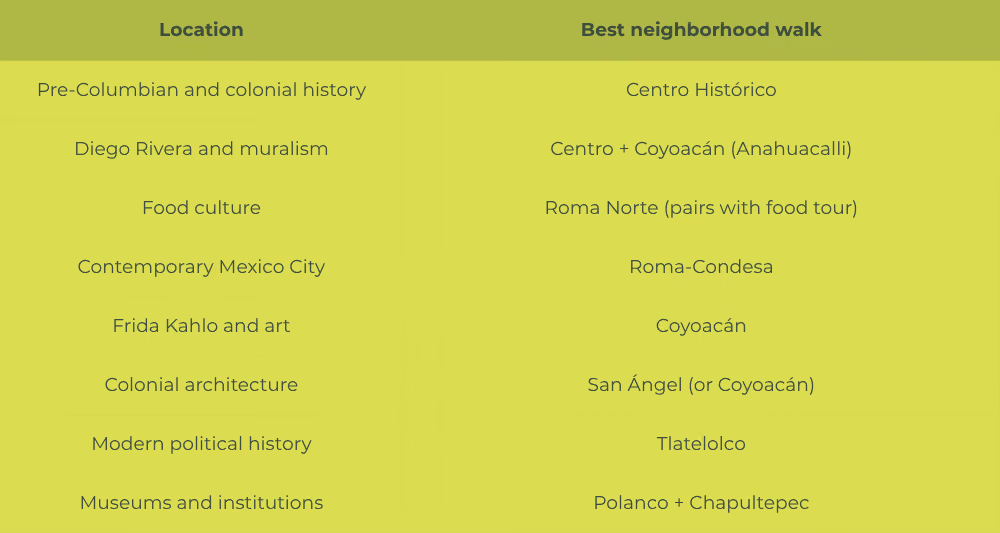
Comment choisir selon vos centres d'intérêt
Centre d'intérêt
Meilleure promenade dans le quartier
Histoire précolombienne et coloniale
Centro Histórico
Diego Rivera et le muralisme
Centro + Coyoacán (Anahuacalli)
Culture gastronomique
Roma Norte (à combiner avec une visite culinaire)
Mexico contemporaine
Roma-Condesa
Frida Kahlo et l'art
Coyoacán
Architecture coloniale
San Ángel (ou Coyoacán)
Histoire politique moderne
Tlatelolco
Musées et institutions
Polanco + Chapultepec
Visites guidées à pied réservables
- Balade historique dans le centre historique (Airbnb Experiences) : 3 heures, du Zócalo au Templo Mayor. Environ 45 à 70 USD par personne.
- Balade architecture et gastronomie à Roma et Condesa (GetYourGuide) : 2,5 à 3 heures, axée sur le design et la gastronomie. Environ 55 à 85 USD par personne.
- Balade dans le village et les musées de Coyoacán (Viator) : 3 heures, inclut le musée Trotsky. Environ 50 à 80 USD par personne.
- Journée de visite personnalisée dans le quartier (Rutopía) : Choisissez votre quartier, la spécialité de votre guide et votre rythme. Contactez-nous pour connaître les tarifs actuels.
Tarifs en un coup d'œil
FAQ
Est-il sûr de se déplacer à pied à Mexico ? Dans les quartiers touristiques (Roma, Condesa, Polanco, Coyoacán, San Ángel, Tlatelolco) en journée : oui. Le Centro Histórico est généralement sûr en journée, et de plus en plus le soir le long des principaux axes piétonniers. L' article sur les conseils de sécurité détaille les précautions spécifiques à chaque zone.
Quelle est la distance à parcourir à pied dans le Centro ? Une balade ciblée dans le Centro couvre 3 à 5 km. Le terrain est plat et pavé. L'altitude (2 240 mètres) rend la marche un peu plus fatigante le premier jour par rapport au niveau de la mer ; allez-y un peu plus doucement que d'habitude le temps de vous acclimater.
Puis-je combiner deux quartiers en une journée de marche ? Le Centro le matin et Coyoacán l'après-midi (en utilisant Uber ou le métro pour passer de l'un à l'autre) est la combinaison la plus naturelle et fonctionne très bien. Roma et Condesa forment une seule longue promenade (ils sont adjacents). Combiner trois quartiers en une journée est généralement trop : vous arriverez fatigué au troisième et ne pourrez pas en profiter pleinement.
Looking for more Mexico travel resources? Be sure to check out:
- Les meilleures visites à réserver à Mexico pour 2026
- Guide complet des visites gastronomiques à Mexico en 2026
- Guide complet de la visite du musée Frida Kahlo en 2026
- Les meilleures visites artistiques et culturelles à Mexico pour 2026
- Conseils de sécurité à Mexico pour les voyageurs en 2026
- Les meilleurs forfaits d'itinéraires à Mexico pour vos voyages en 2026
Rédigé par
Design your trip to Mexico with a local travel designer. Unique activities and lodging, 100% tailor-made and stress-free.
.webp)
Articles connexes
Duration:
Blog title heading will go here
Days
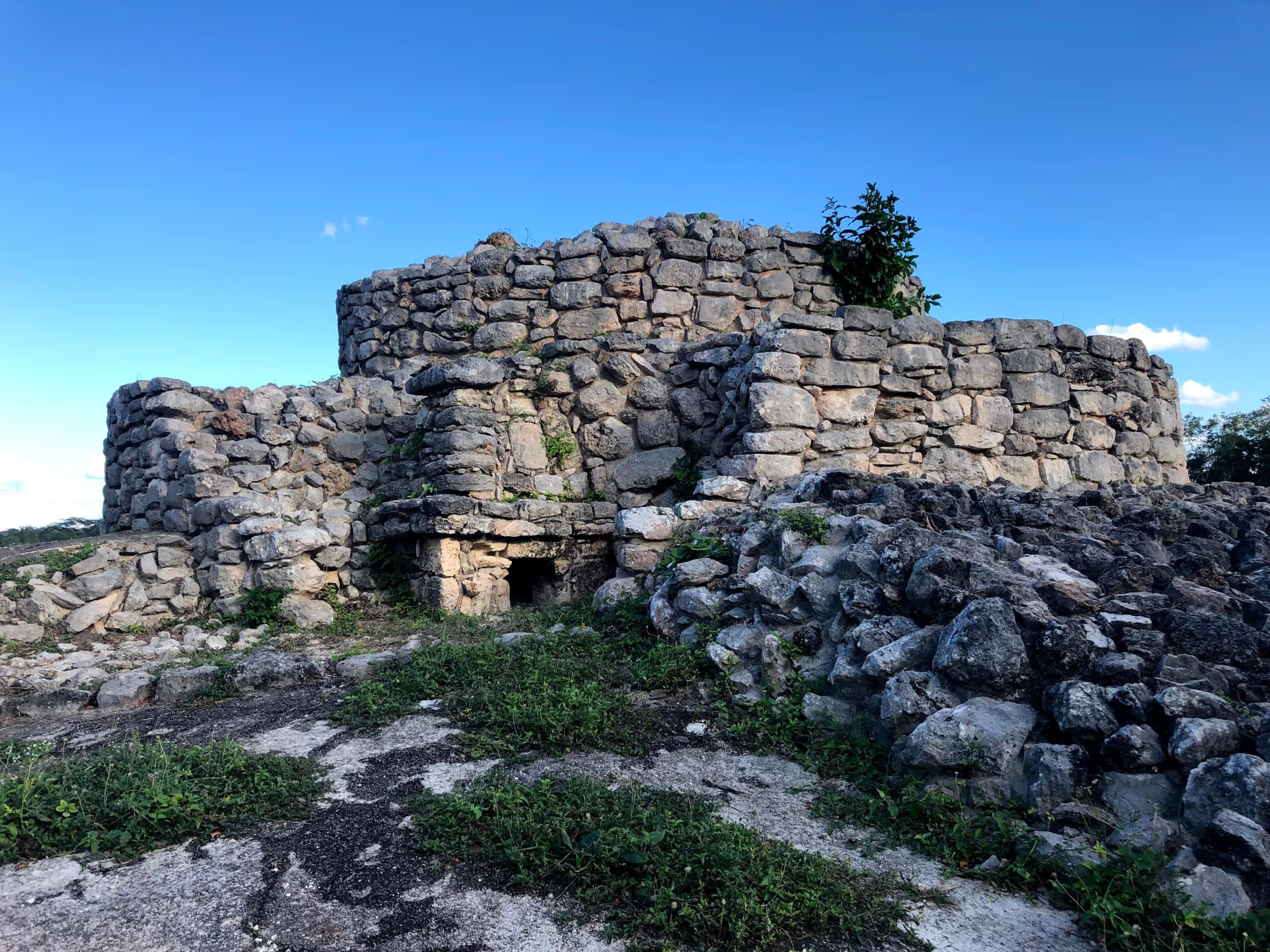
Mayan Sites Riviera
Avec Rutopía, découvrez les sites mayas. Rencontrez des lieux incroyables, avec des rituels, cérémonies et histoires anciennes des Mayas.
En savoir plus

Duration:
Blog title heading will go here
Days
les-10-experiences-immanquables-a-oaxaca
Découvrez les 10 meilleures activités à faire à Oaxaca, entre son centre historique, ses sites archéologiques et sa gastronomie.
En savoir plus
Duration:
Blog title heading will go here
Days
San José del Pacífico
Les amoureux de la nature trouveront à San José del Pacífico des champignons (pas seulement les « magiques » !) mais aussi des paysages magnifiques au-dessus des nuages.
En savoir plus
Rejoignez-nous à ce sujet
voyage
Planifiez votre voyage avec nousvoyage
Inscrivez-vous à notre newsletter pour être tenu au courant des nouveautés.
Oups ! Une erreur s'est produite lors de l'envoi du formulaire.
Ready to experience the real Mexico?
Travel with local experts and get hangds-on supoort every step of the way... from planning to arrival.

Your Travel Companion in Mexico, 24/7
We're with you from arrival to departure via WhatsApp for anything you need.

Trusted by thousand of travelers with a 4.9 rating on Google