Customize my trip


Best Mexico City Itinerary Packages For 2026 Travel
Mexico City itinerary packages for 3, 5 and 7 days: neighbourhoods, day trips and pacing. Ready-to-book 2026 templates from our CDMX team.


Content
They highlight our work



Unique trips in Mexico.
Tailor made for you.
Request your tripTailor made for you.
Let a local guide help you plan your trip to Mexico
Start tailor-made tripThe most common Mexico City planning mistake is building an itinerary for a smaller city. Travelers who arrive having planned to cover the Centro, Coyoacán, Xochimilco, Teotihuacán, and Polanco in three days discover on day one that each of those destinations justifies half a day on its own, and that moving between them is not a walk between neighborhoods but a 30 to 60-minute transit each way. The result is a trip that feels like a series of rushed arrivals. This guide provides working templates for 3, 5, and 7 days that pace Mexico City honestly, with real transit times and activity lengths built in, so you arrive knowing what you're doing instead of discovering the constraints on the ground. For a package built around your specific interests and travel dates, our CDMX team can customize from these templates.
How to approach Mexico City as a destination
Mexico City rewards the traveler who treats it as a destination in its own right rather than a transit point between other Mexico destinations. The city is not compact; it is one of the largest urban areas in the world. The distance from the Centro Histórico to Coyoacán is 14 km; to Xochimilco, 25 km; to Polanco, 8 km. These are not walking distances between neighborhoods — they are Uber or Metro rides.
Getting around is part of the local experience. Beyond the Metro, Mexico City has an extensive network of Metrobús lines, trolleybuses (trolebús), and the famous peseros (small informal buses). Google Maps does not always suggest the fastest or most practical routes, especially when combining different transport systems, so locals often use the CDMX mobility app to navigate the various lines and connections.
For most visitors, Uber remains the safest and most reliable option, especially at night, while DiDi is often slightly cheaper and popular for everyday rides around the city.
The planning principle that consistently produces the best CDMX trips: choose a base neighborhood and walk it deeply, then take organized transport for the other destinations on your list. Trying to cover the full city by walking or wandering produces exhaustion and a superficial version of every place you visit.
The templates below are built around: one to two structured activities per day, real transit time between locations, and afternoons that allow for decompression, independent food exploration, and the discovery-by-wandering that Mexico City enables when you're not overscheduled.
What a CDMX package actually includes
An organized Mexico City package from a serious operator covers: hotel accommodation for each night (in the neighborhood that suits your trip), transport for scheduled activities (private driver or group van), guides for the structured visits, and entry tickets to included sites. What it doesn't typically cover: international flights to Mexico City, travel insurance, personal meals beyond those specified, and incidental purchases.
The private tours guide explains how operator-arranged trips differ from self-booked in logistics and access terms. The private driver and guide article covers the per-day cost structure.
3-day Mexico City itinerary
Three days is the minimum for a CDMX visit that produces more than a surface impression. This template assumes arrival on the morning of day 1 and departure on the evening of day 3 (or morning of day 4).
Day 1 — Centro Histórico and adjustment
Altitude is the first variable to manage: Mexico City sits at 2,240 meters, and most visitors feel slightly short of breath and low-energy on day one, especially on arrival. Schedule nothing physically demanding today.
Morning: arrive, check in, walk to the Zócalo. The Zócalo itself is worth an hour of unhurried looking: the Cathedral on the north edge, the Palacio Nacional on the east, the excavated edges of the Aztec Templo Mayor visible through a viewing fence on the northeast corner. Afternoon: Palacio Nacional for the Rivera murals on the stairwell (free entry, allow 45 to 60 minutes). Walk south on Madero Street to the Bellas Artes building for the exterior and the ground-floor lobby. Evening: dinner in Roma Norte (15 minutes by Uber from the Centro).
Day 2 — Teotihuacán
Depart hotel by 7:00 a.m. Arrive at the site before 8:30 a.m. with a licensed guide. Three hours at the site: Moon Pyramid, Avenue of the Dead, Sun Pyramid, Ciudadela, museum. Return to the city by 1:00 p.m. Lunch in Condesa. Afternoon free: Roma Norte walk, a café, independent market browsing.
Day 3 — Coyoacán and departure
Morning: Frida Kahlo Museum at your pre-booked timed entry (10:00 a.m. slot recommended). Coyoacán market lunch. Afternoon: Anahuacalli (if timing allows before departure) or a final walk in Condesa. Evening departure or next-morning flight.
What you miss in 3 days: Xochimilco, Chapultepec and the National Museum of Anthropology, Puebla or any other day trip, the art and culture circuit beyond the Palacio Nacional murals, a serious food tour.

5-day Mexico City itinerary
Five days is where Mexico City starts to reveal itself. This template assumes arrival the evening before day 1, or very early morning of day 1.
Day 1 — Acclimatization and Centro Same as the 3-day day 1, with the addition of a 2-hour afternoon food tour of Mercado de la Merced and Centro street food. This gives you the food vocabulary for the rest of the trip on day one.
Day 2 — Teotihuacán (full day) Same as 3-day day 2. Return by 1:30 p.m. Afternoon: rest or Roma Norte independent walk. Evening: night taco tour (3 hours, organized, 8:00 p.m. departure).
Local tip: One of my favorite local experiences in Mexico City is a taco tour in the Narvarte neighborhood — an area famous across the city for its incredible taco culture. The tour begins at a classic taquería known for its volcanes: crispy tortillas cooked over charcoal and topped with melted cheese, roasted poblano peppers, or garlic. From there, you'll move between long-standing local vendors serving tacos al pastor (with the iconic rotating spit and open flames) and rich, slow-cooked suadero tacos that have made the neighborhood legendary among locals.
The experience also includes a stop at a traditional cantina to discover an important part of Mexico City’s social culture, with the option to enjoy a cold beer or cocktail. The evening finishes with a guided tasting flight of small-batch artisanal mezcals at a cozy local restaurant, led by a local chef and mezcal expert.
This tour is about 3 hours long and everything — food and drinks included — is covered, making it one of the best ways to experience the city like a local rather than just visiting tourist hotspots.
Day 3 — Chapultepec and Polanco Morning: Chapultepec Park — National Museum of Anthropology (2.5 to 3 hours, licensed guide strongly recommended). Lunch in Polanco. Afternoon: Museo Soumaya and Museo Jumex (2 hours combined). Evening: Ballet Folklórico at Bellas Artes (Wednesday or Sunday) if available, or Lucha Libre at Arena México (Tuesday or Friday).
Day 4 — Coyoacán and Xochimilco Morning: Frida Kahlo Museum (timed entry, 10:00 a.m.). Coyoacán market lunch. Early afternoon: transfer to Xochimilco for a 2-hour trajinera ride (weekday is quieter). Return by 5:00 p.m.
Local tip: Xochimilco can be experienced in two completely different ways, and most visitors only see the party version.
The festive side of Xochimilco is the iconic one: colorful trajineras (traditional boats) drifting through the canals with mariachi bands floating by, friends sharing micheladas and tequila, music playing from boat to boat, and a lively atmosphere that feels like a floating celebration. It’s one of the most unique social experiences in Mexico City and especially popular on weekends with locals celebrating birthdays or family gatherings.
But there is another side of Xochimilco that feels worlds away from the party canals. In the ecological preservation zones, local cooperatives work to protect the ancient chinampas — the traditional agricultural islands built by the Aztecs centuries ago — as well as endangered endemic species like the axolotl. Here, the canals are quiet, surrounded by birds, greenery, and farmland, offering a much slower and more authentic perspective on the area’s cultural and environmental importance.
For an even more off-the-beaten-path experience, it’s possible to explore the canals by kayak at sunrise. Gliding through the misty waterways early in the morning, before the party boats arrive, is one of the most peaceful and magical experiences you can have in Mexico City.
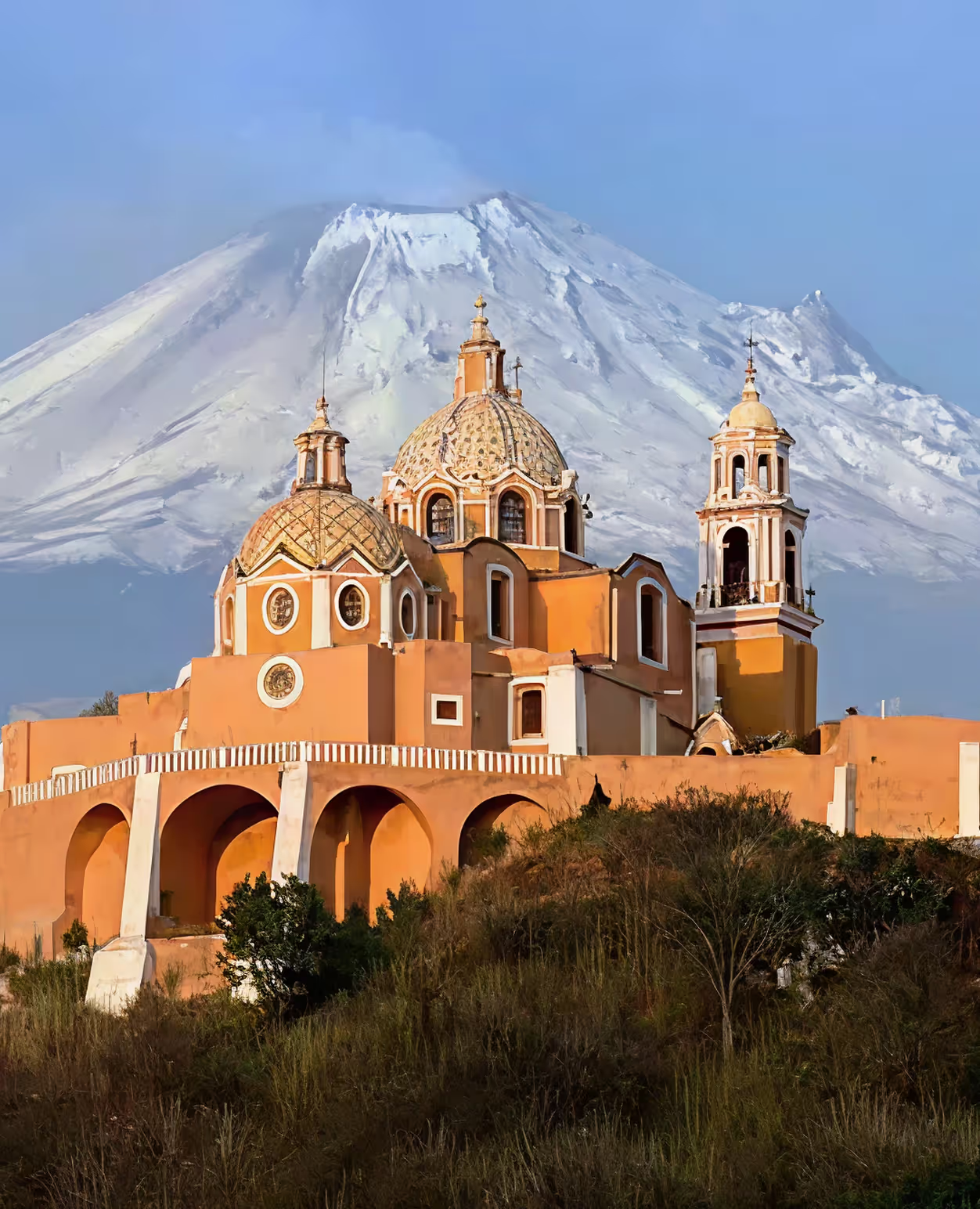
Day 5 — Puebla day trip or open Option A: Puebla day trip (depart 7:30 a.m., cover Cathedral, Cholula, mole lunch, return by 8:00 p.m.). Option B: Free day. Roma-Condesa deep walk, specific restaurant lunch, afternoon at a museum you missed. This is the day that turns a good CDMX trip into a great one: unscheduled time that the city fills better than any plan.

7-day Mexico City itinerary
Seven days gives you the full CDMX experience: city depth, the day-trip network, and time for the experiences that require sustained attention rather than a rushed stop.
Day 1 — Arrival and Centro orientation Early afternoon arrival. Walk the Zócalo and adjacent streets. Evening: dinner in Roma Norte.
Day 2 — Teotihuacán Full-day, early departure, licensed guide. Return early afternoon. Evening: light dinner in Condesa.
Day 3 — Muralist circuit Full-day guided muralism focus. Palacio Nacional (90 minutes), SEP building murals (45 minutes), lunch in Centro, Bellas Artes gallery murals (60 minutes), Chapultepec Castle murals (60 minutes). This is the day that most changes how you think about Mexican history.
Day 4 — Chapultepec deep dive Morning: National Museum of Anthropology (3 hours with a specialist guide). Lunch in Polanco. Afternoon: Soumaya and Jumex (2 hours). Evening: Lucha Libre at Arena México.
Day 5 — Coyoacán and Xochimilco Morning: Frida Kahlo Museum (timed entry). Lunch at Coyoacán market. Afternoon: Xochimilco trajinera (2 hours, weekday preferred).
Day 6 — Puebla day trip Full day. Depart 7:30 a.m. Cholula pyramid, Cathedral, Capilla del Rosario, Amparo Museum, mole lunch. Return by 8:00 p.m.
Day 7 — Final day, self-directed Morning at a neighborhood market you haven't visited (Mercado Medellín in Roma, or the Mercado de Jamaica flower market). Late lunch at a restaurant you chose during the trip. Afternoon packing and departure logistics.
What you still miss in 7 days: Tolantongo (a full-day commitment), the Monarch Butterfly Biosphere (seasonal and far), the Coyoacán-San Ángel combination in depth, a full afternoon at MUAC, Tlatelolco at the depth the 1968 history deserves.

Mexico City as part of a multi-region Mexico trip
CDMX is the natural anchor for two multi-region pairing:
CDMX + Oaxaca (7 to 10 days): Three to four nights in Mexico City, fly to Oaxaca for four to five nights. The food and cultural thread between these two cities is the strongest pairing in Mexico. Full route in the Mexico City and Oaxaca itinerary plan.
CDMX + Yucatán (10 days): Three nights in Mexico City, fly to Mérida, four nights through the interior (cenotes, Uxmal, Valladolid), two nights on the coast. The classic first-Mexico-trip pairing.
For the full multi-region picture, the best Mexico tours hub covers how CDMX fits within the national context.
The altitude consideration and how it affects day 1
Mexico City at 2,240 meters is higher than most visitors expect. The effects on day one: mild headache, unusual fatigue, breathlessness on stairs that feels disproportionate to the effort. These symptoms are common and resolve within 24 to 48 hours for most travelers.
Day 1 planning rule: no early starts, no strenuous activity, no alcohol on the first night. The templates above all follow this rule. Travelers who arrive and immediately try to cover the Centro, the murals, and a food tour in one afternoon pay for it on day two. Let the city come to you on the first day.
The best altitude adjustment strategy: drink 2 to 3 liters of water on day 1, eat lightly, walk slowly. By day 2, most visitors feel close to normal.
Package pricing ranges for 2026

Excludes: international flights, travel insurance, personal meals, tips.
Bookable packages
- 3-Day CDMX Cultural Highlights (Viator or GetYourGuide): Group format, hotel included, Teotihuacán + Centro + Coyoacán. About $700 to $950 USD per person.
- 5-Day Private Mexico City Package (Rutopía or Intrepid): Private vehicle, boutique hotels, full schedule. From about $1,400 per person for two.
- Custom CDMX Package (Rutopía): Built from your interests, group size, and budget. Contact our team for current availability and pricing.
FAQ
Is Mexico City worth more than 3 days? Yes, meaningfully. Travelers who spend 3 days consistently say their main regret is not staying longer. Five days is the first length where the city starts to feel like a place you know rather than a place you visited.
What's the best neighborhood base for a CDMX visit? Roma Norte or Condesa for most travelers — central, walkable, excellent food, safe, and boutique hotel-dense. Polanco if comfort and proximity to Chapultepec are priorities. Coyoacán if you want village atmosphere over urban energy.
Should I book guided tours for every day or self-guide some? Both. A licensed guide for Teotihuacán and the National Museum of Anthropology makes a decisive difference. For neighborhood walking in Roma-Condesa or Coyoacán, a good map and a list of specific places is often enough. The templates above indicate where a guide adds most value.
How does Mexico City compare to other major world cities for tourism value? Remarkably well. A boutique hotel in Roma Norte runs $80 to $200 USD per night; a comparable property in Paris or Tokyo runs two to three times more. Restaurant meals at genuinely excellent CDMX restaurants are 150 to 400 MXN ($7.50 to $20 USD) per main course. Museum entry fees are under $5 USD at most institutions. The safety picture is better than its reputation suggests. CDMX is one of the best-value extended city visits available to international travelers.
Looking for more Mexico travel resources? Be sure to check out:
Written by
Design your trip to Mexico with a local travel designer. Unique activities and lodging, 100% tailor-made and stress-free.
.webp)
Related posts

Duration:
Trip duration
Days
Muyil Sian Ka'an
Activity in Sian Ka'an Biosphere south of Tulum. Visit Muyil and float in the ancient channels. Plan a smooth, unique trip with Rutopia.
Read more

Duration:
Trip duration
Days
Selva Lacandona Guide
You are curious to know the Lacandon Jungle and you don't know what you need to know before you go, we will tell you the most important things you need to know.
Read more
Duration:
Trip duration
Days
Campeche's Gastronomy
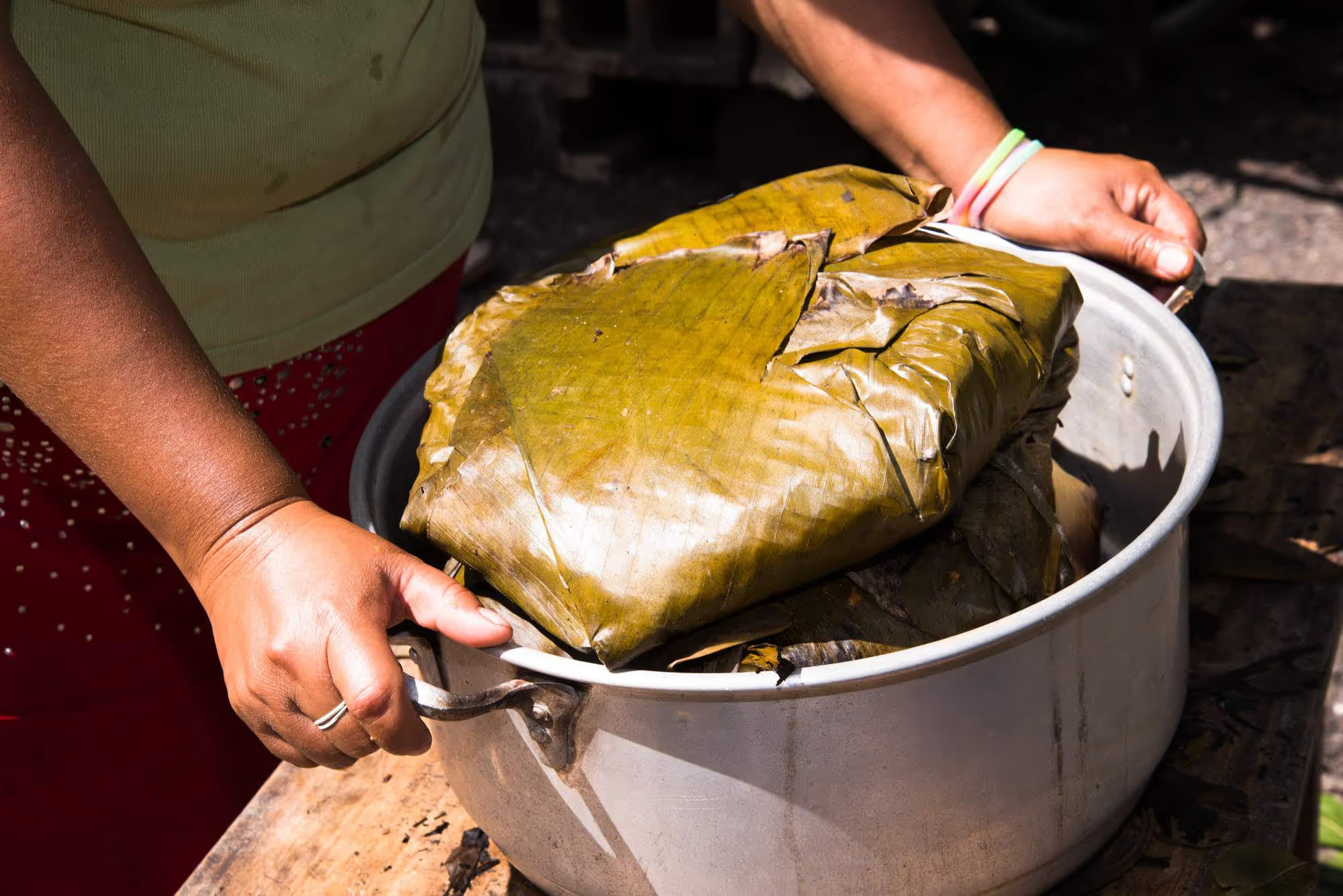
Campeche Gastronomy contains a variety of cuisines with Spanish, Caribbean and Mayan influences. Campeche is famous for its fresh seafood
Read more
Join us on this
journey
Plan your trip with usjourney
Join our newsletter to stay up to date on features and releases.
Oups ! Une erreur s'est produite lors de l'envoi du formulaire.
Ready to experience the real Mexico?
Travel with local experts and get hangds-on supoort every step of the way... from planning to arrival.
Your Travel Companion in Mexico, 24/7
We're with you from arrival to departure via WhatsApp for anything you need.
Trusted by thousand of travelers with a 4.9 rating on Google