Personnaliser mon voyage


A Complete Sian Ka'an Tours Guide For 2026
Sian Ka'an tours guide: lagoon drift snorkels, dolphin spotting, licensed biosphere operators and real 2026 prices. From our Yucatán travel team.

Contenu
Ils mettent en valeur notre travail


Des voyages uniques au Mexique.
Fait sur mesure pour vous.
Demandez votre voyageFait sur mesure pour vous.
Laissez un guide local vous aider à planifier votre voyage au Mexique
Commencez un voyage sur mesureSian Ka'an is the largest protected area in the Mexican Caribbean, a UNESCO World Heritage biosphere where you float through ancient Maya canals, watch dolphins arc through turquoise water, and hear birdsong so dense it sounds layered. This guide covers everything you need to book a tour in 2026: the right operators, honest logistics, real prices, and one piece of advice our guide Adrián has given every first-timer for fifteen years. Ready to explore the rest of the Yucatán while you're planning? Browse Rutopía's Mexico tours packages.
Quick Summary
- Sian Ka'an means "origin of the sky" in Maya
- UNESCO World Heritage Site since 1987, covers 1.3 million acres (530,000 hectares) of Quintana Roo coastline
- Home to over 400 bird species per UNESCO, plus West Indian manatees, bottlenose dolphins, jaguars, and nesting sea turtles
- Contains part of the Mesoamerican Barrier Reef System, the second largest reef system in the world
- Signature experience: the drift snorkel through ancient Maya canals, the current does the work, no swimming required
- Access is controlled: all tours must use licensed operators; capacity inside the biosphere is limited
- Most tours depart from Tulum town or the Tulum hotel zone, roughly 45 minutes to the biosphere entrance
- Full-day group tours: 1,700–2,600 MXN ($85–130 USD) per person including transport, boat, snorkel gear, and lunch
- Biodegradable sunscreen is mandatory; bring your own or buy it locally for around 200 MXN ($10 USD)
- Book in advance, especially for travel between December and April
What Is Sian Ka'an?
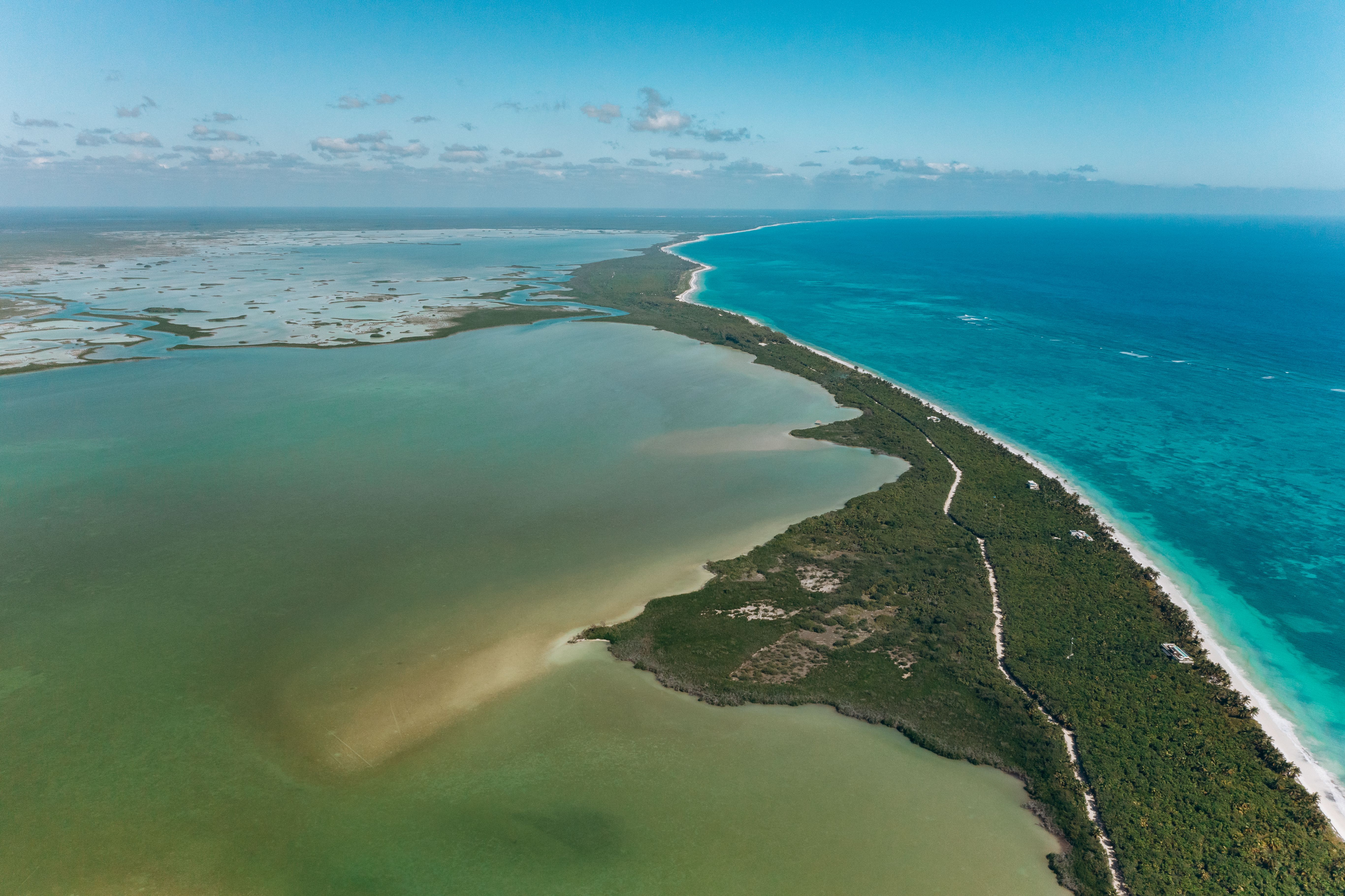
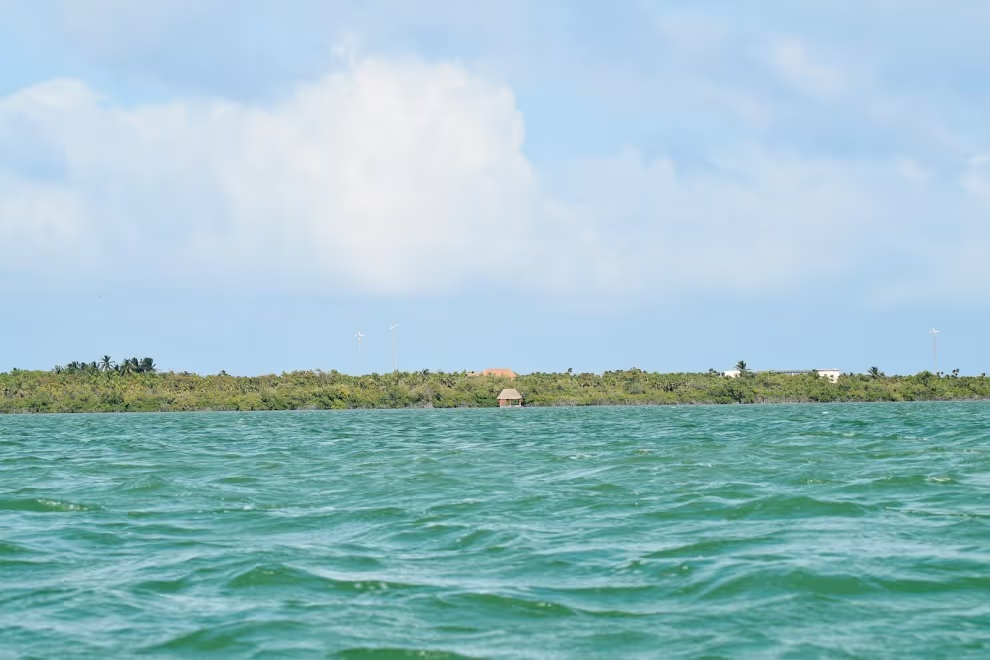
Sian Ka'an, pronounced roughly "see-AHN kah-AHN," translates from Maya as "origin of the sky." The name suits it. On a clear morning inside the reserve, the sky and the water share the same pale blue, and the mangroves grow so dense between them that you lose track of where the land ends.
The biosphere reserve stretches along the Caribbean coast of Quintana Roo, covering 1.3 million acres (530,000 hectares) of habitat: tropical forest, wetlands, freshwater lagoons, saltwater lagoons, mangrove systems, and more than 120 kilometers of barrier reef. That reef is part of the Mesoamerican Barrier Reef System, the second largest in the world after the Great Barrier Reef of Australia. UNESCO designated Sian Ka'an a World Heritage Site in 1987, recognizing both its ecological complexity and its cultural significance.
The reserve also contains ancient Maya settlement ruins and the remnants of the canal system the Maya used to move goods through the coast. The wildlife inventory is dense: over 400 bird species documented, West Indian manatees in the lagoons, bottlenose dolphins in the coastal waters, four species of sea turtles nesting on the beaches, and a jaguar population that remains one of the most viable on the Yucatán Peninsula.
Because visitor access is limited and controlled through a permit system administered by CONANP, Mexico's national natural areas commission, the reserve has kept a quality that many of the Caribbean's more accessible spots have lost. For more context on how protected-area tourism works across the region, see our 2026 guide to the best Yucatán tours.
What Tours Actually Look Like
A standard licensed Sian Ka'an day tour runs about eight hours door to door from Tulum. The structure looks roughly like this:
Morning pickup from your hotel or a central meeting point in Tulum town or the hotel zone. The drive south to the biosphere entrance takes around 45 minutes on the main road, which becomes a rough unpaved track once you pass the boundary.
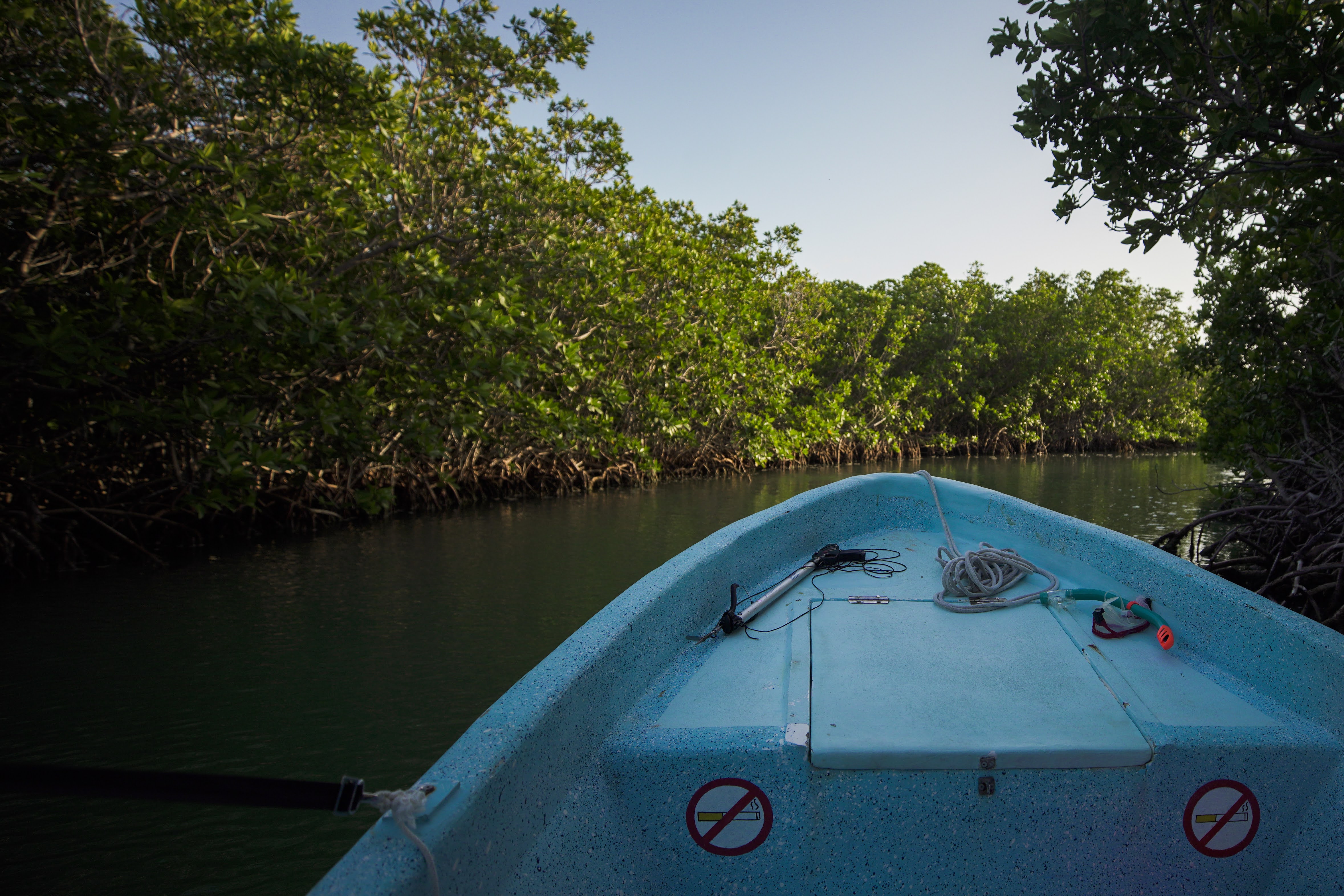
Boat departure from one of the reserve's permitted launch points. The boat is typically a small motorized craft carrying eight to twelve people plus your guide. These boats usually do not have a roof, as the route passes through natural areas. You travel south through the coastal lagoon system toward the mangrove channels and the reef-adjacent waters.
Mangrove navigation through narrow channels. Your guide cuts the engine and the group listens. The sound changes completely when the motor goes off inside a mangrove tunnel: you hear herons, frigatebirds, the water against the hull.
Floating along the Mayan canals through the ancient Maya canals. This is the piece most people remember. More on it in the next section.
Dolphin spotting on the open coastal water. Not guaranteed (nothing in wildlife tourism should be), but bottlenose dolphins, manatees, rays are regularly sighted in the lagoon mouths and coastal zones. Some tours also pass by nesting turtle beaches depending on the season; June through October is peak nesting.
Lunch is usually served outside the reserve, either at a palapa-style restaurant near the reserve area or around Boca Paila, depending on the route and operator. It is typically a simple local meal, often with fresh fish or chicken, rice and a drink.
Return drive to Tulum in the afternoon.
Pro tip: Book the earliest departure available. Heat and wind both increase as the day goes on, and the drift canal is best when the water is still cool and clear. Most licensed operators offer 7:00 or 7:30 a.m. starts.
If you want a broader view of day-trip structures across the region, our hub guide to all Yucatán tours in 2026 covers comparable logistics for the main destinations.
Floating Along The Mayan Canals
Floating along the Mayan canals is the Sian Ka'an experience that people describe most when they come back. It requires almost no skill and delivers a rare feeling of moving through a place rather than just looking at it.
The Maya who built settlements inside what is now the biosphere reserve also engineered a network of canals to connect the lagoons to the reef. These canals still run on tidal flow. When the tide moves, the water in the canals moves with it, and the current is strong enough to carry a snorkeler along at a comfortable pace.
Your guide sets you in the water at the entry point. Wearing your life jackets, they enter the Muyil Lagoon area spread your arms, and let the canal take you. The water is typically one to three meters deep, clear enough to see the bottom, and fish use the canals: depending on visibility you might see small reef fish, and the underwater walls of the ancient stone channels. You travel 200 to 400 meters in about fifteen to twenty minutes, exit at the designated point, and reboard the boat.
No swimming required. The whole point is that you do not fight the current. Children who can swim can typically do the activity. Adults who are not strong swimmers can also do it safely because the current carries them and guides are in the water alongside the group; if someone is not comfortable in open water at all, it is better to skip this part and stay on the boat or walk along a wooden path that cuts through part of the jungle (if you choose this option, be prepared for the humidity and the mosquitoes).
A Story About the Drift Canal
A story about the drift canal:
We work through a licensed Sian Ka'an operator based in Tulum, whose lead guide Adrián has been running biosphere tours since 2011. When we asked him what to tell first-timers, he said: "Tell them to float. People try to swim the drift canal. The canal does the work. All you have to do is float."
Adrián told us about a group he took in early 2024: four adults, all nervous about being in open water. He put them in the canal. Within thirty seconds, one of the women started laughing into her snorkel. She said afterward that she had never felt anything like it. She wasn't doing anything. The Maya canal, designed and dug over a thousand years ago, was moving her through the Caribbean.
That is the experience. You do not conquer it. You let it carry you.
Getting There: Access Points and Logistics
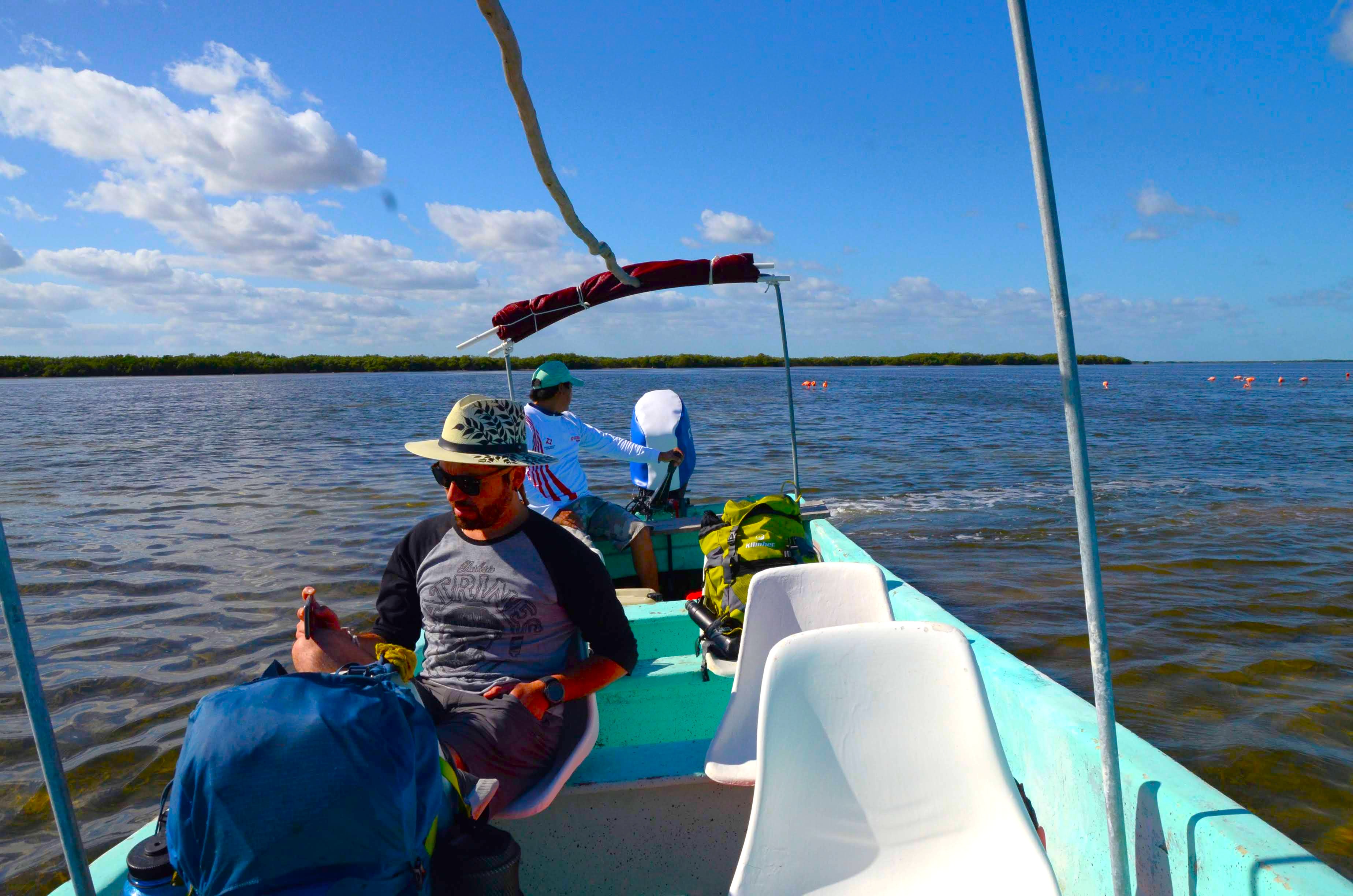
From Tulum: The most common and practical access point. Tulum sits about 45 minutes north of the biosphere entrance by car. Most licensed operators include hotel pickup from Tulum town or the Tulum hotel zone. If you are staying in Tulum, you are already in the right place.
From Playa del Carmen or Cancún: Both are viable but add travel time. From Playa del Carmen, expect a 90-minute transfer. From Cancún, count on two hours or more each way; some operators offer pickup from both, but confirm before booking.
Punta Allen: This is the remote fishing village at the southern end of the reserve, accessible via a 60-kilometer unpaved road through the biosphere itself. The road is rough and slow (two or more hours from the biosphere entrance in a 4x4). Punta Allen is worth knowing about if you want to stay inside the reserve, fish the flats, or take a boat tour from the village itself. It is not a day-trip destination from Cancún.
Boca Paila: A fishing lodge area in the central section of the reserve, often included as a lunch or rest stop on full-day tours from Tulum.
Entry requirements: No individual entry to the main tour zones without a licensed operator. For any experience inside the reserve, it is necessary to go with a certified local guide or authorized operator from the area, as the permit system is enforced to protect the ecosystem and regulate visitor activity. If someone offers to take you in without a licensed guide, it is better to decline.
Punta Allen can be visited independently if you are going there to stay overnight, as there are small hotels and lodging options in the area. However, since it is located within a protected natural zone, you may still need to pay an entrance or conservation fee when accessing the area.
For help thinking through logistics across the whole Yucatán Peninsula, see our post on how to book Yucatán tours for 2026 travel.
Choosing a Licensed Operator
The biosphere permit system means not every company advertising "Sian Ka'an tours" is actually permitted to take you inside. Here is how to verify you are booking with a legitimate operator:
- They should be able to provide their CONANP operating permit number on request
- Their groups should be capped (typically 8–12 people per boat, not 20+)
- They should specify biodegradable sunscreen as a requirement, not a suggestion
- They should provide life jackets, and a bilingual guide included in the price
Red flags to watch for: rock-bottom pricing well below the 1,700 MXN floor, no mention of group size limits, no mention of sunscreen rules, and tours departing from Cancún that advertise "Sian Ka'an" as a two-hour stop on a day that also includes Tulum ruins and a cenote. That itinerary is not a Sian Ka'an tour. It is a drive-by.
Local tip: if you are comparing private versus group tours, private tours into Sian Ka'an cost significantly more, often around 3,500–5,500 MXN per person, depending on group size. This is because the reserve has a daily limit on the number of visitors allowed in certain areas, and private services require dedicated logistics, permits, transportation and guiding.
The advantage of a private tour is that it gives you a slower pace, a guide who can respond more closely to your interests, and fewer people in the water at the drift canal. However, if budget is an important factor, a shared tour can still be a very good option to experience the reserve in a responsible and well-organized way. Our take on the tradeoffs is in our Yucatán private tours vs group tours guide.
For a deeper look at how to evaluate operators across the region, see our guide on cenote safety and tour logistics you need to know.
Prices and What's Included
Group tour (8–12 people): 1,700–2,600 MXN per person ($85–130 USD). This typically includes round-trip transport from Tulum, boat, guide, snorkel gear, life jacket, and lunch. Some operators include biodegradable sunscreen; most do not.
Private tour: 3,500–5,500 MXN per person ($175–275 USD) depending on group size and inclusions.
What is not usually included: tips for your guide (budget 150–200 MXN / $8–10 USD), beverages beyond water, if the operator does not supply it.
Tailor-made Sian Ka'an experiences: For a fully customized private itinerary built around Sian Ka'an and the broader Yucatán coast, Rutopía's tailor-made packages start from $3,000 USD per person. A deposit is required 30 days before arrival. Browse tailor-made options on our Mexico tours packages page.
Biodegradable sunscreen: Required inside the reserve. Do not bring regular sunscreen; it is banned and some operators will turn you back at the water. Buy biodegradable sunscreen in Tulum before departure; most pharmacies and beach shops carry it for around 200 MXN ($10 USD).
Local tip: To support conservation efforts and avoid water contamination, which can have a high impact on the environment, sunscreen should not be applied if the activity includes entering the water canals. In that case, it is best to wear sun-protective clothing, such as a long-sleeve rash guard, hat and sunglasses, and apply biodegradable sunscreen only after the water activity is finished.
For a wider comparison of what things cost across the Yucatán, see our best Yucatán itinerary packages for 2026 travel.
What to Bring and What to Leave Behind
Bring:
- Biodegradable sunscreen (reef-safe, chemical-free)
- Rash guard or lightweight long-sleeve shirt for sun protection on the boat
- Water (at least 1.5 liters per person; it is hot on the open water)
- Insect repellent - Bio-friendly (mangroves mean mosquitoes at certain times of day)
- Waterproof bag or dry bag for your phone and valuables
- Cash in MXN for tips, extra drinks, or any small purchases at lunch stops
- Motion sickness medication if anyone in your group is susceptible (see Honest Downsides section below)
Leave behind:
- Regular sunscreen (prohibited in the water)
- Plastic bags (many operators ask you not to bring single-use plastic into the reserve)
- Expectations of a calm, spa-like boat ride (see next section)
Honest Downsides to Know Before You Go
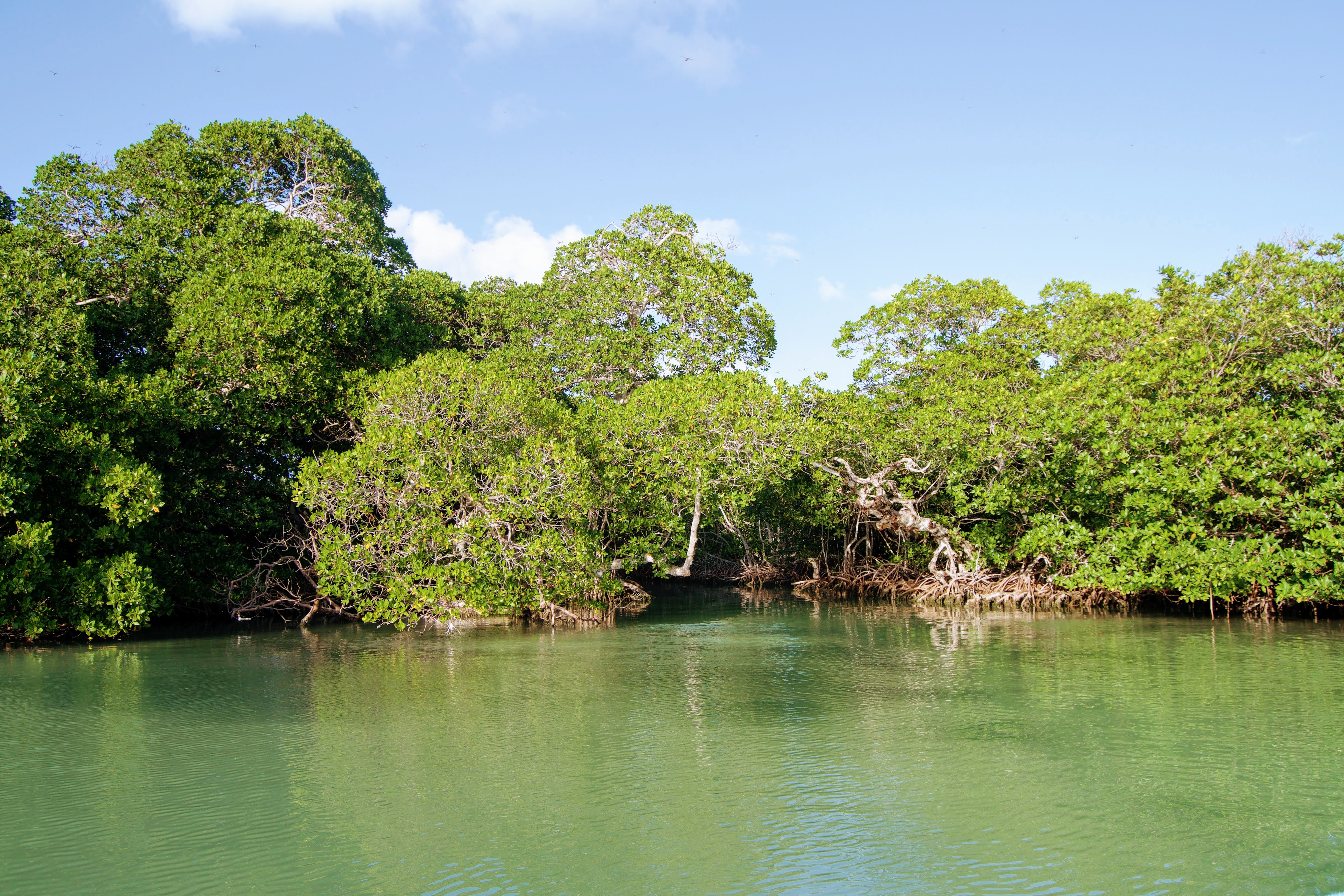
The boat ride to the mangroves is beautiful but long, about 45 minutes one way at open-sea speed. If anyone in your group gets motion sick easily, take sea-sickness medication beforehand. This is not a calm lagoon paddle; the biosphere sits on the open Caribbean coast and morning swells are real. A few people on nearly every tour feel queasy by the time they reach the mangrove channels. Dramamine or a similar over-the-counter medication taken 30–60 minutes before departure makes a significant difference.
The road entering the reserve, up to the dock where you will take the boat, is unpaved and can be slow, especially in a van. For this reason, it is important to allow extra time in your day and keep in mind that the journey may feel a bit bumpy before reaching the boat departure point.
Wildlife sightings, while likely, are not guaranteed. Dolphins are common but not present on every tour. Manatees are rare encounters. Jaguars are almost never seen on day tours. Crocodiles may also be seen in certain areas of the reserve, but sightings depend on the time of day and natural conditions. Book this trip because the ecosystem itself is extraordinary, not because you are chasing a specific animal encounter.
Finally, heat. Full-day tours run through the warmest hours. The boat provides some breeze, but the lunch stop and shore sections are exposed. A hat and sun-protective clothing are not optional in July or August.
For activities that include navigation through the mangroves, the boats do not have a roof. This is not only for visibility and safety, but also because the canals can be narrow and surrounded by dense mangrove vegetation. A roof could interfere with the branches, disturb the ecosystem or make navigation more difficult in certain areas.
For this reason, it is preferable to take the tour in the morning, when the sun is not yet at its strongest. We also recommend bringing a hat, sunglasses and light long-sleeved clothing. If the activity includes entering the water, sunscreen should be applied only after finishing the water activity, in order to help protect the ecosystem and avoid contaminating the canals.
Sian Ka'an is one of the most compelling natural areas on the Yucatán Peninsula. It just rewards realistic expectations. Our best Yucatán tours for families and best ruins tours in Yucatán for 2026 pieces both help calibrate expectations across the region.
Bookable Tours
Rutopía vets operators in the Sian Ka'an corridor for CONANP licensing, group-size limits, and environmental compliance before listing them. For the wider peninsula picture, see our overview of the best Yucatán tours for 2026. Current bookable tours for 2026 are available through our Mexico tours packages page.
If you want to pair Sian Ka'an with other Quintana Roo experiences, common combinations include:
- Sian Ka'an + Tulum ruins: See our complete 2026 Tulum ruins tour guide for how to structure the day
- Sian Ka'an + cenote: Our best cenote tours in Yucatán for 2026 covers the cenotes nearest to Tulum that fit naturally into a two-day plan
- Sian Ka'an + Bacalar: Bacalar's lagoon is a full day south on Highway 307; see our 2026 Bacalar lagoon boat tours guide if you want to make it a two-night add-on
- Sian Ka'an + northern Yucatán: If you want to extend your trip to Chichen Itza, Valladolid, or Uxmal after your time on the coast, our Chichen Itza tour guide from Cancún, Tulum and Playa and complete guide to Mérida tours are the right starting points
FAQ
What does Sian Ka'an mean? Sian Ka'an means "origin of the sky" in the Maya language. The name comes from the ancient Maya communities who inhabited the area before it was designated a protected biosphere reserve.
Is Sian Ka'an a UNESCO World Heritage Site? Yes. UNESCO designated Sian Ka'an a World Heritage Site in 1987, recognizing its exceptional biodiversity and the presence of ancient Maya archaeological sites within the reserve.
How big is Sian Ka'an? The reserve covers approximately 1.3 million acres (530,000 hectares) along the Caribbean coast of Quintana Roo, making it the largest protected natural area in the Mexican Caribbean.
It is important to note that only certain areas, mainly in the northern part of the reserve, are open for visitor tours. The rest of the reserve is more strictly protected and reserved for conservation, scientific research and ecosystem monitoring, helping preserve its biodiversity and fragile natural balance.
Do I need to book in advance? Yes. Capacity inside the biosphere is controlled and tours sell out, particularly between December and April. Booking one to two weeks ahead is standard in peak season; three to four days ahead is usually sufficient in low season (May, June, September, October).
Is floating along the Mayan canal safe for non-swimmers? The drift canal is generally safe for adults who are not strong swimmers because the current carries you and guides are in the water alongside the group. Comfort with having your face in open water is necessary. If you are not comfortable in water at all, stay on the boat; the boat sections of the tour are genuinely worthwhile on their own.
Can children do the tour? Yes, with caveats. Children who are comfortable in water can do the drift canal. The boat ride is long and exposed, which can be difficult for very young children. Most operators recommend a minimum age of six to eight years for the full tour. See our best Yucatán tours for families in 2026 for family-specific guidance.
Why is sunscreen banned? Chemical sunscreens contain compounds (primarily oxybenzone and octinoxate) that damage coral reefs and disrupt marine ecosystems. Mexico has banned non-biodegradable sunscreens at protected natural areas including Sian Ka'an and many cenotes. Operators enforce this and may not allow you in the water if you are wearing sunscreen.
What wildlife will I actually see? Bird sightings are nearly guaranteed: 400+ species inhabit the reserve, and even a short mangrove passage typically yields frigatebirds, herons, roseate spoonbills, and others. Dolphins are commonly spotted on the open-water sections. Manatees, sea turtles, crocodiles, and jaguars are possible but uncommon on standard day tours.
Is the reef inside Sian Ka'an the one you float? The drift snorkel is through the ancient Maya canals inside the lagoon system, not on the open reef. The lagoon and canal water is clear with good visibility for fish and the canal walls.
How does Sian Ka'an compare to Holbox or Bacalar? They are genuinely different experiences. Holbox is an island village with shallow bioluminescent lagoons and whale shark season in summer; see our Holbox tours and whale shark season guide. Bacalar is a freshwater lagoon system inland from the coast with boat tours, kayaks, and color-changing water; see our Bacalar lagoon boat tours guide. Sian Ka'an is the most ecologically complex and most tightly access-controlled of the three, and the drift snorkel is unique to it.
Looking for more Mexico travel resources? Be sure to check out:
Rédigé par
Design your trip to Mexico with a local travel designer. Unique activities and lodging, 100% tailor-made and stress-free.
.webp)
Rejoignez-nous à ce sujet
voyage
Planifiez votre voyage avec nousvoyage
Inscrivez-vous à notre newsletter pour être tenu au courant des nouveautés.
Oups ! Une erreur s'est produite lors de l'envoi du formulaire.
Ready to experience the real Mexico?
Travel with local experts and get hangds-on supoort every step of the way... from planning to arrival.


Your Travel Companion in Mexico, 24/7
We're with you from arrival to departure via WhatsApp for anything you need.
Trusted by thousand of travelers with a 4.9 rating on Google