Personnaliser mon voyage


A Complete 2026 Tulum Ruins Tour Guide
Tulum ruins tour guide: sunrise access, cenote combos, beach logistics and real ticket costs for 2026. Honest advice from our Yucatán trip team.

Contenu
Ils mettent en valeur notre travail



Des voyages uniques au Mexique.
Fait sur mesure pour vous.
Demandez votre voyageFait sur mesure pour vous.
Laissez un guide local vous aider à planifier votre voyage au Mexique
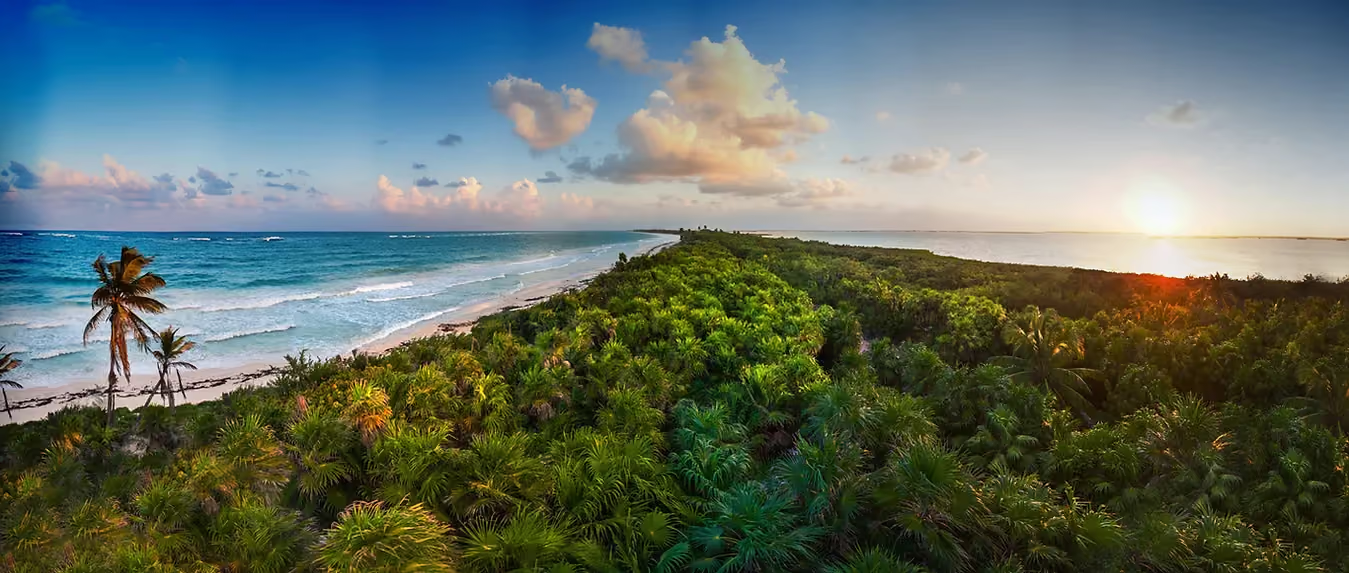
Commencez un voyage sur mesureTulum's ruined Maya city sits on a limestone cliff above one of the clearest stretches of Caribbean coastline in Mexico, and that setting alone makes it worth a visit. The structures are smaller than Chichén Itzá or Uxmal, and Tulum town has changed enormously in recent years, but nothing else in the Yucatán puts you on a clifftop with turquoise water below and ancient stone walls around you. If you want to build the rest of your trip around it, our travel designers at Rutopía can do that for you.
Quick summary: Tulum ruins tour guide at a glance
- Tulum ruins receive approximately 1.8 million visitors per year (INAH estimates), making it one of Mexico's most visited archaeological sites despite being the smallest of the major Maya sites.
- Entry fee is approximately 95 MXN (~$5 USD) for the ruins; a separate Tulum state entry fee also applies.
- The site opens at 8 a.m.; peak crowds arrive around 10 a.m. via shuttle from Tulum town.
- Sunrise early-access permits are sometimes available through licensed tour operators.
- There is a small beach below the ruins where you can swim — unique among the major Maya sites
- No shade inside the site; mid-day heat is a serious logistics issue
- The best Tulum day pairs two hours at the ruins with a morning cenote stop and an afternoon in Sian Ka'an
- Gran Cenote is ~5 km from the ruins; Cenote Dos Ojos is ~12 km — both work as same-day add-ons
- Tulum town has become heavily commercialized; the boutique fishing-village atmosphere it was once known for is largely gone
- The official site authority is INAH's Tulum archaeological zone page
Why Tulum ruins are worth your time (and why two hours is enough)
The walled Maya city of Tulum was a thriving port during the late Post-Classic period, roughly the 13th to 15th centuries, and it remained inhabited after Spanish contact longer than most major Maya centers. The perimeter wall that still encircles three sides of the site is one of the few surviving examples of a Maya fortified settlement, and standing inside it with the Caribbean visible through the gaps in the stone gives you a sense of place that photographs cannot fully convey.
That said, the site is compact. The main ceremonial structures can be covered in a focused 90-minute walk, and there is limited shade anywhere inside the walls. Going in with that expectation works in your favor: you arrive before the crowds build, see everything deliberately, cool off on the beach below, and leave before the midday heat makes the whole experience uncomfortable.
Compared to Chichén Itzá or Uxmal, the architecture at Tulum is less elaborate and the scale is much smaller. Those sites reward longer exploration; Tulum rewards arriving early, paying close attention to a few key structures, and building the rest of the day around the location rather than the ruins alone. Our 2026 guide to the best Yucatán tours covers how Tulum fits into a broader Yucatán itinerary alongside those larger sites.
Pro tip: Book a licensed guide in advance rather than hiring at the gate. A knowledgeable guide changes what you see in the Temple of the Frescoes from "old painted walls" to one of the most intact examples of Post-Classic Maya cosmological art in Mexico.
The main structures you should not miss
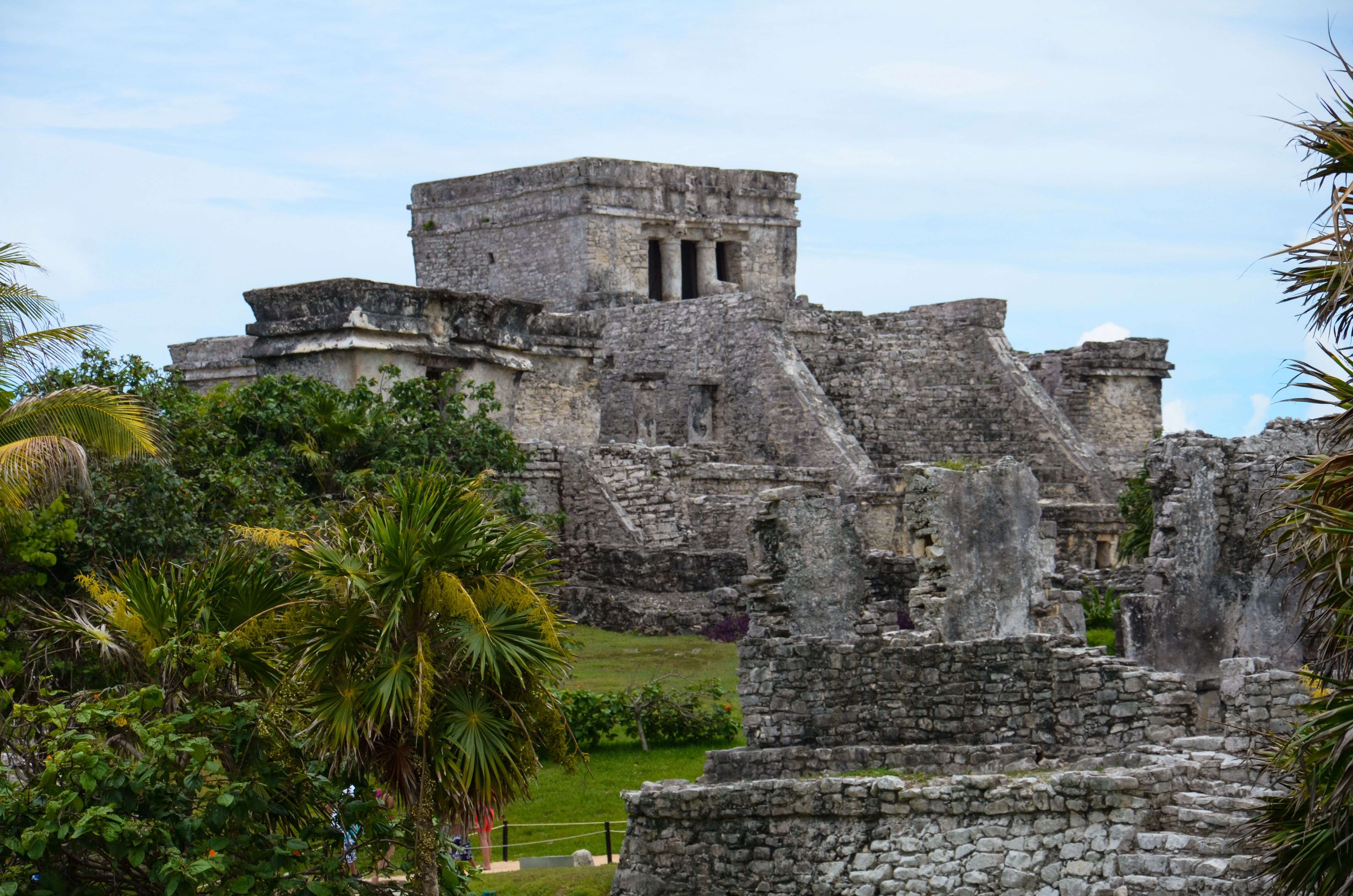
El Castillo is the most recognizable structure at Tulum and the largest on site. It sits directly on the cliff edge, and its position is not accidental: the building functioned as a navigational marker for Maya canoe traders working the Caribbean coast. The alignment of the structure and its interior windows allowed a flame placed at the right angle to guide mariners safely through the reef gap below. Most visitors photograph it from the front and move on without registering that they are looking at a lighthouse.
The Temple of the Frescoes is the site's most important structure from an archaeological standpoint. The interior murals, now protected behind a metal barrier, contain some of the best-preserved Post-Classic Maya painted imagery in the Yucatán Peninsula. The iconography depicts Ixchel, the Maya moon goddess, alongside the Descending God figure that appears repeatedly at Tulum. The exterior facade has a relief of a human figure in a diving or descending posture, consistent with the Descending God motif found throughout the site. Wikipedia's Tulum entry provides useful background on the iconographic context if you want to read before you visit.
The Temple of the Descending God is a smaller structure but one of the most visually distinctive at Tulum. The carved figure above the doorway, inverted and interpreted as either a bee deity or a setting sun, appears at other Yucatán sites but is particularly clear here. Spend a moment with it before the crowds arrive and the area around it becomes congested.
A story about what the lighthouse tells you
A guide our Yucatán team works with near Tulum, we'll call him Santiago , has been taking small groups through the site since 2009. He spends most of his time with clients not at the Temple of the Frescoes, which everyone photographs, but at El Castillo, which most people treat as a backdrop.
Santiago explains that the position of El Castillo on the cliff was deliberate and precise. Maya traders in canoes working the Caribbean coast used a flame placed in the upper window of the building as a navigational reference at night. The reef below Tulum has a gap in it, and a canoe following the light through the correct angle would clear the reef safely. "Most people walk past it like it's decoration," he says. "But this was infrastructure. The Maya were moving goods along this coast the way we use shipping lanes. This building was how they did it safely."
Knowing that changes how you stand in front of El Castillo. You stop seeing a picturesque pyramid and start seeing the edge of a working port.
Sunrise access vs. standard entry: which is right for you
Standard entry to Tulum ruins typically begins at 8 a.m. Arriving at opening time, before the first shuttles from Tulum town deposit tour groups at the site around 9:30 to 10 a.m., gives you a noticeably quieter experience. The light is also better for photography in the early morning, particularly on El Castillo, which faces east toward the water.
Some licensed tour operators have offered special early-access arrangements that allow entry before the general public opening, taking advantage of the site's dramatic sunrise light over the Caribbean.
For travelers who are not early risers and are joining a group tour from Cancún or Playa del Carmen, the practical advice is to request a departure time that gets you to the site by 8:30 a.m. at the latest. An hour and a half of touring before the crowd peaks makes a significant difference to the experience.
Pro tip: If you are driving yourself, pay for the parking closest to the main entrance rather than the lower lot. The walk from the lower parking area through the Tulum town commercial zone to the ruins entrance is longer than it looks on the map and significantly hotter by mid-morning.
The beach below the ruins
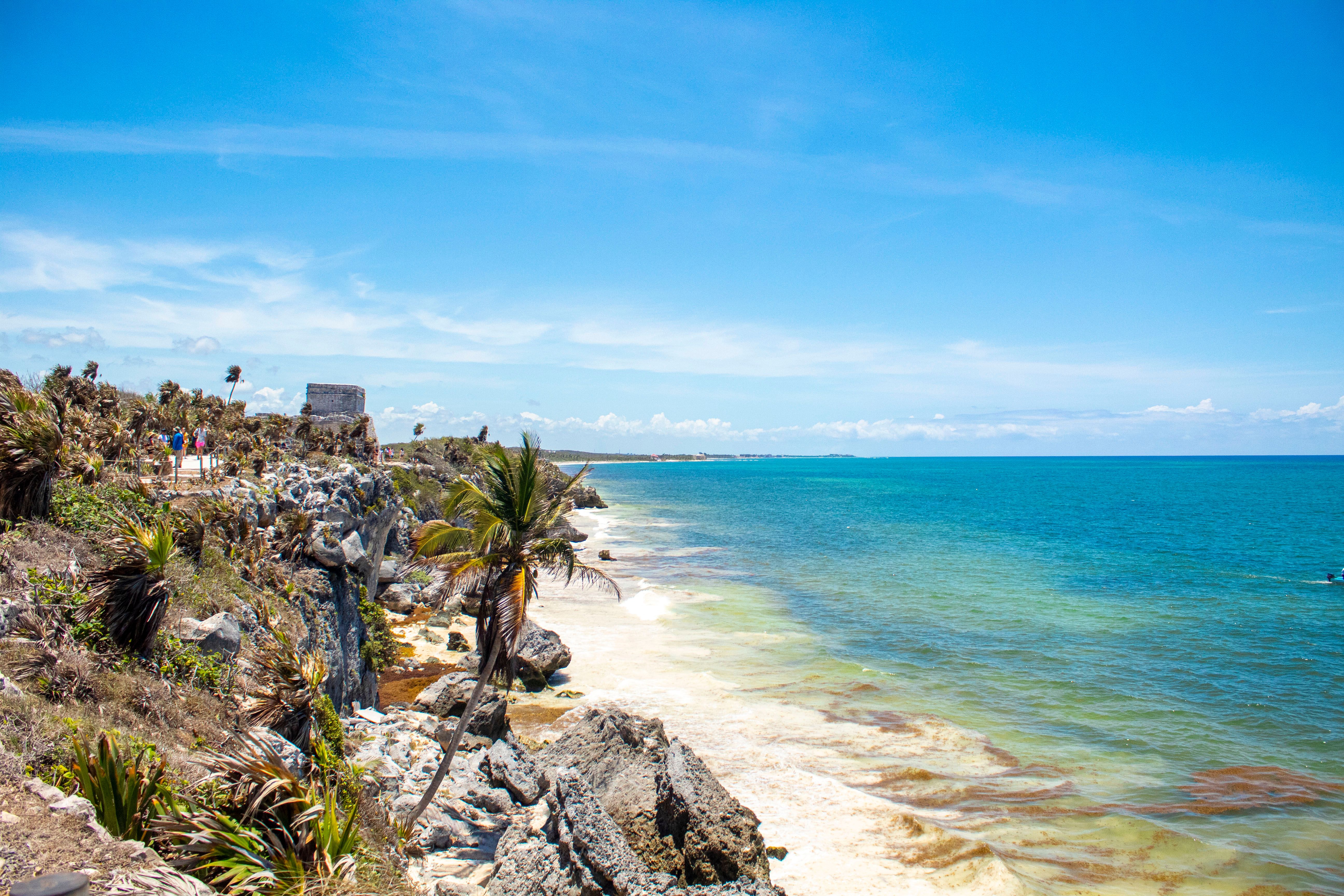
One of the genuinely unusual features of Tulum is the small beach accessible from inside the archaeological zone. After passing through the main walled area, a path descends the cliff to a strip of Caribbean sand with the ruins visible above you on the bluff. You can swim here. This is not common at Maya archaeological sites; it is not possible at Chichén Itzá, Uxmal, or any of the other major inland sites in the Yucatán.
The beach is small and can become crowded by mid-morning. Water shoes are worth packing because the entry into the water is rocky in places. The combination of swimming in clear Caribbean water with a view of a walled Maya city on the cliff above you is genuinely striking and worth building into your schedule rather than skipping because you ran long in the ruins.
Plan for 30 to 45 minutes at the beach if you want to swim. Pack a change of clothes or a dry bag if you are continuing to cenotes or Sian Ka'an afterward, since the logistics of changing in the beach area are limited.
Getting there: shuttle, car, or tour
The ruins are located a short distance from Tulum town, and the access road has its own parking area and a shuttle system for visitors. Most people arriving independently from Tulum town take the colectivo-style shuttle that runs between the town commercial zone and the ruins entrance. Arriving by car gives you more flexibility but adds the cost of parking, and traffic on the access road backs up significantly by mid-morning.
From Cancún, the ruins are approximately two hours by car or ADO bus to Tulum town, then the shuttle to the site. From Playa del Carmen, it is roughly one hour. Most group tours from the Riviera Maya corridor include transportation, entrance fees, and a guide in the package price, which is often the most cost-efficient option for travelers not renting a car for their entire trip.
Taxis from Tulum town to the ruins entrance are available but pricing is inconsistent. Agree on a fare before you get in and confirm whether the driver will wait or return at a set time if you want a round trip.
Pro tip: There's a crowd factor at Tulum that has nothing to do with the shuttle from town: cruise ship schedules out of Cozumel. Wednesdays are the worst possible day to be at these ruins, since that's when up to eight ships can be in port at once, all sending excursions across on the ferry and into vans headed for Tulum. Sundays are consistently the quietest, often with no ships in Cozumel at all. If your dates are flexible at all, check the Cozumel cruise calendar before you lock in which day you do Tulum, not just what time. It's a bigger swing in crowd size than arriving at 8 a.m. versus 9 a.m., and almost nobody outside the cruise crowd thinks to check it.
For how Tulum tours compare to group and private options across the region, see our piece on Yucatán private tours vs. group tours in 2026.
Honest thoughts on Tulum town
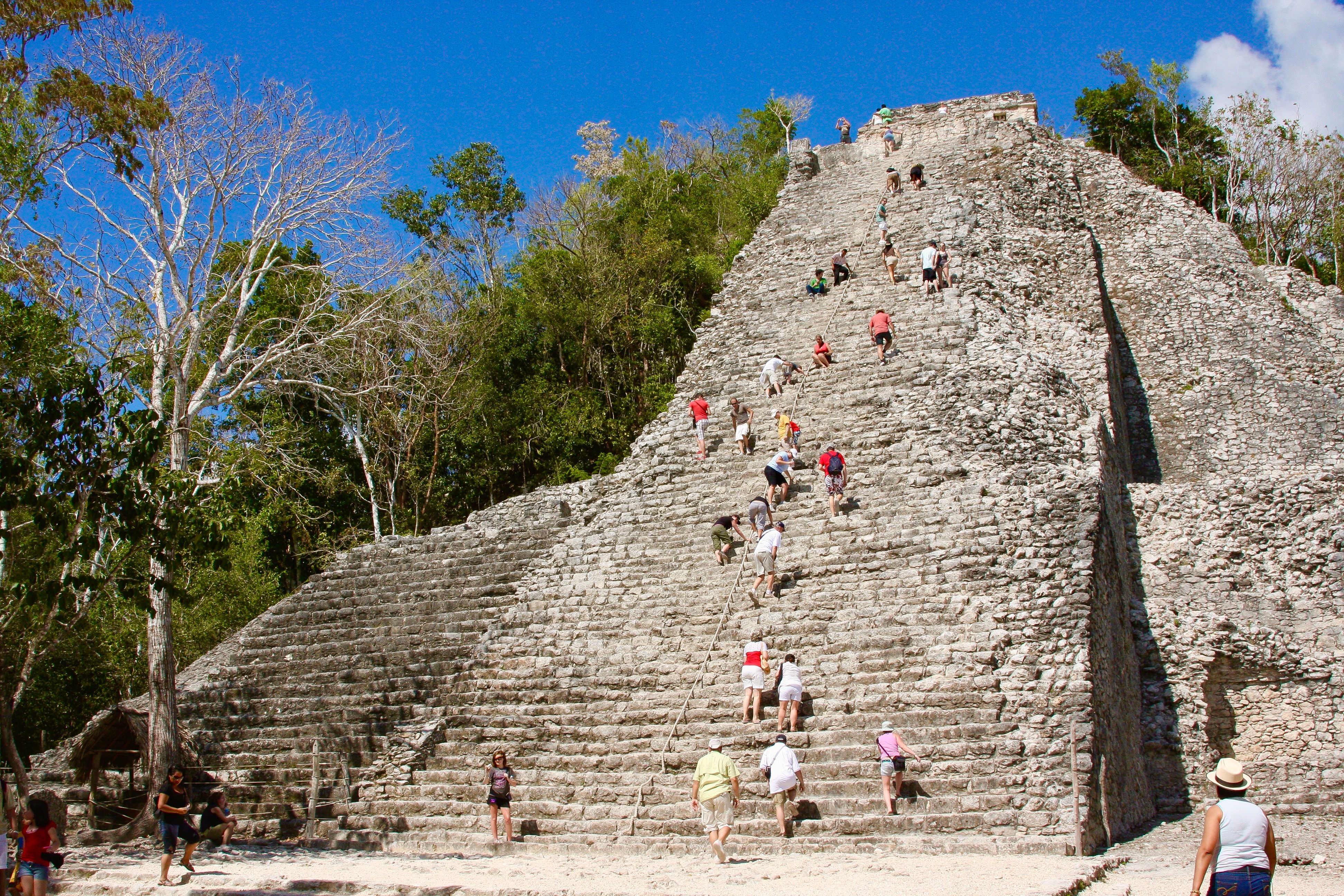
Tulum town has changed dramatically in the last five years. The boutique hotel strip that made it famous has expanded into a full resort zone with prices to match. The cenote access roads are increasingly managed by commercial operations rather than the local ejido communities that originally developed them. If you are expecting a quiet fishing village, manage your expectations carefully. If you are expecting beautiful ruins on a cliff above a Caribbean beach, you will get exactly that — one of the coastal highlights in our roundup of the best Yucatán tours for 2026.
The commercial zone between the parking area and the ruins entrance is dense with vendors and can feel relentless, particularly if you arrive mid-morning with the crowd. Moving through it quickly on arrival and budgeting time to look at stalls on the way out, when you are less rushed, is a better approach than trying to browse on the way in.
For travelers sensitive to over-tourism dynamics, it is worth knowing that Tulum town's growth has created real pressure on the reef, the freshwater lens beneath the peninsula, and the communities that were there before the resort expansion. The ruins themselves, managed by INAH, remain well-maintained. Our best Yucatán itinerary packages guide includes alternatives for travelers who want more of the Yucatán and less of the Tulum resort corridor.
Cenote combos that work
The area around Tulum has some of the most accessible cenotes in the Yucatán, and pairing the ruins with a cenote visit in the same day is one of the best uses of time in the region. Two options work particularly well logistically.
Gran Cenote is approximately 5 km from the ruins on the road toward Cobá. It is a semi-open cenote with clear, cool freshwater and good snorkeling visibility. Admission is approximately 180 MXN (~$9 USD). It opens in the morning and can get crowded by late morning; visiting immediately after the ruins before the tour buses arrive from the Riviera Maya corridor gives you better conditions. Life jackets are available for non-swimmers.
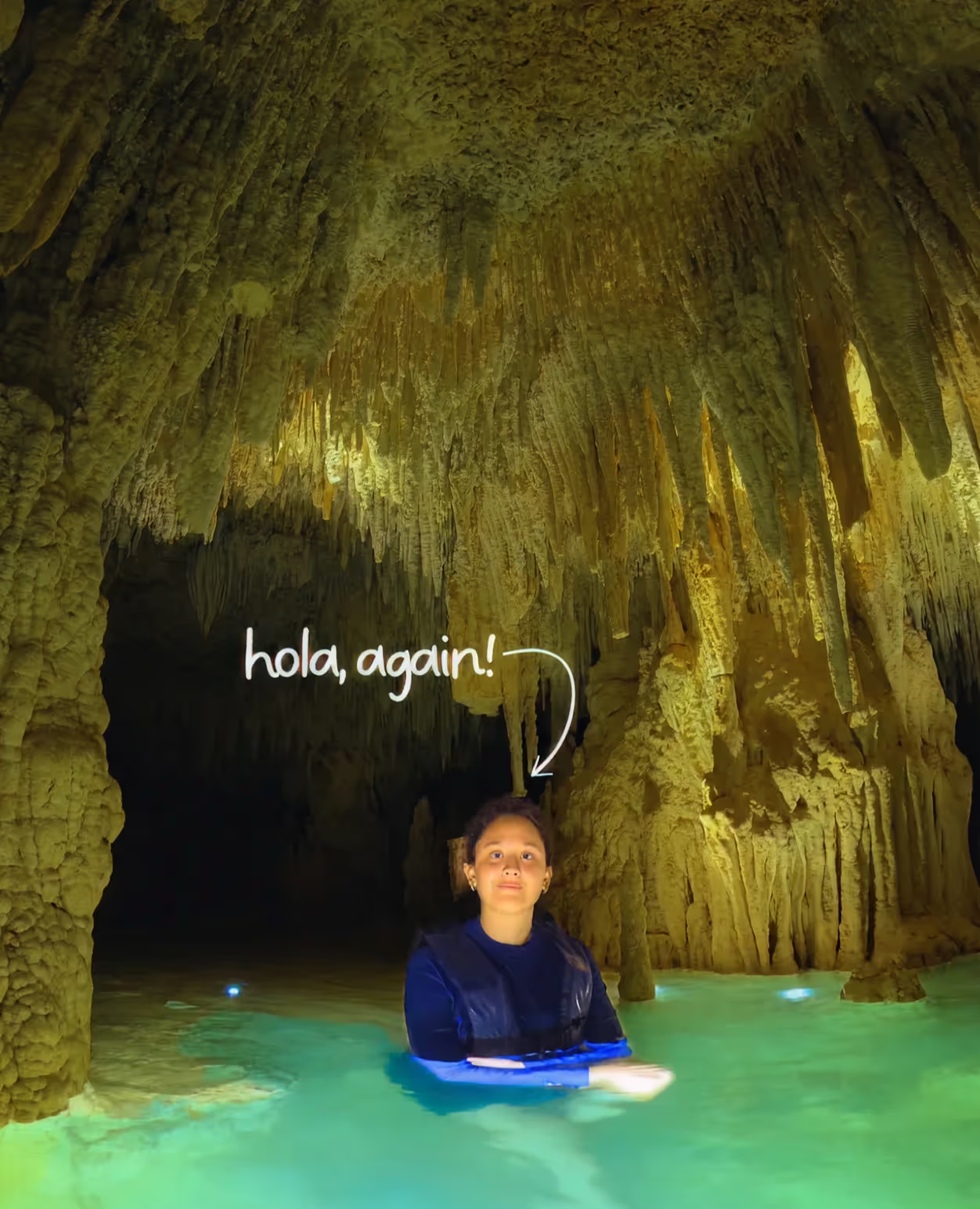
Cenote Dos Ojos is approximately 12 km from the ruins and is a more extensive cave system suitable for snorkeling and, with a licensed guide, diving. It takes longer to reach and the experience is more immersive; the darkness of the cave interior and the visibility in the water make it a genuinely different environment from the open-air Gran Cenote. Plan for at least 90 minutes at Dos Ojos if you go.
Both cenotes work as afternoon activities after a morning at the ruins and the beach. For a broader look at cenote options across the Yucatán, see our best cenote tours in Yucatán for 2026, and for logistics and safety information specific to cenote swimming, see cenote safety and tour logistics you need to know.
Sian Ka'an as an afternoon add-on
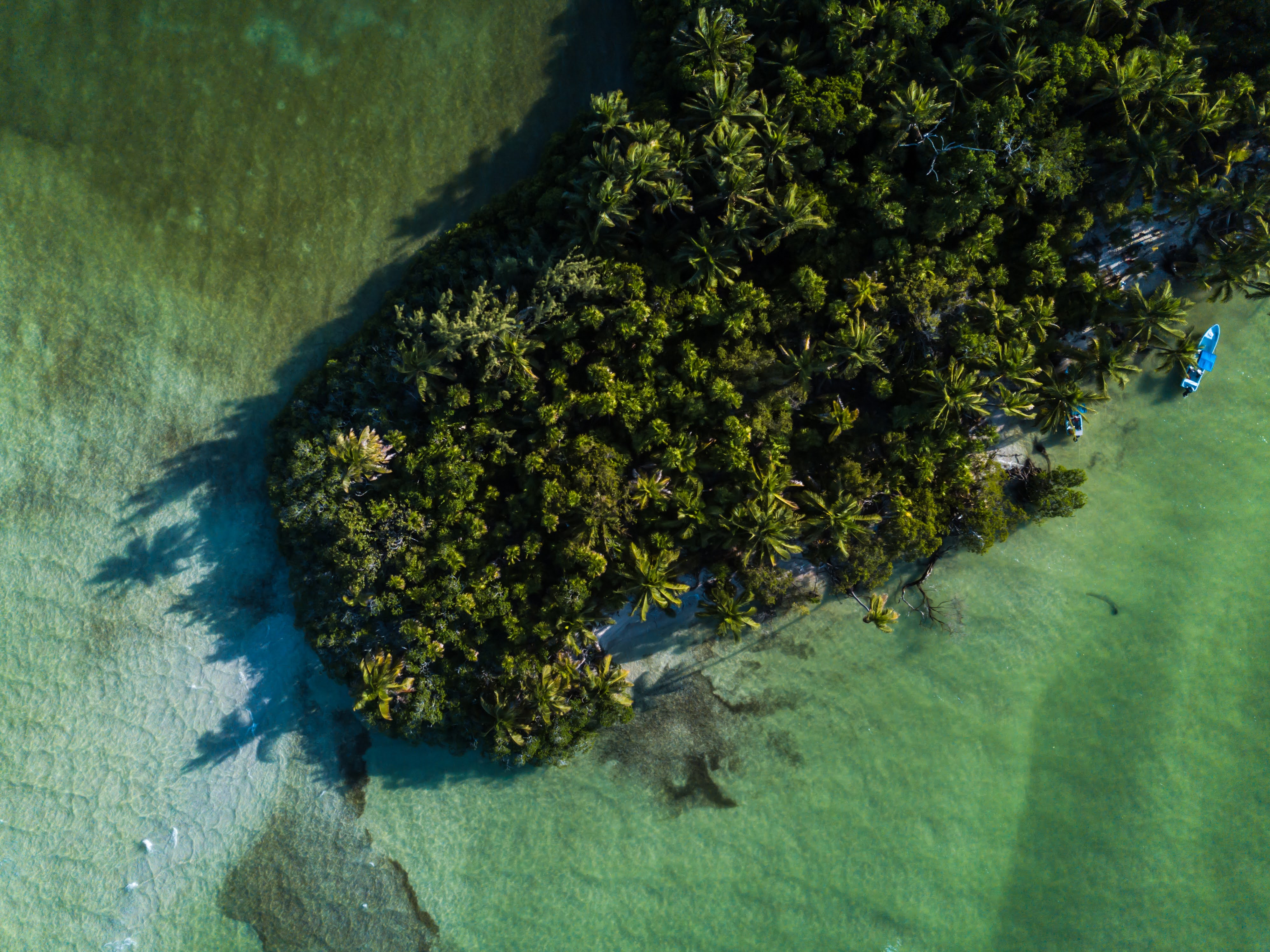
The Sian Ka'an Biosphere Reserve begins just south of Tulum and is a UNESCO World Heritage site encompassing wetlands, tropical forest, barrier reef, and mangrove channels. A boat tour through the reserve channels is one of the best half-day activities in the region and pairs naturally with a morning at the ruins.
Most Sian Ka'an boat tours operate from the Boca Paila area, accessible by a road that runs south from Tulum town along the coast. Tours typically last three to four hours and include navigation through the channels, wildlife observation, and a float through a natural freshwater-meets-saltwater section of the channel system. Frigate birds, roseate spoonbills, crocodiles, and manatees are all possible sightings depending on the season.
The reserve's UNESCO status and the ecological significance of the watershed that connects the inland cenote system to the reef mean this is not just a pleasant boat trip but a genuinely important ecosystem visit. Our complete Sian Ka'an tours guide for 2026 covers operator selection, what to expect, and booking logistics in detail.
What to bring and what to expect
There is no shade inside the Tulum archaeological zone. This is not an exaggeration or a mild warning; on a clear day in the Yucatán between 9 a.m. and 3 p.m., the ruins are fully exposed and the limestone reflects heat. Sun protection is not optional. Bring sunscreen rated SPF 50 or higher, a hat with a brim, and more water than you think you need.
If you plan to swim at the beach below the ruins, pack your swimsuit underneath your clothes or in a small daypack. Water shoes or sandals with a strap are useful for the rocky entry into the water. A dry bag or a second plastic bag for wet items is worth it if you are continuing to cenotes afterward.
Bring cash in Mexican pesos for the entry fee (~95 MXN), the separate Tulum state fee, shuttle, tips, and the cenote if you are adding one. Card payment infrastructure at the ruins entrance and surrounding area is improving but not reliable enough to count on. For a realistic look at how Tulum fits into a multi-day trip, our complete Yucatán tours overview for 2026 covers the full region.
Bookable tours
Rutopía works with licensed operators across the Yucatán and Quintana Roo corridor. For Tulum specifically, the tours we recommend are:
- Tulum ruins + Gran Cenote half-day — typically a 4-5 hour departure from Tulum or Playa del Carmen, covering early ruins access and Gran Cenote before the mid-day crowds build. Includes a licensed guide at the ruins and transport between sites. Approximately 700–1,000 MXN (~$35–$50 USD) per person depending on group size and departure point.
- Tulum + Sian Ka'an full day — ruins in the morning, boat tour through the Sian Ka'an channels in the afternoon. A complete day that uses the geography well without requiring a car. Approximately 1,800–2,400 MXN (~$90–$120 USD) per person.
- Private Tulum ruins tour with a licensed local guide — small-group or private format with more depth than a standard walk-through. Worth booking for travelers who want more than a surface-level visit. Ask about sunrise access availability for 2026 when booking.
Rutopía tailor-made itineraries start from $3,000 USD per person, with a deposit required 30 days before arrival. Talk to our team about a custom Yucatán route.
FAQ
How long does it take to visit the Tulum ruins? Plan for 90 minutes to two hours inside the archaeological zone, plus 30 to 45 minutes at the beach below if you want to swim. Allow additional time for the shuttle from the parking area to the entrance and the return trip. A full morning visit including the beach takes about three hours from arrival to departure.
What are the Tulum ruins entry fees in 2026? The ruins entry fee is approximately 95 MXN (~$5 USD). A separate Tulum state entry fee applies in addition. Parking fees apply if you drive.
When do the Tulum ruins open? The site typically opens at 8 a.m.. Arriving at or shortly after opening gives you significantly better conditions than arriving mid-morning when tour buses begin arriving from the Riviera Maya corridor.
Is sunrise access available at Tulum ruins? Some licensed tour operators have offered early-access arrangements before the general opening, particularly for small groups. Availability for 2026 should be confirmed when booking.
Can you swim at the Tulum ruins? Yes. There is a small beach accessible from inside the archaeological zone, below the cliff on which El Castillo sits. You can swim in the Caribbean from inside the site, which is unusual among major Maya archaeological sites. The entry into the water is rocky in places; water shoes help.
How do the Tulum ruins compare to Chichén Itzá? Tulum is much smaller and less architecturally elaborate than Chichén Itzá, but the setting is more dramatic. Chichén Itzá rewards a longer, more thorough visit and has larger, more complex structures. Tulum is a two-hour visit with a Caribbean backdrop. Both are worth seeing. See our Chichén Itzá tour guide from Cancún, Tulum, and Playa for a direct comparison.
What cenotes are near the Tulum ruins? Gran Cenote is approximately 5 km away on the Cobá road and works as a same-day add-on after the ruins. Cenote Dos Ojos is approximately 12 km away and is suited for snorkeling and cave diving. Both are accessible without a car if you book through a tour. Our cenote tours guide for the Yucatán covers both in detail.
What is the Temple of the Frescoes at Tulum? It is the most archaeologically significant structure on site. The interior contains painted murals depicting Maya deities including Ixchel and the Descending God, representing some of the best-preserved Post-Classic Maya painted imagery in the Yucatán. The murals are now behind a protective barrier; a licensed guide who can describe what you are looking at significantly increases the value of the visit.
Is Tulum worth visiting if I'm also going to Chichén Itzá and Uxmal? Yes, but for different reasons. Tulum is not a substitute for the larger inland sites. If you are seeing Chichén Itzá and Uxmal, add Tulum for the coastal setting, the beach, and the half-day that frees up for Sian Ka'an afterward. Our best ruins tours in Yucatán for 2026 travelers covers how to sequence multiple sites efficiently.
How do I book a private guide at Tulum ruins? Guides at the gate are available but quality varies. Booking a licensed local guide in advance through a reputable operator gives you consistency and typically better English or Spanish instruction. For a custom itinerary that includes Tulum with a vetted private guide, talk to our team at Rutopía.
Looking for more Mexico travel resources? Be sure to check out:
Rédigé par
Design your trip to Mexico with a local travel designer. Unique activities and lodging, 100% tailor-made and stress-free.
.webp)

Rejoignez-nous à ce sujet
voyage
Planifiez votre voyage avec nousvoyage
Inscrivez-vous à notre newsletter pour être tenu au courant des nouveautés.
Oups ! Une erreur s'est produite lors de l'envoi du formulaire.
Ready to experience the real Mexico?
Travel with local experts and get hangds-on supoort every step of the way... from planning to arrival.


Your Travel Companion in Mexico, 24/7
We're with you from arrival to departure via WhatsApp for anything you need.
Trusted by thousand of travelers with a 4.9 rating on Google