Personalizar mi viaje


Tu itinerario de viaje para Oaxaca y Chiapas 2026
Un itinerario de viaje por Oaxaca y Chiapas de 10 a 14 días: Monte Albán, pueblos mezcaleros, San Cristóbal y Palenque. Diseñado por los expertos en viajes de Rutopía.


Contenido
Destacan nuestro trabajo



Viajes únicos en México.
Hecho a medida para ti.
Solicita tu viajeHecho a medida para ti.
Deja que un guía local te ayude a planificar tu viaje a México
Comience un viaje a medidaResumen rápido: el itinerario de Oaxaca y Chiapas de un vistazo
- Duración: 12 días como mínimo. Catorce días permiten disfrutar de Chiapas como se merece.
- Rango de precio: De 3,400 a 5,600 USD por persona, con guía privado y alojamiento de gama media. No incluye vuelos internacionales.
- Días en Oaxaca: 7 noches: ciudad, valles centrales (Teotitlán, Tlacolula, Mitla), día de mezcal en la Sierra Sur, noche opcional en la Sierra Norte.
- Días en Chiapas: 5 noches: San Cristóbal de las Casas, visita comunitaria dominical en Zinacantán o Chamula, Cañón del Sumidero y ruinas de Palenque.
- La combinación Oaxaca + Chiapas: Dos regiones que no comparten casi nada en cuanto a paisaje, gastronomía o cultura indígena, y precisamente por eso funcionan tan bien juntas. Cada una hace que la otra se sienta más completa.
- Centro Histórico de Oaxaca y Palenque son ambos sitios declarados Patrimonio de la Humanidad por la UNESCO: un reflejo de la extraordinaria densidad de patrimonio cultural que abarca esta ruta en 12 días.
- Tiempo de antelación: 4 a 5 meses para esta ruta. Los talleres en las tierras altas de Oaxaca y las visitas a las comunidades de Chiapas requieren coordinación previa con socios locales.
Si desea que nuestro equipo diseñe este itinerario según sus fechas e intereses específicos, comience en nuestra página de tours y paquetes por México.
Esta es la ruta que nuestro equipo realiza con mayor frecuencia en invierno. Cubre zonas que la mayoría de los itinerarios por México pasan por alto por completo, y las personas que conocerá en estas dos regiones son la razón por la que los viajeros regresan.
Por qué Oaxaca y Chiapas funcionan como un itinerario combinado

Oaxaca es árida, zapoteca y se articula en torno a los textiles, el mezcal y el mole. Chiapas es selva tropical, maya tsotsil y tzeltal, y se articula en torno al café, el ámbar y comunidades de las tierras altas que se han autogobernado desde antes de la llegada de los españoles. Combinarlos significa que no habrá dos días iguales durante los 12 días de viaje.
El vuelo interno de Oaxaca (OAX) a Tuxtla Gutiérrez (TGZ) dura 1 hora y 15 minutos. La mayoría de los itinerarios lo incluyen el día 8. Algunos operadores prefieren el trayecto en coche vía Tehuantepec: es hermoso, pero toma 8 horas. Tome el vuelo. Para obtener contexto sobre dónde se sitúa esta ruta en el conjunto general, consulte nuestra guía de los mejores tours por México para 2026.
Consejo experto: Ahorra tiempo y dinero usando autobuses nocturnos Si viajas con un presupuesto ajustado, tu mejor opción es tomar un autobús nocturno. Viajar de noche te permite recuperar el sueño mientras te desplazas entre destinos, ¡lo que significa que no sacrificarás un día entero de exploración sentado en el transporte!
Oaxaca: Días 1–7

Día 1 (llegada a la ciudad de Oaxaca). Llegada, registro en el hotel y paseo por el zócalo. El paseo vespertino alrededor de la iglesia de Santo Domingo es la orientación ideal. Cena en una cocina tradicional en el centro. Duerme temprano.
Día 2: Ciudad de Oaxaca. Mañana: Ruinas del Templo Mayor (sitio ceremonial zapoteca bajo la ciudad), Mercado 20 de Noviembre para almorzar una tlayuda, tarde en las galerías cerca de Alcalá. Este es también el día para familiarizarse con la gastronomía oaxaqueña: la variedad de chiles, el chocolate que no es dulce, el tejate que toma cuarenta minutos preparar. INAH administra el sitio del Templo Mayor.
Consejo local: ¡No te pierdas el chocolate caliente de Oaxaca! Si visitas Oaxaca, ¡simplemente no puedes perderte el chocolate caliente tradicional! Por la tarde, dirígete a una cafetería local y deléitate con esta bebida rica y reconfortante; es la forma perfecta de sumergirte en la cultura local y relajarte después de un día de exploración.
Día 3: Teotitlán del Valle + Mitla. Conduce 45 minutos hacia el este hasta Teotitlán para visitar las cooperativas de tejido: demostraciones de tintes naturales, telares en funcionamiento y tapetes cuyo precio parece pequeño después de haber visto el proceso. Continúa hacia Mitla para admirar la mampostería geométrica zapoteca, que no tiene paralelo en la arquitectura mesoamericana. Regresa pasando por el mercado de los jueves en Tlacolula si el tiempo lo permite.
Día 4: Mercado dominical de Tlacolula. El día de mercado más importante en los valles de Oaxaca. Llega antes de las 9 a. m. La barbacoa al fondo del mercado, los puestos de productos agrícolas en el centro, los chapulines en el extremo norte. Quédate dos horas como máximo. Los grupos de la ciudad llegan alrededor de las 10:30 y la energía cambia. Esto funciona mejor como base para una excursión de un día combinada con un sitio secundario del valle. Consulta nuestra guía de tours culturales para conocer el marco completo de la experiencia en el valle de Oaxaca.
Día 5: Palenque de mezcal en la Sierra Sur. Medio día de viaje hacia las montañas al sur de Oaxaca. Las destilerías en la Sierra Sur son operaciones reales, no montajes turísticos: el agave se cosecha en la ladera, se tuesta en un horno de tierra y se fermenta en tinas de madera. Una degustación de tres copas en un pequeño palenque cuesta entre 300 y 400 MXN (alrededor de 15 a 20 USD). Consulta nuestra guía de tours de aventura para ver cómo la Sierra Sur encaja en un itinerario activo más amplio.
Día 6: Día libre en la ciudad de Oaxaca. La ciudad merece un día tranquilo. Una clase de cocina por la mañana si aún no has tomado una. Un taller de alebrijes en San Martín Tilcajete si quieres ver la tradición de tallado en madera pintada en su origen. El Museo Rufino Tamayo para ver objetos precolombinos por la tarde.
Consejo local: Llévate un pedacito de Oaxaca a casa. Si te gustan los recuerdos, no puedes irte de Oaxaca sin llevarte una pieza de barro negro . Esta cerámica pulida, única y de color negro, es totalmente tradicional de la región y constituye una obra maestra auténtica e impresionante para recordar tu viaje.
Día 7: Noche opcional en la Sierra Norte. Senderismo en el bosque de niebla en los Pueblos Mancomunados a 3,000 metros de altura, con noche en cabañas comunitarias en Benito Juárez o Cuajimoloyas. Añade esto si tienes 14 días disponibles. Elimínalo si el límite son 12.
Consejo experto: En Oaxaca, reserva la visita al palenque de mezcal para media mañana en lugar de por la tarde. Los maestros destiladores trabajan desde el amanecer. Para las 2 p.m., la producción activa ha terminado y la visita se convierte solo en una degustación en lugar de una experiencia completa. Pide a tu operador que programe la visita cuando la tahona (rueda de piedra) aún esté en funcionamiento.
Chiapas: Días 8–12

Vuela de OAX a TGZ el día 8. Traslado a San Cristóbal de las Casas (1.5 horas desde Tuxtla: una carretera de montaña sinuosa que desciende de los 35°C de la costa a los 18°C de las tierras altas en 90 minutos). San Cristóbal será tu base durante cuatro noches.
Día 8 (llegada a San Cristóbal). Las calles empedradas, el andador Real de Guadalupe, café de olla en una cafetería local. Cena en el centro. La ciudad de noche en diciembre es extraordinaria: faroles, mercados y el aire frío de la sierra.
Día 9: Zinacantán y San Juan Chamula. El mejor día de toda esta ruta.
Una historia sobre un domingo en Chamula: La iglesia de San Juan Chamula no tiene bancas. Las familias se sientan sobre agujas de pino en el suelo, rodeadas de cientos de velas y botellas de Coca-Cola utilizadas en las prácticas rituales tsotsiles. Está prohibido tomar fotografías en el interior. Esta norma es aplicada de manera firme y respetuosa por los miembros de la comunidad. La cuota de entrada al pueblo de 200 MXN (alrededor de 10 USD) se destina al consejo comunitario. Un guía local que hable tsotsil y español puede explicarte lo que estás viendo sin restarle importancia. Sin un guía, solo observas y te pierdes el significado por completo. Antes, en Zinacantán: la cooperativa textil de mujeres, las flores bordadas sobre lana negra, un desayuno tardío de pozol y tamales. Este día solo funciona con un guía que tenga relaciones genuinas en ambas comunidades. Sobre el contexto de turismo sostenible detrás de visitas comunitarias como esta, ese guía explica cómo funciona el modelo de ingresos.
Día 10: Cañón del Sumidero. Un desfiladero de 1,000 metros de profundidad que se aprecia mejor desde el agua. El recorrido en lancha desde Chiapa de Corzo abarca 35 km entre paredes verticales de basalto, cocodrilos en las orillas y una cascada en el punto más estrecho. Calcula 3 horas en total. Reserva la salida a primera hora de la mañana para evitar los grupos turísticos de la tarde.
Pero seamos realistas con la logística: el trayecto de San Cristóbal a Chiapa de Corzo es de una hora y media por trayecto. Planifica bien el día con tu guía. El cañón merece la pena, pero no merece la pena hacerlo con prisas.
Consejo local: contempla el cañón desde las alturas. Después de navegar por las aguas del Cañón del Sumidero, asegúrate de subir a los miradores. ¡Tomarte el tiempo para ver el cañón desde ambas perspectivas te permitirá disfrutar de una vista de postal de los imponentes acantilados desde arriba!
Día 11: Palenque. El traslado de San Cristóbal a Palenque dura 5 horas por la carretera de las tierras bajas o 3,5 horas por la ruta de montaña a través de Ocosingo. Ambas son opciones viables. La ruta de montaña atraviesa comunidades tzeltales y zonas cafetaleras. Llegada a Palenque para registrarse en el hotel por la tarde y dar un paseo por el pueblo al atardecer.
Día 12: Ruinas de Palenque al amanecer y salida. Apertura de puertas a las 8 a. m. El sitio arqueológico en la selva antes de que lleguen los grupos turísticos, los monos aulladores en la copa de los árboles sobre el Templo XX, la acústica del lugar vacío, la bruma matutina sobre la Sierra de Chiapas. Recorre todo el sitio con un guía que pueda explicarte la escalinata jeroglífica y el sarcófago de Pakal. Salida desde el aeropuerto de Villahermosa (VHU) o Palenque. Consulta nuestra guía de itinerarios guiados por México para ver cómo se compara esta estructura de 12 días con otras duraciones.
Consejo profesional: Añade una noche en el pueblo de Palenque (noche del día 11) en lugar de intentar llegar conduciendo desde San Cristóbal el mismo día para volar el día 12. Esa noche extra te permite visitar las ruinas de Palenque a las 8 a. m. descansado, en lugar de hacerlo tras un viaje de 5 horas. Es la diferencia entre vivir la mejor mañana del viaje o una visita apresurada solo por cumplir.
Itinerario detallado día a día

Dónde alojarse en esta ruta

Ciudad de Oaxaca (7 noches): Casa de las Bugambilias o La Betulia para posadas boutique en el centro histórico, $100–$180 USD por habitación doble. Evite las cadenas hoteleras internacionales aquí: la relación calidad-autenticidad favorece claramente a las posadas independientes.
San Cristóbal de las Casas (3 noches): Casa Felipe Flores o Hotel Bo para opciones boutique, $80–$160 USD por habitación doble. La ciudad es transitable a pie desde ambos puntos. El frío de las tierras altas por la noche hace que una habitación con chimenea no sea un lujo, sino una necesidad práctica.
Palenque (1 noche): Chan-Kah Resort Village es la opción más confiable junto a las ruinas, con piscina, jardines y tarifas razonables ($80–$140 USD por habitación doble). Los hoteles del pueblo son más económicos, pero están más alejados del sitio arqueológico.
Cuánto cuesta este itinerario por Oaxaca y Chiapas
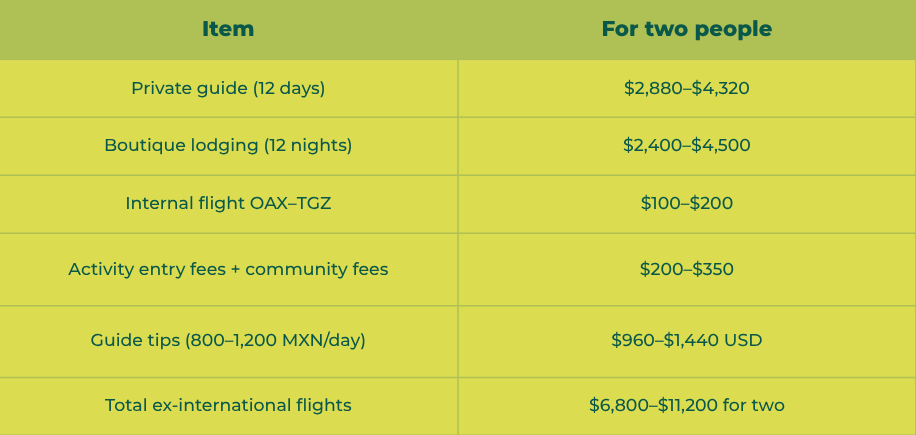
Por persona: $3,400–$5,600. Los vuelos internacionales añaden entre $800 y $1,800 para dos personas desde los principales centros de conexión de Norteamérica. Desglose completo por persona en nuestra guía honesta de costos de viajes por México.
Tours reservables para esta ruta
- Rutopía: Viaje a medida de 12 días por Oaxaca y Chiapas. Guía privado, posadas boutique y hoteles comunitarios durante todo el recorrido, visita a palenque de mezcal, visita a la comunidad de Chamula y amanecer en Palenque. Desde $3,400 por persona. Planifique su ruta con nuestro equipo
- G Adventures: Explorador de Oaxaca y Chiapas. 12 días en grupo pequeño. Desde $2,300 por persona. Ver en Viator [VERIFY: live listing URL]
- Intrepid Travel: México auténtico. Recorrido de 15 días en grupo pequeño por CDMX, Oaxaca y Yucatán (diferente combinación). Desde $2,450 por persona. Ver en GetYourGuide [VERIFY: live listing URL]
- Airbnb Experiences: Visita privada a un palenque de mezcal en Oaxaca. Visita de medio día a una destilería para dos personas. Desde $80 USD. Ver en Airbnb Experiences [VERIFY: live listing URL]
Preguntas frecuentes sobre el itinerario por Oaxaca y Chiapas
¿Cuántos días se necesitan para un itinerario por Oaxaca y Chiapas?
Doce días como mínimo: 7 en Oaxaca y 5 en Chiapas. Catorce es mejor; los dos días adicionales permiten absorber la logística de Chiapas sin sacrificar ninguna experiencia. Con menos de 12 días, una de las dos regiones se verá perjudicada. Consulta nuestros itinerarios por México según su duración para comparar las distintas opciones.
¿Es este un buen primer viaje a México?
No es lo ideal para una primera visita; la logística es más compleja que la ruta CDMX + Yucatán y la profundidad cultural requiere cierto contexto sobre México para apreciarla plenamente. Nuestra recomendación para un primer viaje es el itinerario por CDMX y Yucatán. Reserva Oaxaca y Chiapas para tu segunda visita.
¿Cuál es la mejor época para este itinerario por Oaxaca y Chiapas?
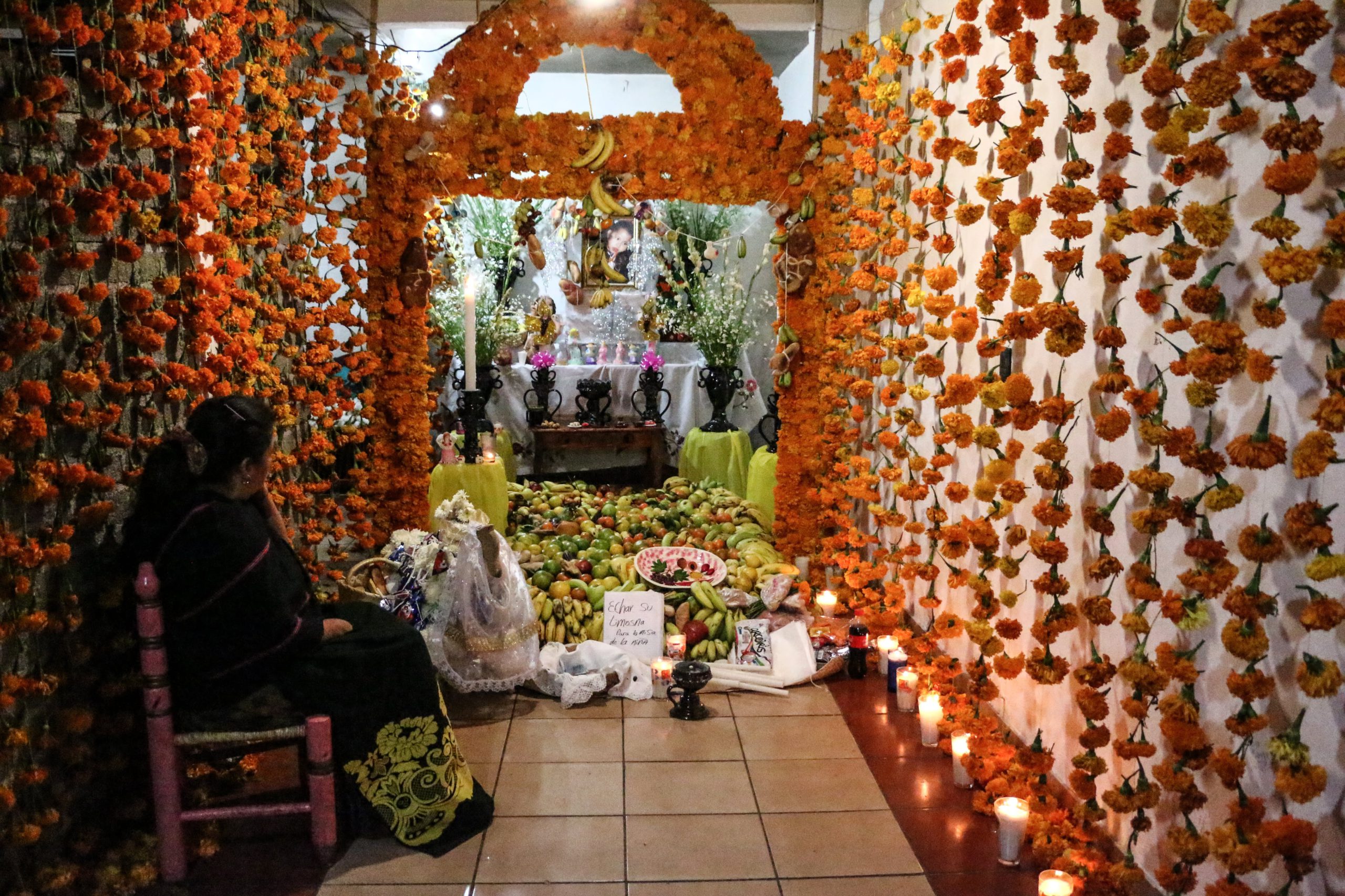
De octubre a principios de diciembre y de febrero a abril. Vale la pena reservar con seis meses de antelación para el Día de Muertos en Oaxaca (finales de octubre a principios de noviembre). Evita la temporada alta del 20 de diciembre al 5 de enero en la ciudad de Oaxaca; el zócalo se llena demasiado y los talleres del valle cierran por las festividades. Guía estacional completa en nuestro Guía de temporada en México.
¿Es seguro México para este itinerario por Oaxaca y Chiapas?
Sí, en las rutas que opera nuestro equipo. La ciudad de Oaxaca y los valles centrales, San Cristóbal de las Casas y la zona arqueológica de Palenque cuentan con altos niveles de seguridad para los viajeros en itinerarios estándar. Las visitas a las comunidades de Zinacantán y Chamula son seguras precisamente porque su guía tiene relaciones establecidas allí; respete las normas de fotografía y siga las indicaciones de su guía. Nuestra guía de seguridad en México cubre el panorama regional.
¿Puedo recorrer Oaxaca y Chiapas sin un guía privado?
La ciudad de Oaxaca y los valles centrales se pueden recorrer de forma independiente con una buena investigación. Las visitas a las comunidades de Chiapas (Zinacantán, Chamula), la logística del Cañón del Sumidero y el traslado de Palenque al aeropuerto son mucho más difíciles de gestionar sin un guía que conozca la región. Las visitas a las comunidades, en particular, requieren un guía con relaciones locales genuinas, no solo un coordinador logístico. Consulte nuestra guía de tours privados en México para ver cómo funciona el formato guiado en la práctica.
¿Cuál es la norma sobre fotografía cultural en Chiapas?
Está prohibido tomar fotografías dentro de la iglesia de San Juan Chamula y esta norma se aplica estrictamente. Fotografiar a miembros de las comunidades tsotsil o tzeltal requiere consentimiento explícito, solicitado a través de su guía en el idioma local, no mediante gestos con el teléfono. Fotografiar a niños sin el consentimiento de sus padres no es aceptable en ninguna parte de esta ruta. Su guía le dará las instrucciones antes de cada visita a una comunidad.
¿Cómo se compara el itinerario de Oaxaca y Chiapas con el de CDMX y Yucatán?
La ruta de CDMX y Yucatán cubre los sitios más famosos de México y es más sencilla logísticamente. Oaxaca y Chiapas profundizan más en la cultura indígena, requieren más planificación y ofrecen un tipo de viaje diferente: menos icónico, pero más inmersivo. Muchos de nuestros clientes realizan ambos en dos visitas distintas. Nuestro resumen de los mejores tours en México compara todas las opciones de ruta.
¿Cuánto cuesta este itinerario?
De 3400 a 5600 USD por persona para un viaje privado guiado de 12 días, sin incluir vuelos internacionales. El desglose completo se encuentra en nuestra guía de costos de tours en México. Para una comparación con el formato de grupos pequeños, consulte nuestra guía de tours en grupos pequeños frente a tours privados.
Looking for more Mexico travel resources? Be sure to check out:
- Los mejores tours en México para 2026: comparativa de formatos
- Itinerario de viaje por Ciudad de México y Yucatán: la ruta clásica
- Tours culturales en México: historia, gastronomía y comunidad
- Turismo sostenible en México: viajes basados en la comunidad
- ¿Cuánto cuestan los tours en México? Un desglose honesto
- Cuándo reservar tours en México: estacionalidad por región
Escrito por
Design your trip to Mexico with a local travel designer. Unique activities and lodging, 100% tailor-made and stress-free.
.webp)
Únete a nosotros sobre esto
viaje
Planifica tu viaje con nosotrosviaje
Únete a nuestro newsletter para mantenerte al tanto de novedades y consejos para tus viajes.
¡Vaya! Se ha producido un error al enviar el formulario.
Ready to experience the real Mexico?
Travel with local experts and get hangds-on supoort every step of the way... from planning to arrival.


Your Travel Companion in Mexico, 24/7
We're with you from arrival to departure via WhatsApp for anything you need.
Trusted by thousand of travelers with a 4.9 rating on Google