Personnaliser mon voyage


Best Cenote Tours In Yucatán For 2026
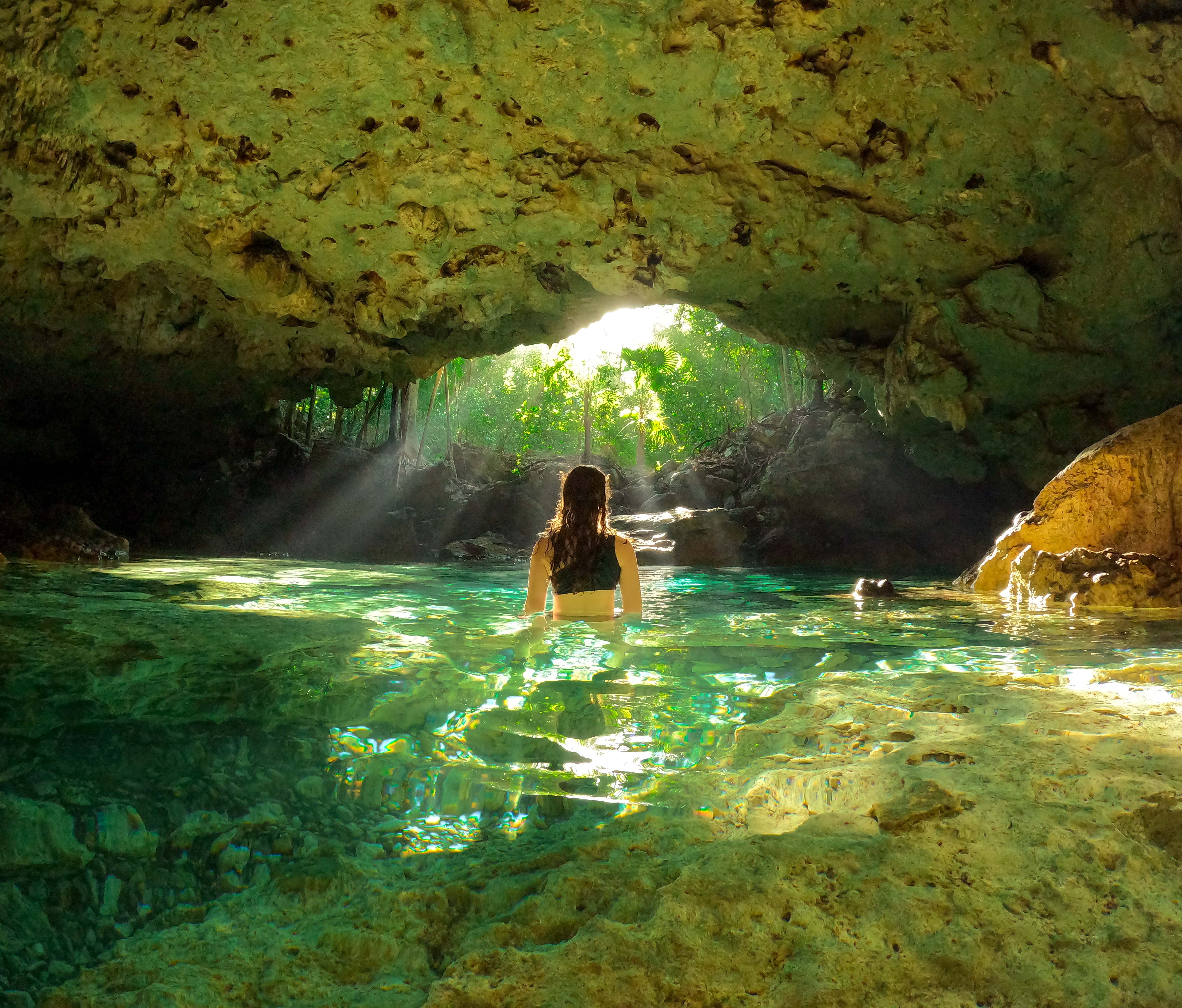
Best cenote tours in Yucatán: hidden jungle cenotes, snorkel-friendly pools and how to avoid the crowds for 2026. Picks from our Yucatán team.

Contenu
Ils mettent en valeur notre travail



Des voyages uniques au Mexique.
Fait sur mesure pour vous.
Demandez votre voyageFait sur mesure pour vous.
Laissez un guide local vous aider à planifier votre voyage au Mexique
Commencez un voyage sur mesureThe Yucatán Peninsula sits on a porous limestone shelf riddled with underground rivers, and where that shelf collapses you get a cenote — a freshwater sinkhole that can be anything from a rope-ladder cave pool to an open-sky lagoon. Picking the right one for your trip makes the difference between a quiet, cool swim in the jungle and standing shoulder-to-shoulder with a tour bus crowd. Visit our Mexico tours packages if you want Rutopía to design the whole trip around them.
Quick summary: best cenote tours in Yucatán at a glance
- The Yucatán Peninsula holds an estimated 6,000 cenotes per CONABIO; roughly 2,500 are accessible to visitors
- Most-photographed: Cenote Ik Kil (near Chichén Itzá) — beautiful, crowded, go early or skip the swim
- Best for snorkeling: Gran Cenote and Dos Ojos, both within 15 km of Tulum ruins
- Best off-the-beaten-track: Cenote Yaal Utzil near Homún, Cenote X-Canché near Ek' Balam
- Most atmospheric access: Cuzamá cenotes via horse-drawn cart
- Community cenote entry: 80–200 MXN per person (about $4–10 USD)
- Guided tour packages: $65–$120 USD per person
- Non-negotiable rule: no regular sunscreen in cenotes — biodegradable-only or none at all
- Best visiting window: arrive before 10 a.m. to beat group tours
- Full planning guide: our Yucatán tours hub
The four types of cenotes you'll encounter
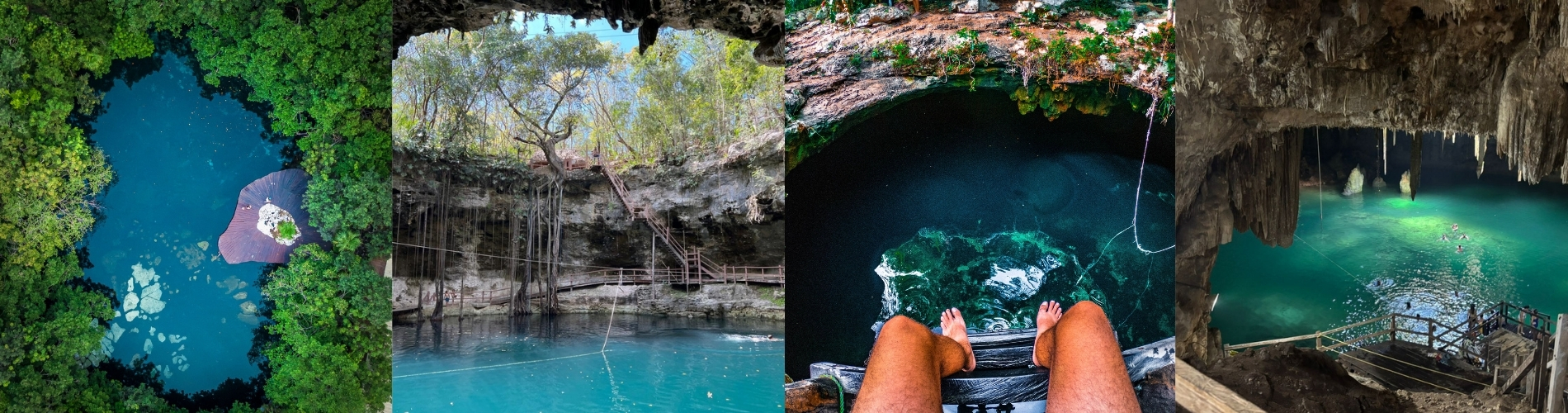
Not all cenotes look the same. Understanding the four main types helps you pick the right one for your trip and sets realistic expectations before you arrive.
Open cenotes are surface-level sinkholes with no roof. They tend to get full sun, which makes for dramatic photos but also means more algae and warmer water. These attract the highest visitor counts, especially in peak season (December through March and July through August).
Semi-open cenotes have a partial rock canopy with one open section where roots and vines hang down into the water. The light filtering through makes for spectacular photography, and the covered sections stay cooler. These are often the sweet spot between atmosphere and crowd size.
Cave cenotes are fully enclosed, reached by rope, ladder, or carved stone steps, with headlamps or natural light shafts. They feel the most otherworldly and are generally the least crowded because they require more physical effort and have lower visitor capacity.
Subterranean cenotes are primarily for experienced cave divers. Connected to the vast underground river system mapped by the Proyecto de Espeleología de Tulum, these are not recreational swimming spots for the general traveler. Read our cenote safety and tour logistics guide before considering any cave diving excursion.
Popular cenotes worth knowing about (and their caveats)
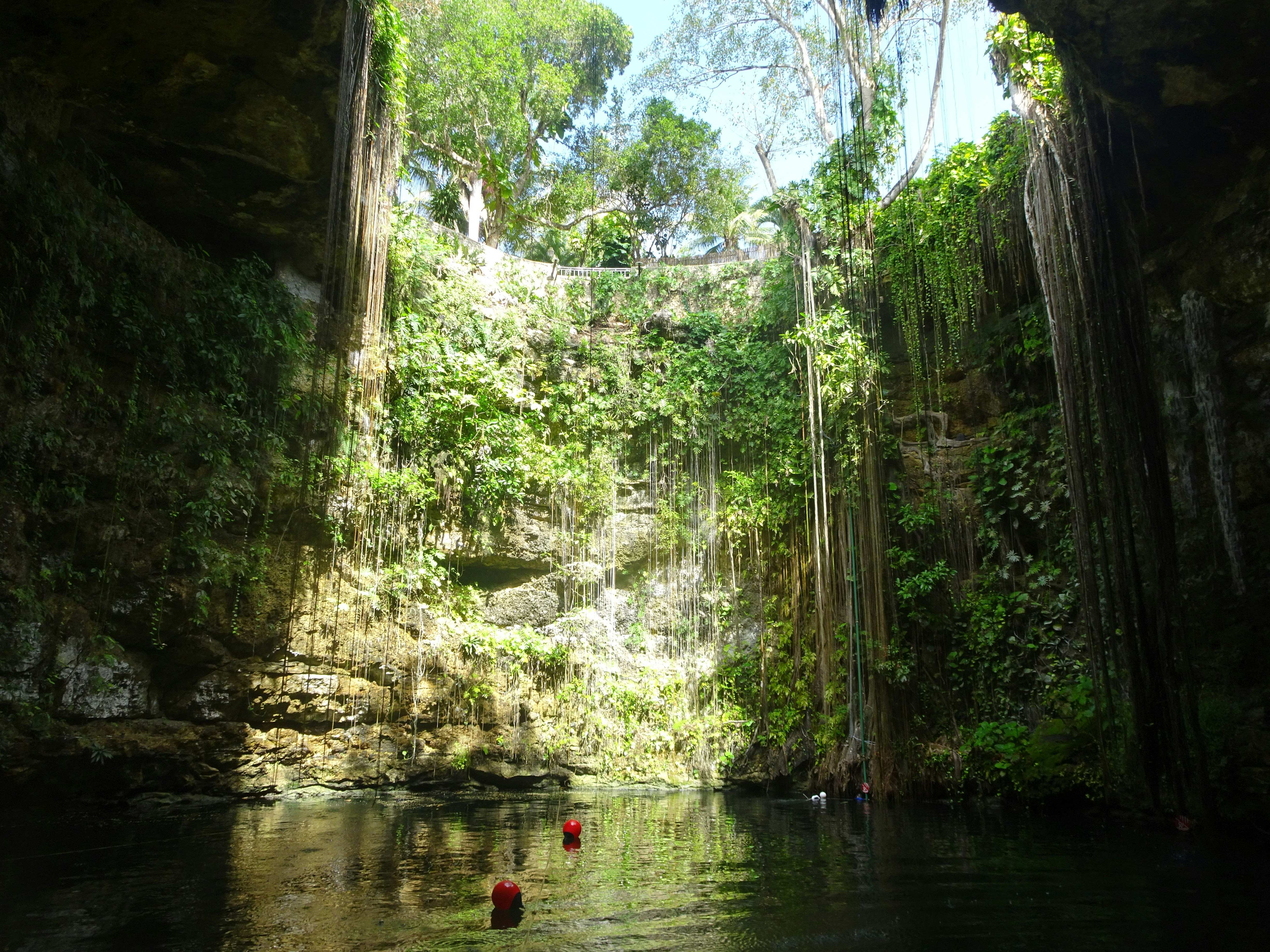
These three cenotes appear on every Yucatán itinerary for good reason. Our team suggests visiting them with clear expectations.
Cenote Ik Kil (near Chichén Itzá): Cenote Ik Kil is the most-photographed cenote in Yucatán and it is beautiful. It also receives hundreds of visitors a day in peak season and the water near the entry ladder is noticeably warmer than the center for reasons you don't want to think about too hard. If you're doing a Chichén Itzá tour from Cancún or Tulum, Ik Kil is right next door and worth a quick look — arrive when the gates open or plan to take photos from the viewing platform and skip the swim. If you really want to enjoy Ik Kil without the crowds, consider staying overnight at Hotel Ik Kil, located right by the cenote. The property offers simple bungalows, double rooms and duplex options, and guests receive complimentary access to the cenote outside regular opening hours. After the public closing time, hotel guests usually have an extra hour when the cenote is reserved only for them: a much quieter way to experience one of Yucatán's most iconic swimming spots.
Gran Cenote (Tulum area): Gran Cenote sits about 5 km northwest of the Tulum ruins and offers crystal-clear shallow water, stalactites, and a resident turtle population that has decided the tourists are fine. It can handle more visitors than Ik Kil without feeling oppressive and has proper changing rooms and a snorkel rental shack. Get there before 9 a.m. to have it nearly to yourself.
Cenote Dos Ojos (Tulum area): Dos Ojos ("Two Eyes") is the entry point for one of the world's longest mapped underwater cave systems. The two connecting pools are roughly 12 km north of the Tulum ruins and are consistently clear, even on busy days. The snorkeling circuit through the cave sections is one of the best afternoon activities in the state and a guided tour here runs $65–$80 USD including gear and a certified guide. For full context on the Tulum area, see our complete Sian Ka'an tours guide.
Casa Cenote, also known as Cenote Manatí, is a great option for travelers who want to experience a cenote in a slightly different way. Unlike many inland cenotes, it feels almost like a natural swimming pool: long, open, calm and surrounded by mangroves, with clear water that makes it ideal for snorkeling, swimming and beginner-friendly water activities.
It is also often used as a natural training pool for diving. Its gentle conditions, good visibility and easy access make it a popular place for introductory dives, refresher sessions and practice before exploring more technical cenotes or open-water sites.
Pro tip: If you want to swim at Ik Kil without the crowd, stay overnight in Valladolid — the best base for these cenotes rather than doing a day trip from Cancún. Early gate entry will be almost empty before the tour buses pull in around 11 a.m.
Less-visited cenotes our team recommends
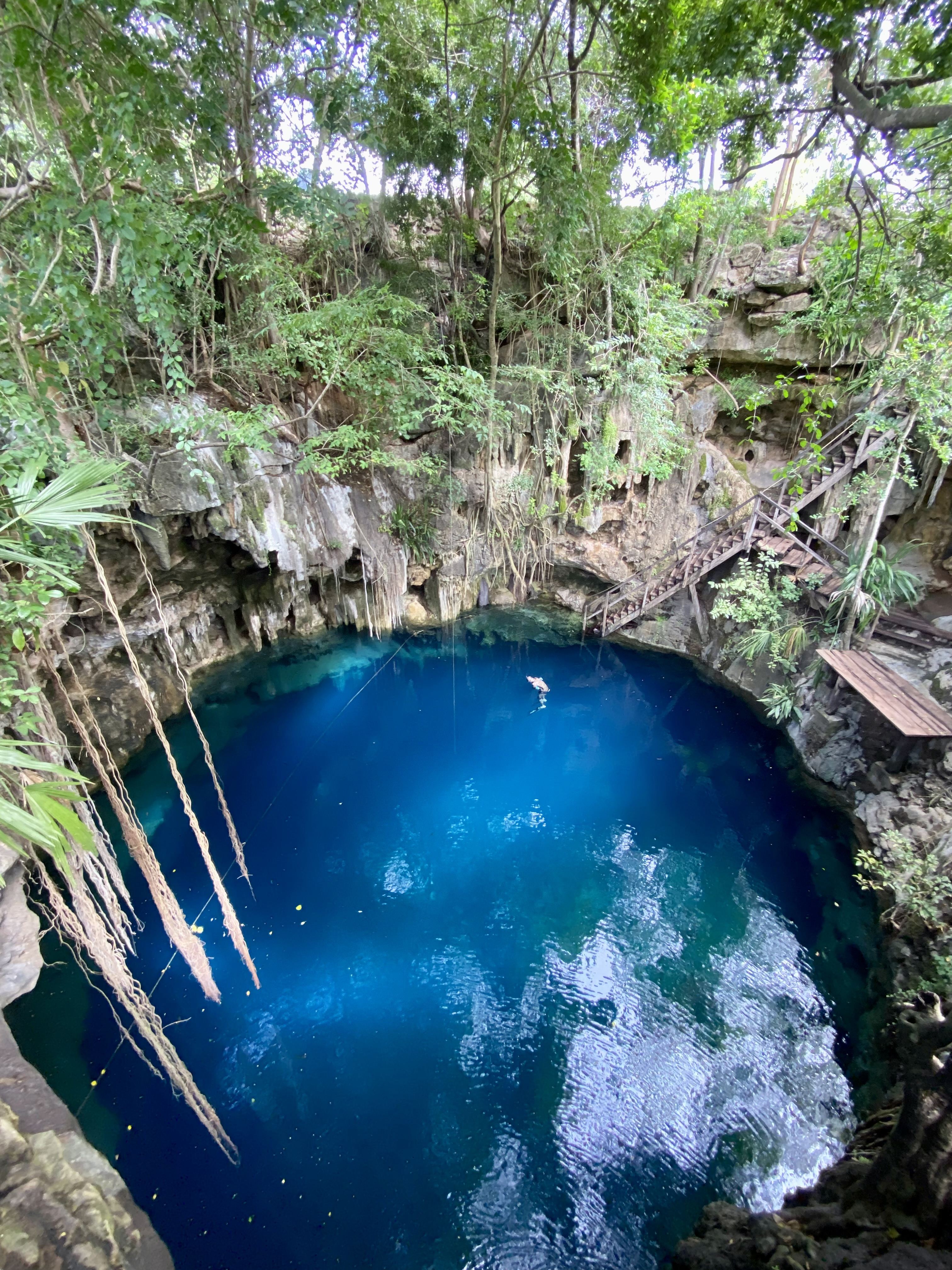
The cenotes below receive a fraction of the traffic of the big three and, in most cases, offer a better experience. Several are community-run, which means your entry fee goes directly to the families maintaining the site.
Cenote X-Canché (near Ek' Balam): About 3 km from the Ek' Balam ruins, X-Canché sits at the bottom of a rope-descent through the jungle. Entry runs around 80 MXN ($4 USD) and includes a life jacket. The water is blue-green and cold, the site is clean, and the nearby Ek' Balam pyramid is one of the most underrated ruins in the state. Pair the two as a half-day trip out of Valladolid town center.
Cenotes of Cuzamá (near Homún): Three linked cenotes accessed by a short horse-drawn cart ride along old hacienda rail tracks. The experience is as much about the journey as the swim. Entry to all three runs 150–200 MXN per person, and the cenotes themselves are narrow and cave-like with shafts of natural light dropping into dark indigo water. Go on a weekday — weekends bring local families and the experience is still fun but much louder.
Route of the Cenotes (east of Puerto Morelos): The inland highway east of Puerto Morelos passes more than two dozen cenotes in about 20 km. Most are community-run, entry runs 80–150 MXN each, and crowds are minimal compared to the Tulum corridor. Cenotes Boca del Puma, Verde Lucero, and La Noria are the most developed and easiest to find. If you have a rental car, this route makes an excellent self-guided afternoon.
Cenote Yaal Utzil (near Homún): A semi-open cave cenote about ten minutes off the main Mérida-Cancún road. Entry is 150 MXN per person ($8 USD) and the site is small enough that it almost never feels crowded. See the section below for more on the people who run it.
For a more authentic and off-the-beaten-path cenote experience, consider the Path of Water in Chemuyil, led by the Bejil Ha cooperative. This local youth-led cooperative has made a remarkable effort to clean and restore cenotes that were once used as dumping sites, transforming them into beautiful natural spaces that can now be responsibly shared with visitors.
During this activity, you can discover several different types of cenotes in just one experience: open, semi-open and closed. The route between them is done by bicycle, with short rides of no more than about seven minutes, crossing the jungle and the peaceful village of Chemuyil.
For an additional cost, a photographer can accompany you to capture beautiful memories of the experience. At the end of the activity, the cooperative can also prepare a local meal, perfect before enjoying a free afternoon. On site, you can also purchase sun-protective clothing and water shoes if needed.
Pro tip: For families traveling with children, the Route of the Cenotes and Gran Cenote both have shallow areas with gradual entry. Cave cenotes with rope descents are better suited to confident swimmers aged 10 and up.
A story about cenote stewardship
A story about cenote stewardship: Don Fausto Tzab and his nephew Marco run ropes and dry bags at Cenote Yaal Utzil from a palapa roughly ten minutes off the main road. Entry is 150 MXN per person (about $8 USD), and Fausto will not let you in without a life vest, even if you swim — he has pulled too many people out to care if you find it dramatic. The cenote is his family's land and their main income, the palapa is hand-built, and the rules are posted in Spanish and English on a hand-painted sign. When our team visited there were four other swimmers in the water and a dog asleep in the shade. That is the cenote experience worth looking for.
This is also the model for how community cenotes work across the Homún and Cuzamá area. Mexico's SEMARNAT designates cenotes as protected natural monuments, but the day-to-day stewardship falls on the families and ejidos who own the land. Booking through a community cenote, even informally at the gate, is one of the more direct ways your travel spending reaches local hands. Our Mérida tours guide covers this region in more detail.
Group tour vs. private guide: what to choose
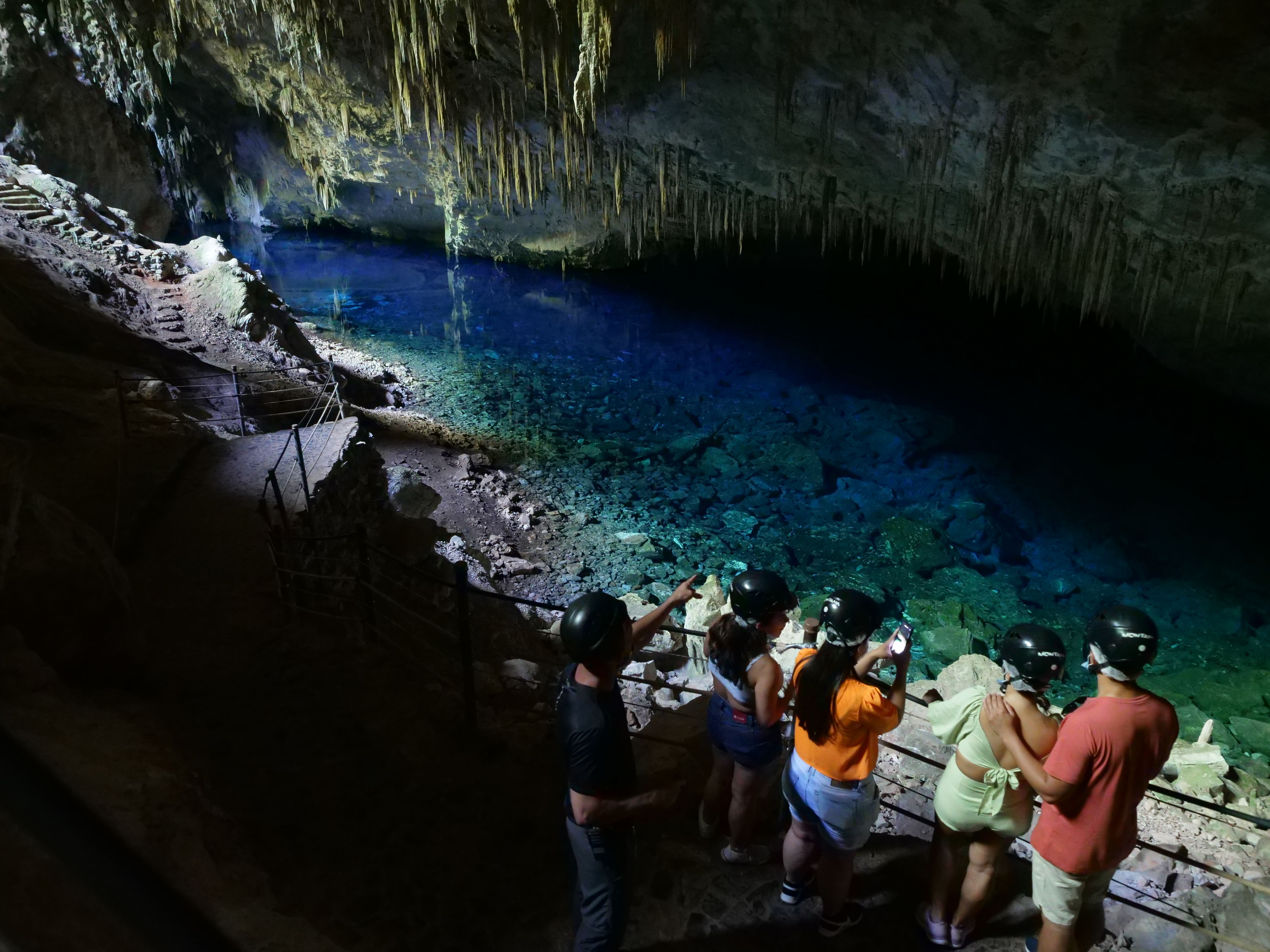
Most cenote tours sell as group departures out of Cancún, Playa del Carmen, and Tulum. They cover two or three cenotes in a day, include transport and a guide, and run $65–$120 USD per person. They're not a bad deal for the price, but they operate on tight schedules and tend to hit popular sites during peak hours.
A private guide gives you flexibility on timing (leave early, avoid the crowds), the ability to visit less-trafficked cenotes, and someone who actually knows the geology and ecology. Cost is higher, typically $120–$200 USD for two to four people, but split between a small group it's often comparable. Our private vs. group tours guide lays out exactly when each option makes sense.
If you're designing a longer trip around Yucatán, cenote days pair naturally with ruins visits. A day that combines Ek' Balam in the morning with Cenote X-Canché in the afternoon is a well-structured eight-hour itinerary that most travelers find satisfying without feeling rushed. See how to book Yucatán tours for 2026 for a step-by-step overview of the booking process. Our best Yucatán itinerary packages guide has sample day structures that include cenote stops.
Cenote safety and logistics
Cenotes are not swimming pools. The water is cold (often 24°C / 75°F year-round), visibility varies, and underground currents exist in cave and subterranean types. A few rules that apply across almost every cenote in Yucatán:
- No regular sunscreen. Chemical sunscreens damage the ecosystem and are banned at the vast majority of cenotes. Use biodegradable sunscreen applied at least 20 minutes before entry, or go in with no product on your skin at all. Rash guards are a good alternative.
- Life vests at cave cenotes. Reputable cenote operators will require them. Do not argue with this rule.
- Rainy season awareness (June to October). Heavy rainfall can cause flash-flood conditions in cave and subterranean cenotes. Check with your operator the morning of any cave cenote visit during rainy season. Gran Cenote and open-sky cenotes are lower risk but can have murky water after heavy rain.
- Footwear. Water shoes or old sneakers are useful for the rope and ladder entries at cave cenotes. Flip-flops on wet rock are a bad combination.
For a complete breakdown of safety considerations, read our dedicated cenote safety and swim logistics guide before booking.
Bookable Tours
Below are the tour formats our team recommends for different traveler types. Prices are approximate for 2026 peak season.
- Dos Ojos + Gran Cenote combo (group, Tulum-based): Full-day guided snorkel tour covering both cenotes with gear and transport. Runs $75–$95 USD per person. Best for first-time visitors who want to check the Tulum area cenotes efficiently.
- Ek' Balam + Cenote X-Canché (group or private, Valladolid-based): Half-day or full-day combination of ruins and cenote swim. Group price $55–$75 USD; private $130–$180 USD for up to four. Our team recommends the private option here for the early-morning timing control.
- Cuzamá cenotes + horse-cart (community tour, Homún area): Local community-operated. Entry plus cart ride is roughly 200–250 MXN per person ($10–13 USD). No booking required; show up at the Homún ejido office. Best for travelers with their own transport.
- Route of the Cenotes self-drive (Quintana Roo): Rent a car in Cancún or Playa del Carmen and drive the inland route east of Puerto Morelos. Budget 80–150 MXN per cenote entry and four to five hours. Best for independent travelers who want flexibility.
- Tailor-made cenote itinerary with Rutopía: If you want a custom multi-day design that weaves lesser-known cenotes together with ruins, local lunch stops, and overnight bases in towns like Valladolid or Homún, our Yucatán travel designers can build it from scratch. Tailor-made trips start from $3,000 USD per person and require a deposit 30 days before arrival. Start the conversation on our Rutopía trip-planning page.
FAQ
What is the best cenote to visit in Yucatán? It depends on what you want. For first-timers who want clear water and easy snorkeling, Gran Cenote near Tulum is the most reliable. For atmosphere and fewer crowds, Cenote X-Canché near Ek' Balam or the Cuzamá cenotes near Homún are our top picks. See our 2026 Yucatán tours guide for full context on where each cenote fits into a broader itinerary.
How much does a cenote tour in Yucatán cost? Community cenote entry runs 80–200 MXN per person (roughly $4–10 USD). Guided group tours covering two or three cenotes cost $65–$120 USD per person including transport and equipment. Private tours for small groups run $120–$200 USD and offer better timing flexibility. Tailor-made multi-day trips that include cenote days start from $3,000 USD per person.
Can you swim in cenotes in Yucatán? Yes, the majority of accessible cenotes allow swimming. Cave cenotes require a life vest at reputable sites. Some cenotes near active dive operations restrict swimmers during guided dive sessions. Always check with the site operator on arrival.
Why is sunscreen banned in cenotes? Chemical sunscreen compounds — particularly oxybenzone and octinoxate — damage the fragile algae and microorganism ecosystems inside cenotes. SEMARNAT prohibits their use at protected cenotes. Use biodegradable reef-safe sunscreen applied 20 minutes before entering, or wear a rash guard instead. Our cenote safety guide covers this in more detail.
Are cenotes safe to visit during rainy season? Open-sky and semi-open cenotes are generally safe during the rainy season (June to October), though water clarity drops after heavy rain. Cave and subterranean cenotes carry a flash-flood risk during storms. Check local conditions the morning of any cave cenote visit in rainy season and follow your guide's judgment.
How do I get to cenotes without a car? Most popular cenotes near Tulum (Gran Cenote, Dos Ojos) are accessible by bicycle, colectivo, or guided tour shuttle from Tulum town. Cenotes near Valladolid, like X-Canché, are reachable by taxi or colectivo from the town center. More remote cenotes, including Cuzamá and the Route of the Cenotes, are much easier with a rental car. See how to book Yucatán tours for logistics options.
What is the difference between a cenote tour and just showing up? Showing up independently works at most community cenotes, which take entry fees at the gate. Guided tours add context, snorkel equipment, transport, and timing management. For cave cenotes or dive-access cenotes, a certified guide is required for safety, not just convenience. Our Yucatán private vs. group tour breakdown explains when to book versus wing it.
Is Cenote Ik Kil worth visiting in 2026? Yes, but with a plan. Visit at gate opening to avoid the worst crowds. The site is well-maintained and the views from the rim are worth the trip even if you skip the swim. It's a natural add-on if you're already visiting Chichén Itzá, which is directly next door. If your priority is a quiet swim, pick Cenote X-Canché instead.
How many cenotes can you visit in one day? Two to three is the practical maximum for a comfortable day. More than that and the logistics — driving, changing, waiting for your turn at the entry — become tiring. A well-designed two-cenote day paired with a ruins visit is more satisfying than rushing through five sites. See our full Yucatán tours hub for sample day structures that balance ruins and cenotes.
Are cenotes appropriate for families with young children? Open and semi-open cenotes with gradual entry are fine for children who can swim. Gran Cenote and several cenotes on the Route of the Cenotes have shallow sections. Cave cenotes with rope descents require confident swimmers and are better for ages 10 and up. See our family tours guide for Yucatán for family-specific recommendations.
Looking for more Mexico travel resources? Be sure to check out:
Rédigé par
Design your trip to Mexico with a local travel designer. Unique activities and lodging, 100% tailor-made and stress-free.
.webp)

Rejoignez-nous à ce sujet
voyage
Planifiez votre voyage avec nousvoyage
Inscrivez-vous à notre newsletter pour être tenu au courant des nouveautés.
Oups ! Une erreur s'est produite lors de l'envoi du formulaire.
Ready to experience the real Mexico?
Travel with local experts and get hangds-on supoort every step of the way... from planning to arrival.


Your Travel Companion in Mexico, 24/7
We're with you from arrival to departure via WhatsApp for anything you need.
Trusted by thousand of travelers with a 4.9 rating on Google