Customize my trip


Mexico City Safety Tips For Tour Travelers In 2026
Mexico City safety tips for tour travelers: neighbourhood notes, taxi choices and nighttime rules. Honest 2026 guidance from our CDMX team.


Content
They highlight our work



Unique trips in Mexico.
Tailor made for you.
Request your tripTailor made for you.
Let a local guide help you plan your trip to Mexico
Start tailor-made tripMexico City's safety reputation is significantly worse than its reality for tourists, and slightly better than the worst news coverage would lead you to expect. The honest picture sits in the middle: Mexico City is a Level 2 destination per the U.S. State Department — the same classification as the United Kingdom, France, and Germany — and the tourist neighborhoods function at a safety level comparable to other major Latin American capitals. The city has also changed materially in the last decade: widespread Uber adoption has eliminated the main safety risk that street taxis posed, the historic center has undergone significant gentrification and increased police presence, and the tourist corridors in Roma, Condesa, and Polanco are busy, well-lit, and actively patrolled. The risks that remain are real and worth knowing specifically. This guide covers exactly that: what the actual risks are, where they are, and what decisions make the biggest difference. For tours that handle your transport and logistics from arrival, our team manages this so you don't have to.
The state department advisory and what it actually means
The U.S. State Department rates Mexico City (as part of Mexico City state, Federal Entity) at Level 2: Exercise Increased Caution — the same level as France, Germany, the United Kingdom, Belgium, and Spain. Mexico City is not under a Level 3 or Level 4 advisory (the latter being "Do Not Travel") that applies to some specific Mexican states.
What Level 2 means in practice: be aware of your surroundings, avoid demonstrations and large unplanned crowds, use pre-arranged transport rather than street hailing. These are the same precautions that apply to travel in most major European cities.
What Level 2 does not mean: that the city is uniformly dangerous, that tourists are targeted routinely, or that the tourism neighborhoods are unsafe. The advisory language often leads travelers to more caution than the actual risk warrants in tourist zones. Conversely, some travelers dismiss the advisory entirely; the right response is to understand it as a signal for specific vigilance rather than general alarm.
For the national safety context across Mexico, the Mexico safety article covers the full picture. This article focuses on Mexico City specifically.
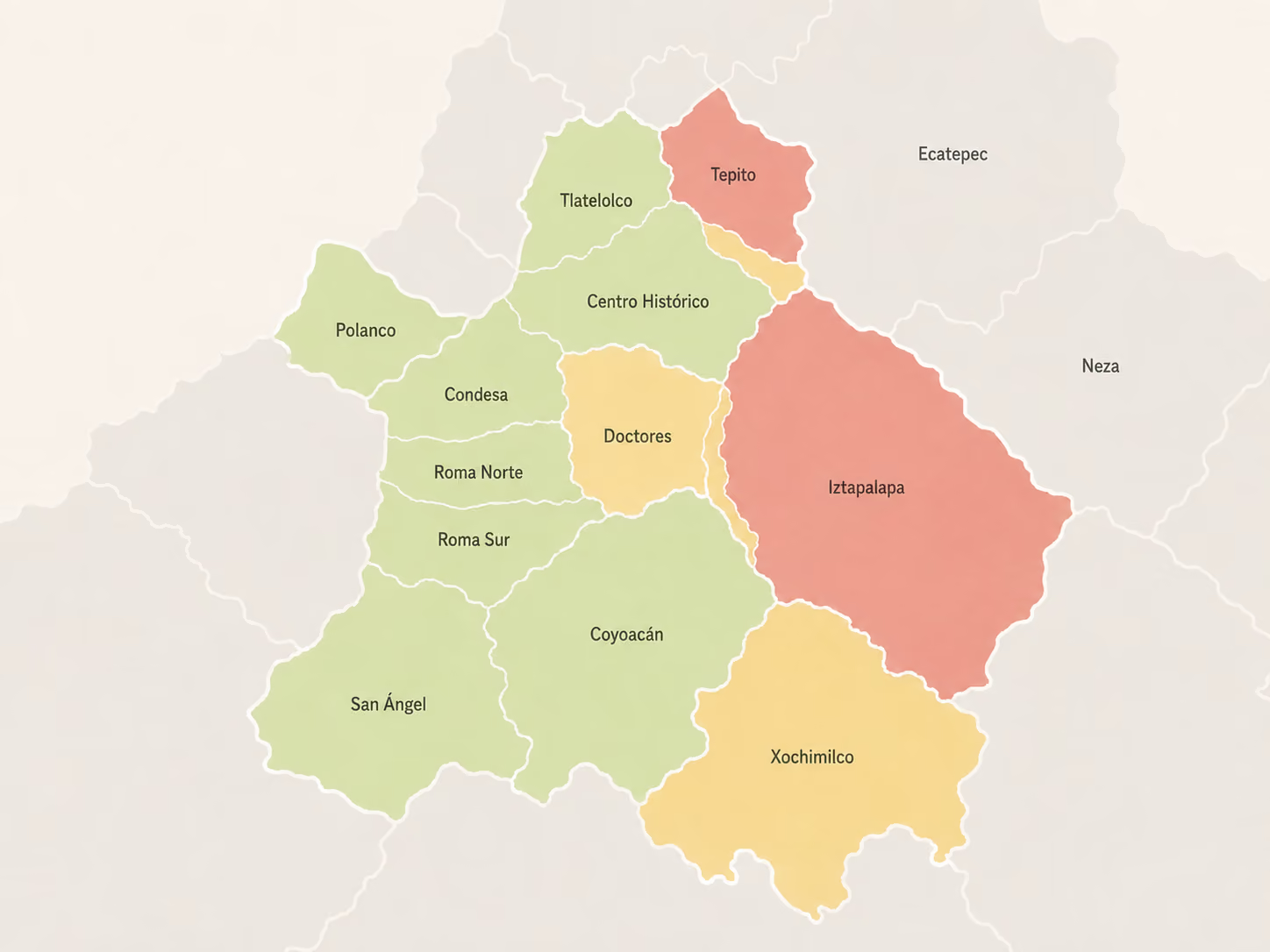
Neighborhood safety: a clear zone map
Low-risk for tourists (apply normal urban caution):
- Roma Norte and Roma Sur
- Condesa
- Polanco
- San Ángel
- Center of Coyoacán (daytime and evening in the center)
- Centro Histórico (daytime; increasingly safe evenings along Madero and the main tourist corridors)
- Tlatelolco (Plaza de las Tres Culturas area, daytime)
Exercise increased caution (stay on main routes, avoid late evenings):
- Centro Histórico edges (particularly northeast toward Tepito)
- Doctores (fine for guided night taco tours; not for independent late-night wandering)
- Parts of Iztapalapa bordering tourist zones
- Xochimilco canal area after dark (leave by 6:00 p.m.)
Avoid for tourists:
- Tepito market and the surrounding neighborhood
- Iztapalapa interior (not a tourist zone)
- Ecatepec (State of Mexico, technically not CDMX)
- Neza (Ciudad Nezahualcóyotl, State of Mexico)
This map is not static. The Centro Histórico has become significantly safer over the last decade due to investment, gentrification, and increased security; areas that were avoid-level ten years ago are now on the low-risk list. Ask your hotel or operator for the current neighborhood assessment for your specific planned activities.
The single most important safety decision: transport
The most significant safety improvement for Mexico City visitors in the last decade has been the widespread adoption of app-based ridesharing (Uber, DiDi, Cabify). Street taxi hailing — once a routine practice for tourists — carried a real risk of express kidnapping (being taken to an ATM and forced to withdraw cash). This risk has dropped dramatically because most people now use apps.
Use Uber or DiDi: Always. The app shows the driver's name, photo, license plate, and route in real time. In the event of a problem, the trip is recorded. This transparency eliminates essentially all of the risk associated with unbooked street taxis.
Never hail a taxi from the street: In Mexico City, this means a taxi that stopped for you from the road. Authorized airport taxis (from the licensed booth inside Terminal 1 or Terminal 2, or pre-arranged transfers) are different. Sitio taxis called by phone from a registered stand are acceptable. Random street taxis are not.
Metro: The Metro is cheap (5 MXN per journey), extensive, and mostly safe. The main risk is pickpocketing during rush hour (7:00 to 9:00 a.m. and 5:00 to 7:00 p.m.) on crowded lines, particularly Line 1 (Rosa) and Line 2 (Azul) through the Centro. Travel with bags in front of you. Women-only cars exist at the front of each train during all hours (marked by pink signage). The Metro is not recommended with large luggage.
Tour vehicle: If your day's activities are managed by a tour operator, the transport is arranged and vetted. This is the cleanest solution for tourists who don't want to manage daily transport logistics.
.avif)
Pickpocketing: where and how it happens
Pickpocketing is the most common incident affecting tourists in Mexico City, and it is almost entirely avoidable with two practices: phone-in-pocket (not in hand) in crowded places, and bag-in-front (not on your back) in markets and on the Metro.
The specific situations where pickpocketing is most common:
- Metro rush hour (Lines 1, 2, and 3 through the Centro during commute hours)
- Crowded market areas (Mercado de la Merced, Mercado de Jamaica on busy days)
- The Zócalo during large events (concerts, national holidays)
- ATM queues where someone watches you enter your PIN
What doesn't require special concern: the main pedestrian corridors (Madero Street, Alcalá in Oaxaca — but this is CDMX: Madero and Francisco I. Madero in the Centro), restaurant seating, museum queues, hotel lobbies, Uber rides.
The best single habit to adopt: when walking in any crowded area, keep your phone in your front pants pocket or a zipped bag compartment. The vast majority of phone thefts in CDMX happen when a phone is in hand in a crowd.
Nighttime safety and where to go after dark
Mexico City has a genuine nightlife and the tourist neighborhoods are active and safe well into the evening. What changes after 10:00 p.m.:
Safe for evening activity (with the usual urban awareness):
- Roma Norte restaurant and bar scene, active until 1:00 to 2:00 a.m.
- Condesa café and bar streets
- Polanco upscale bar and restaurant strip
- Coyoacán center (busy until about 10:00 p.m.)
- Centro Histórico main pedestrian zone (Madero), active until about 9:00 p.m., quieter after
Best avoided independently after dark:
- The Centro's side streets off the main tourist corridors
- Anywhere you haven't walked in daylight first
- Any location you're accessing by walking more than 10 minutes from a main boulevard
Night taco tours: These are organized, guided, and use transport between stops. This is the correct format for accessing Doctores and similar neighborhoods in the evening — you're with a guide who knows the specific operators and the route, not wandering independently.
The safest late-night rule: use Uber, not your feet, for any movement after midnight.

ATMs, cash, and financial security
Mexico City's economy is heavily cash-based outside Polanco and the major hotel chains. Markets, street food, smaller restaurants, museum gift shops, and most tour entrance fees accept cash only or prefer it.
Use bank ATMs inside bank branches or inside major supermarkets (OXXO ATMs and standalone street machines carry higher skimming risk). The ATMs inside Banamex, BBVA, and Santander branches are the most reliable.
Local tip: Most ATMs will give you “big” bills if you select a round amount like 500, or 1000, it is better to ask for 400, if possible 450, 1150, etc.. to have some smaller bills that will be most accepted in street food places or small shops. It is likely that even if you have cash, if the bill is too big, some stores will not accept it. So better to always have 50s and 100s at hand.
Withdraw during the day and inside a secure location. Avoid withdrawing late at night or in a queue visible from the street.
Card payments: Most mid-range and upscale restaurants, large museum gift shops, and hotel services accept card. When in doubt, carry 500 to 1,000 MXN ($25 to $50 USD) in cash for the day's incidentals.
Currency exchange: The best rates in Mexico City are at casas de cambio (currency exchange offices) rather than hotel desks or airport booths. Rates vary; compare a few in the Centro or Roma area. Airport exchange booths offer the worst rates; change the minimum necessary on arrival.
Altitude: the underrated safety consideration
At 2,240 meters, Mexico City sits significantly higher than most travelers expect. Altitude affects more than comfort — it genuinely impairs judgment and physical performance on the first day in ways that matter for safety.
On day one: your response time is slightly slower, you fatigue faster, and dehydration sets in more quickly than it would at sea level. This makes day one the day to be most careful with the following: crossing busy streets (CDMX traffic does not yield to pedestrians reliably), consuming alcohol (it hits harder at altitude — one beer at 2,240m feels like 1.5 at sea level), and undertaking any physically demanding activity (climbing steep stairs, carrying heavy bags).
The adjustment timeline: most travelers feel normal by the morning of day 2. Drink 2 to 3 liters of water on day 1, avoid strenuous activity, and eat lightly.
Air quality in Mexico City
Mexico City has historically had significant air quality issues, and while the situation has improved substantially since the 1990s, periodic smoggy days still occur, particularly in the spring months (March through May) when thermal inversion traps pollutants in the valley.
Check the Mexico City air quality index before planning outdoor activities on any given day (the CDMX government provides real-time monitoring at aire.cdmx.gob.mx). On high-pollution days (Zona de Contingencia Ambiental Extraordinaria), outdoor exercise at altitude is not recommended for travelers with respiratory conditions. Most tourists on vacation activities (museum visits, restaurant meals, neighborhood walks) are not significantly affected by moderate pollution days.
Traveling with children
Mexico City with children is more manageable than its scale suggests, because the tourist neighborhoods are compact and walkable and the main sites (Chapultepec Park, the zoo inside the park, Xochimilco, Coyoacán) are excellent for children.
Child-specific safety notes: keep children within sight in crowded markets; use car seats in private vehicles if traveling with children under 5 (request this from your operator at booking); avoid the Metro during rush hour with young children.
The safest Mexico City day for a family with young children: a private vehicle for the day, structured activities in the morning when energy is high, a park or market in the afternoon.

What to do if something goes wrong
If your phone is stolen: File a report at the nearest police station (report online at reportepolicial.cdmx.gob.mx) for insurance purposes. Contact your phone provider to disable the device remotely. Your tour operator can assist with police contact.
Medical attention: Mexico City has several excellent private hospitals that serve international travelers with English-speaking staff. Hospital Ángeles Pedregal and Hospital Médica Sur are frequently recommended by travel insurers. Travel insurance with emergency medical evacuation coverage is strongly advised.
Emergency number: 911 (works for police, fire, and medical emergencies throughout Mexico City).
Consulates: The U.S. consular section is in Polanco; the UK, Canadian, and Australian consular offices have presence in CDMX. Keep your country's consular number in your phone separately from other contacts in case your phone is taken.
Your tour operator: The most useful contact for most situations that fall short of a medical emergency. A good operator has 24/7 contact during trips and knows the local protocols for common situations.
FAQ
Is Mexico City safe to walk at night? In Roma Norte, Condesa, and Polanco: yes, well into the evening with normal urban awareness. In the Centro after 9:00 p.m.: stay on the main pedestrianized streets. After midnight anywhere: use Uber.
Should I wear my passport as a document belt? Not necessary in the tourist zones. Carry a photo of your passport on your phone and leave the original in your hotel safe. Mexican law requires you to have ID available but a photo is generally accepted for practical purposes.
Are demonstrations dangerous? Large political demonstrations on Reforma or at the Zócalo happen regularly and are generally peaceful. They can block routes and affect transport timing. Your tour operator will monitor planned demonstrations and reroute if necessary. The advice is: don't attempt to walk through or stand near an active demonstration, not because of violence risk but because of crowd dynamics and the potential for unpredictable disruption.
Is Mexico City safe for solo female travelers? The tourist neighborhoods — Roma, Condesa, Polanco, Coyoacán — are safe for solo female travelers during the day and in the early evening at restaurant and bar venues. Standard metropolitan precautions apply at night: use Uber rather than walking, stay in illuminated areas, let someone know where you're going. The Metro's women-only cars are a useful option during rush hour.
Looking for more Mexico travel resources? Be sure to check out:
Written by
Design your trip to Mexico with a local travel designer. Unique activities and lodging, 100% tailor-made and stress-free.
.webp)
Related posts
Duration:
Trip duration
Days
A Brief Guide to Visit Mexico in August: Weather, Festivals & More
Explore Mexico in August, the rainy season, for a unique travel experience. Embrace the unique charm of this time and plan your visit now!
Read more
Duration:
Trip duration
Days
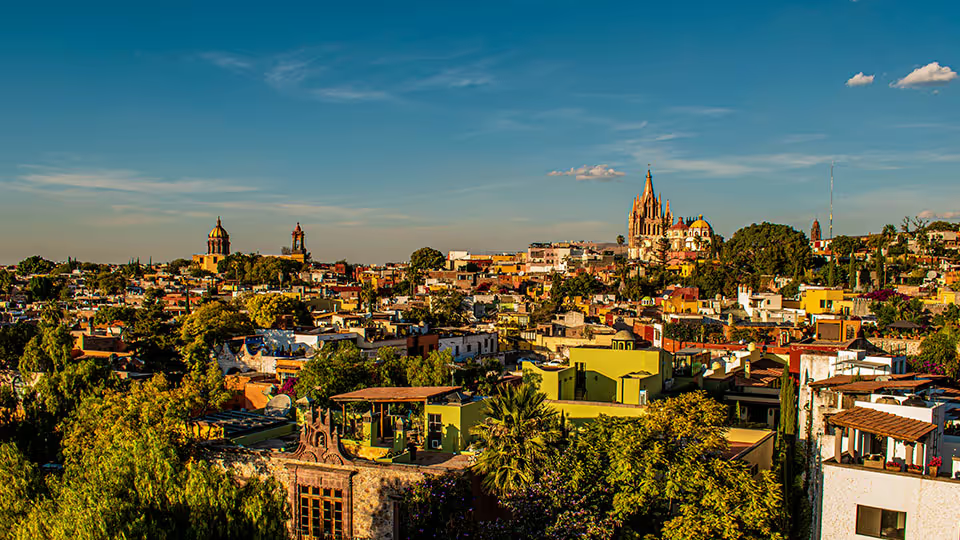
Mysterious Alleys San Miguel
To walk aimlessly through the streets of San Miguel de Allende is an activity that guarantees a time of relaxation and adventure.
Read more
Duration:
Trip duration
Days
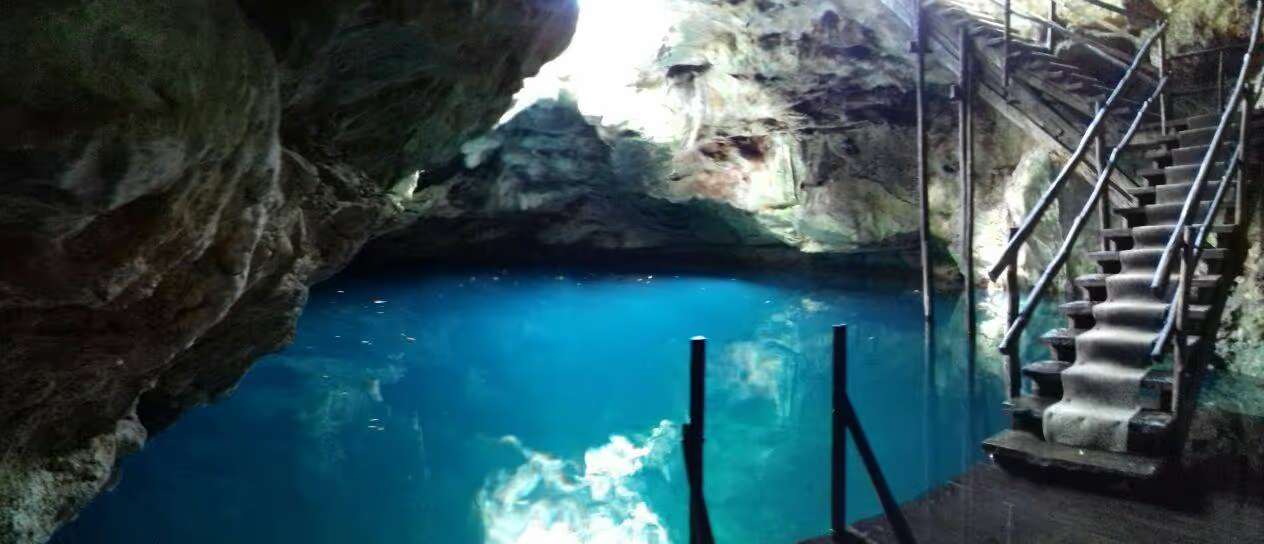
Unknown Caves Durango
Quintana Roo is full of unknown towns hidden in the immensity of the jungle. An example of this are the caves of Nuevo Durango.
Read more
Join us on this
journey
Plan your trip with usjourney
Join our newsletter to stay up to date on features and releases.
Oups ! Une erreur s'est produite lors de l'envoi du formulaire.
Ready to experience the real Mexico?
Travel with local experts and get hangds-on supoort every step of the way... from planning to arrival.

Your Travel Companion in Mexico, 24/7
We're with you from arrival to departure via WhatsApp for anything you need.
Trusted by thousand of travelers with a 4.9 rating on Google