Personalizar mi viaje


Your Complete Guide To Mérida Tours In 2026
Mérida tours in 2026: Paseo de Montejo walks, haciendas, Uxmal day trips and night food tours. Local picks and routes from Rutopía's team.

Contenido
Destacan nuestro trabajo



Viajes únicos en México.
Hecho a medida para ti.
Solicita tu viajeHecho a medida para ti.
Deja que un guía local te ayude a planificar tu viaje a México
Comience un viaje a medidaIf you are planning time in the Yucatán, Mérida deserves more than a one-night stopover. This colonial capital earns its nickname "La Ciudad Blanca" (the White City) through its whitewashed limestone architecture, its unhurried pace, and its status as one of the safest large cities in Mexico. Whether you want guided walking tours, hacienda day trips, or a food tour through night markets, this guide covers the best ways to see the city in 2026. Browse our México tour packages to add Mérida to a broader Yucatán itinerary.
Quick Summary
- Mérida is the state capital of Yucatán, with a population of around 900,000
- Nicknamed "La Ciudad Blanca" for its colonial limestone buildings
- Ranked as one of the safest large cities in Mexico by the U.S. State Department (Yucatán: Level 1)
- Top draws: Paseo de Montejo, Plaza Grande, Gran Mercado Lucas de Gálvez, and world-class Yucatecan food
- Best day trips from Mérida: Uxmal ruins (1 hr south), Izamal (1.5 hrs east), haciendas (30 to 60 min out), and cenotes near Cuzamá
- Every Sunday, Plaza Grande hosts Mérida en Domingo, a free street market and outdoor concert series
- Best visited October through March when the heat is manageable; avoid August middays
- Rutopía's team visits regularly and books ground operators we trust
Why Mérida Works as a Tour Base
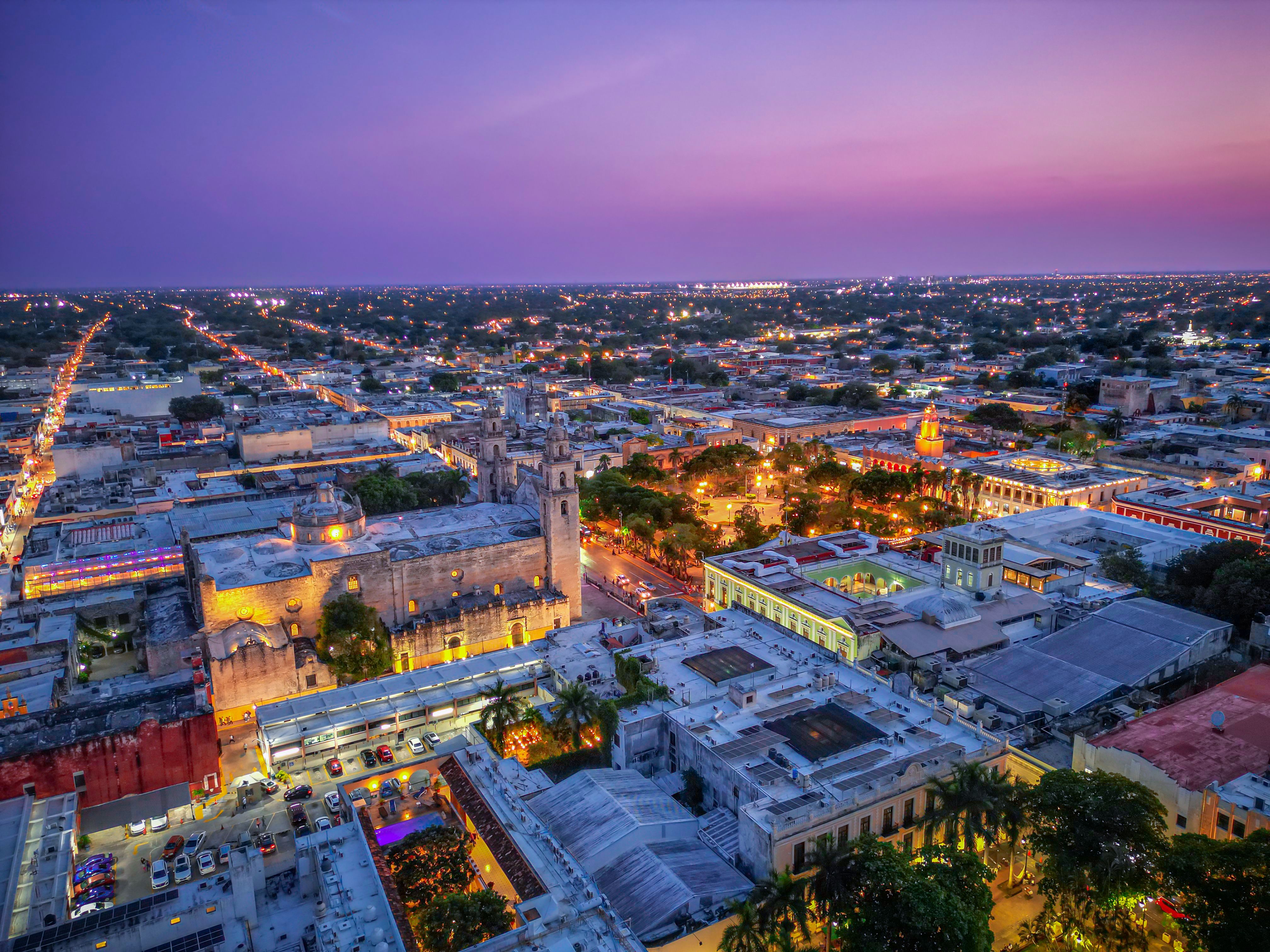
Mérida sits near the center of the Yucatán Peninsula, which makes it a strong hub for exploration in multiple directions. Chichén Itzá is about two hours east, Uxmal one hour south, and Izamal 90 minutes northeast. The Route of the Cenotes runs east toward Puerto Morelos, and the flamingo reserve at Celestún is an easy half-day west.
The city itself is large enough to offer real infrastructure: good restaurants, a reliable taxi and ride-app scene, and international flights into Manuel Crescencio Rejón International Airport. It still retains the feel of a place where people live. You will see families shopping at the market, elderly men playing chess in Plaza Grande, and local schoolchildren on field trips at the same museums you are visiting.
For context from our team: Mérida is where we send travelers who want depth over distance. If you are trying to tick off multiple famous ruins in three days, it is not the right base. If you want to understand the Yucatán, it is the right base. See how Mérida fits into a full peninsula plan in our 2026 Yucatán tours guide.
City Walking Tours: Where to Start
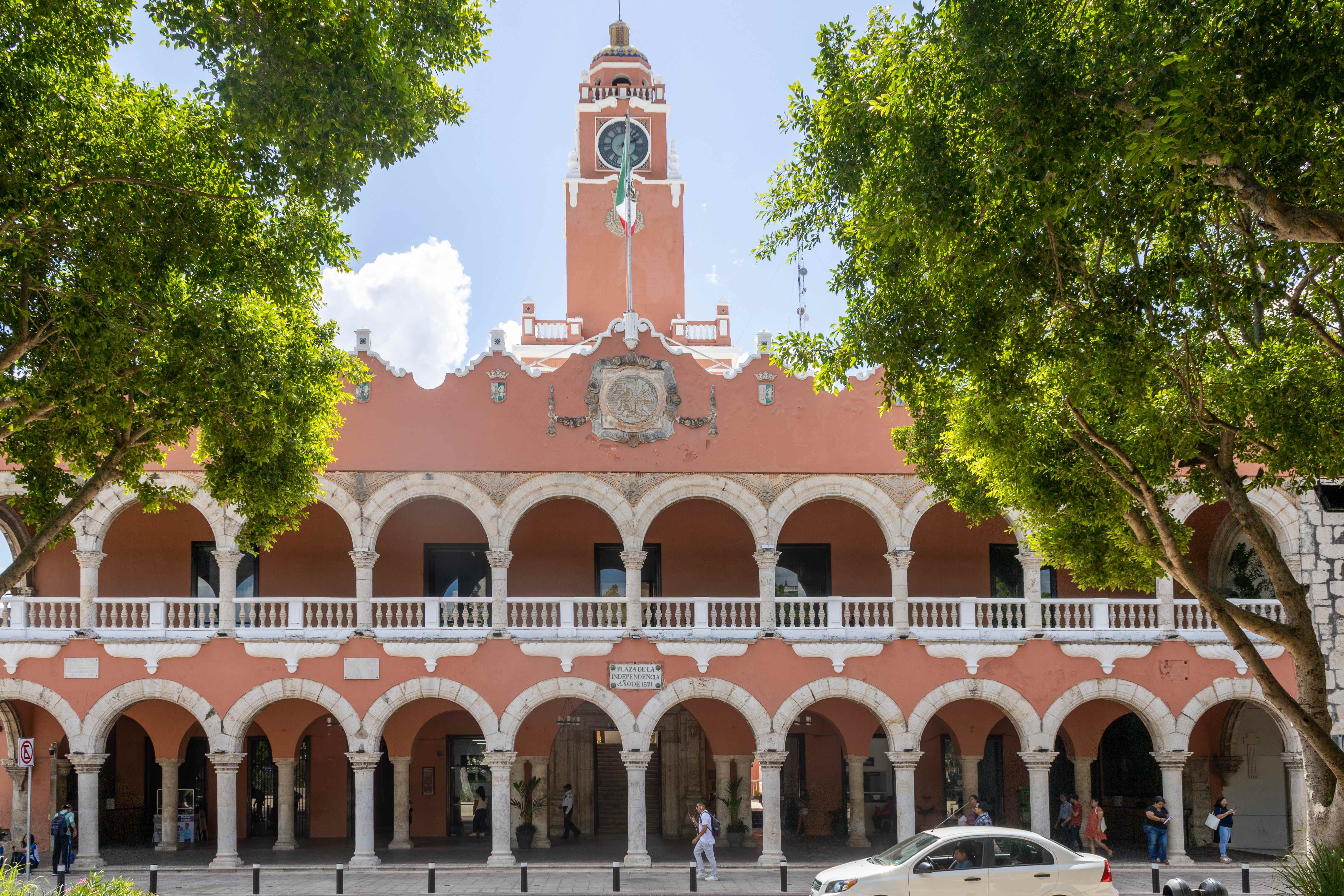
A good Mérida city walking tour covers roughly 1.5 km in a compact colonial grid and takes 2 to 3 hours at a comfortable pace. The core circuit hits:
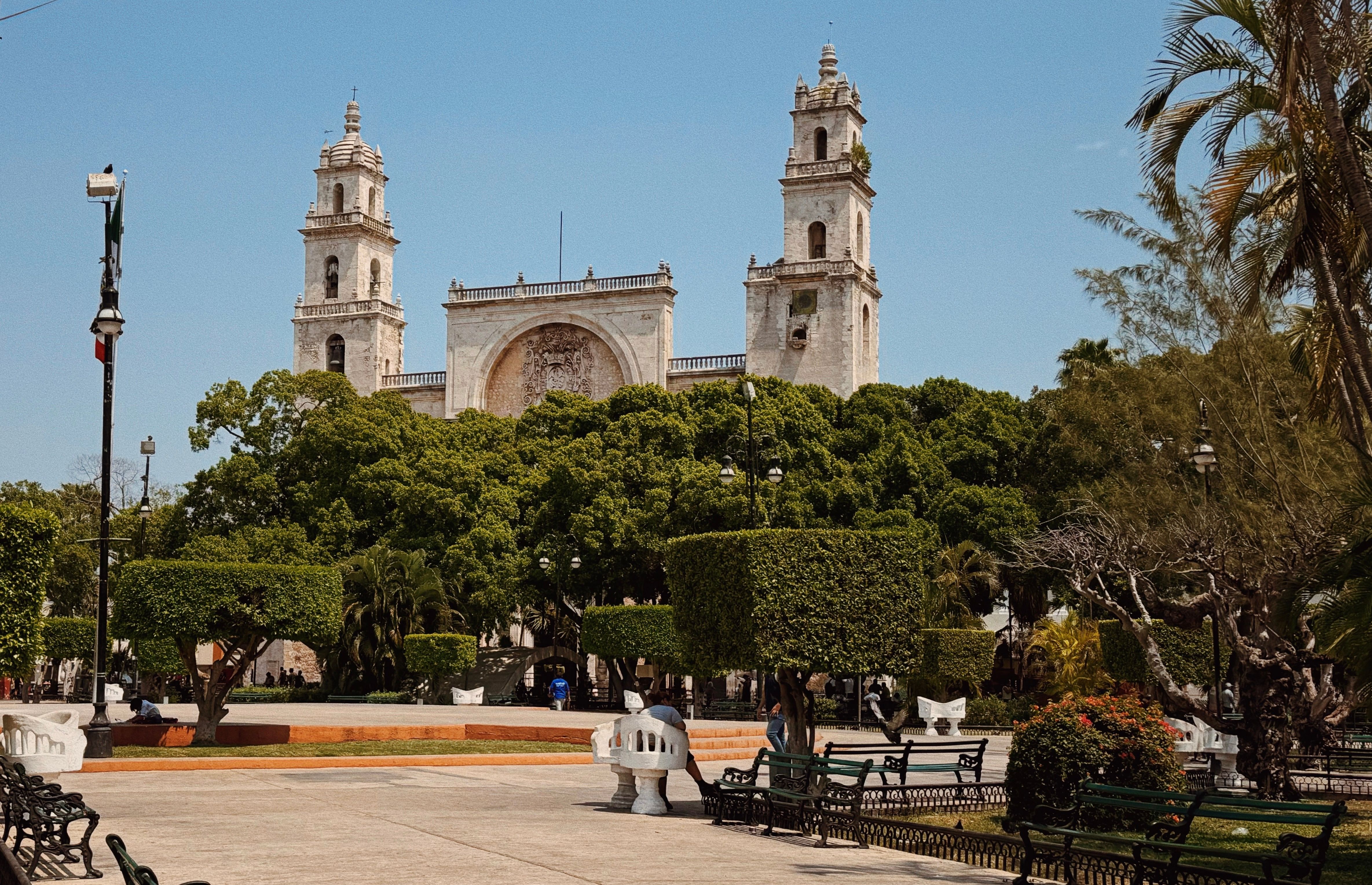
- Plaza Grande: The main square, surrounded by the 16th-century Catedral de San Ildefonso, the Palacio Municipal, and the Casa de Montejo (a conquistador mansion whose façade features stone carvings of soldiers stepping on human heads, which is as unsettling as it sounds)
- Palacio del Gobernador: Entry is free and the Fernando Castro Pacheco murals inside are among the most important public art in Mexico, depicting the history of the Yucatecan people from pre-Hispanic times forward
- Gran Mercado Lucas de Gálvez: The working public market, two blocks south of Plaza Grande, selling produce, spices, prepared food, and hammocks; a better introduction to daily Mérida life than any historic building
- Calzada de los Frailes: For those who want to walk south into the Santa Ana and Santa Lucía neighborhoods, a quieter and less-touristy route
Pro tip: Start your walking tour no later than 8 a.m. from October to March, and no later than 7 a.m. from April to September. The heat is manageable in early morning and becomes difficult after 10 a.m. in warm months. Most tour guides in Mérida will tell you this too.
Self-guided works here if you have a decent map app. Guided tours add real value if you want to understand the colonial-era history and the Mayan subtext layered underneath it. Many of Mérida's churches were built on top of existing Maya temples using the same stones.
Paseo de Montejo and the Museum Circuit
Paseo de Montejo is Mérida's most photographed street: a wide, tree-lined boulevard that runs north from the city center, built in the 19th century when Yucatán's hacienda owners were getting rich from henequén (sisal agave fiber) and wanted a European-style promenade to show for it. The mansions lining both sides of the boulevard date from this era, and many are now hotels, consulates, banks, and museums.
Two museums on or near Paseo de Montejo stand out:
- Museo Regional de Antropología (Regional Anthropology Museum): Housed in the Palacio Cantón, one of the grandest mansions on the boulevard. Entry is around 120 MXN ($6 USD). The Maya collections are legitimate, covering everything from pre-Classic ceramics to the codices. Budget 90 minutes.
- MACAY (Museo de Arte Contemporáneo Atenea de Yucatán): Free entry, located just off Plaza Grande. Rotating exhibitions of contemporary Mexican and Yucatecan artists. Worth 30 minutes if you are walking past.
Paseo de Montejo is easy to walk in the morning and is generally included in any multi-hour city tour. If you are doing it independently, pick it up from the corner of Calle 47 and walk north.
Mérida Food Tours: What and Where to Eat
Yucatecan food is its own cuisine, distinct from the tacos-and-salsas profile most visitors associate with Mexico. The regional staples you need to try:
- Cochinita pibil: Slow-roasted pork marinated in achiote (annatto) and sour orange, wrapped in banana leaves and cooked underground or in a slow oven. Usually eaten in a torta or as a taco. Available at virtually every market stand from 7 a.m.
- Panuchos: Fried tortillas stuffed with black bean paste, topped with turkey or chicken, pickled onion, and avocado
- Sopa de lima: A clear chicken broth with shredded chicken, fried tortilla strips, and sliced lima (a specific Yucatecan citrus, milder than a regular lime, with a floral note). Not substitutable.
- Queso relleno: A Dutch Edam cheese hollowed out and stuffed with spiced ground pork, then baked or simmered. A colonial-era dish with Yucatecan-Dutch trading history behind it.
Local Tip: Don't Miss Out on Marquesitas! If you have a sweet tooth, trying a marquesita is an absolute must! This iconic street food treat features a crispy, rolled crepe filled with a savory layer of shredded queso bola (Edam cheese) paired with your favorite sweet topping—like Nutella, cajeta, or fruit jam. It is the ultimate salty-sweet combination!
Night food tours along the 60th Street corridor and around Plaza Santa Ana are worth booking. A good 3-hour tour will hit five or six stops and explain the history behind each dish.
A story about Mérida's food culture:
A cook we work with through a local cooperative in Mérida, Doña Patricia as her clients know her, teaches the sopa de lima technique at a small kitchen near the market. A two-hour class with lunch runs 950 MXN ($48 USD) including the market walk. She will tell you that the secret to sopa de lima is using the real Yucatán lima, not a regular lime, and she is right. You can find limes outside the Yucatán but you cannot find that dish.
If a cooking class is not your thing, the Gran Mercado Lucas de Gálvez is where locals eat breakfast and lunch. Get there by 8 a.m. and find a stall with a line.
Hacienda Day Trips from Mérida
The hacienda boom of the late 19th and early 20th centuries left dozens of massive estates within an hour of Mérida. Three worth visiting:
- Hacienda Yaxcopoil: 30 minutes south on the road toward Uxmal. A former henequén-processing estate, largely intact, with the original machinery, a family museum, and grounds you can walk. Entry is affordable and the place is quiet on weekday mornings.
- Hacienda Sotuta de Peón: 45 minutes southeast, this one is still active. You can tour the working henequén agave processing operation, see the old rail lines used to haul fiber, and swim in the hacienda cenote afterward. A half-day trip with lunch is the standard format.
- Hacienda Temozon: 45 minutes south, now operating as a hotel. Even if you are not staying, lunch here is special. It sits on its own cenote and the grounds are beautifully maintained.
Pro tip: If you are visiting Mérida in July or August, the haciendas are better than the city for midday hours. They have pools and open grounds to walk in the shade. Book a hacienda day trip and plan to stay through lunch rather than returning to the city at noon.
Hacienda day trips from Mérida pair well with a Uxmal visit if you are going south anyway. See the next section.
Uxmal and the Puuc Route Day Trip
Uxmal is one hour south of Mérida and deserves its own article — we have a complete 2026 Uxmal tour guide. The short version: Uxmal is a UNESCO World Heritage site and, in our team's view, the most architecturally refined Maya site in the Yucatán. The Pyramid of the Magician and the Governor's Palace are extraordinary. The crowds are lighter than at Chichén Itzá.
Uxmal is the anchor of the Puuc Route, a circuit of smaller sites (Kabah, Sayil, Labná, Xlapak) in the hills south of Mérida. You can cover Uxmal plus two or three Puuc sites in a full day if you start early. Rutopía's team recommends leaving Mérida no later than 7 a.m. to beat the late-morning heat at the ruins.
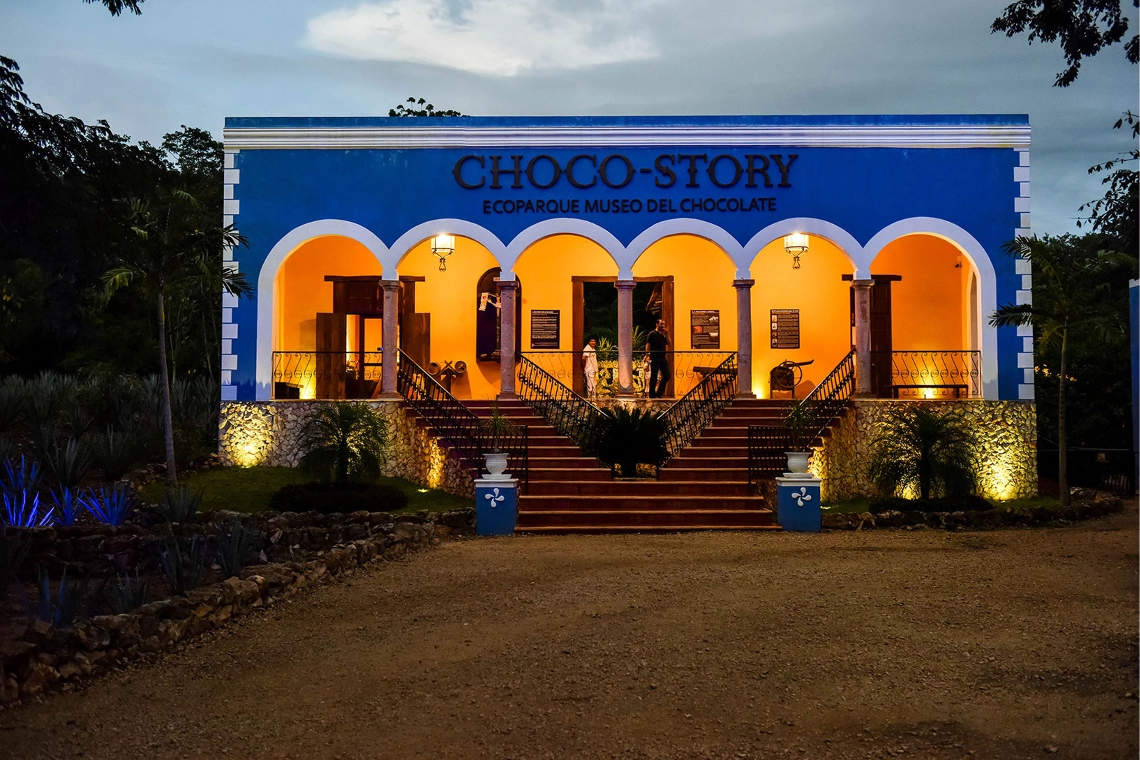
Sweet Stop: Visit Choco-Story Uxmal
If you are a chocolate lover, there is no better way to top off your tour of the ruins than visiting Choco-Story Uxmal right across the street! This interactive eco-museum walks you through the rich history of cacao in Maya culture. You will get to wander through botanical gardens, learn about traditional chocolate making, and even sample an authentic, spiced Maya cacao beverage brewed just like it was centuries ago!
For comparison with the Yucatán's most famous site, read our Chichén Itzá tour guide. For a broader look at ruins across the peninsula, see our Yucatán ruins tours guide.
Izamal Day Trip: The City of Gold

Izamal sits 90 minutes east of Mérida and is one of the most visually arresting towns in the Yucatán. Every building in the historic center is painted the same deep ochre yellow, including the enormous Franciscan convent of San Antonio de Padua, which was built in the 16th century on top of a Maya pyramid. The pyramid base is still visible beneath the convent courtyard.
Izamal is compact and easy to walk in half a day. Horse-drawn carriages (calesas) are the traditional way to get around town. The combination of colonial architecture, Maya substructure, and the monochrome yellow makes it one of the most photogenic places in Mexico.
We suggest pairing Izamal with a Valladolid visit on the same day if you are heading east. Valladolid is another 45 minutes on the same road and has its own character. See our Valladolid tours guide for what to do there.
Izamal: The Vibrant Yellow City
Make the absolute most of your visit to Izamal, Yucatan's famous "Yellow City"! Almost every building in this charming Pueblo Mágico is painted a warm, golden-yellow hue, creating an incredible backdrop as you stroll through its cobblestone streets.
Photographer's Tip: Put on an outfit with contrasting colors (like deep blues, whites, or terracotta tones) and wander down the streets framing the majestic Convento de San Antonio de Padua for stunning photos!
Cenotes Near Mérida
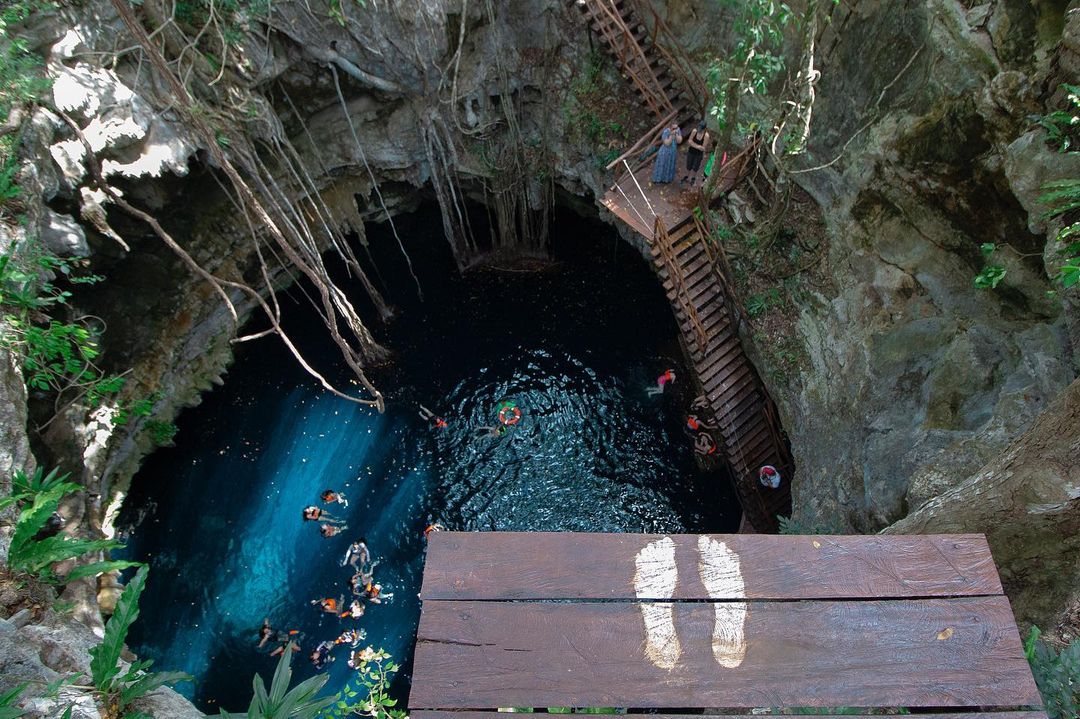
Mérida is not the closest base for the Yucatán's best-known cenotes, but there are good options within day-trip range:
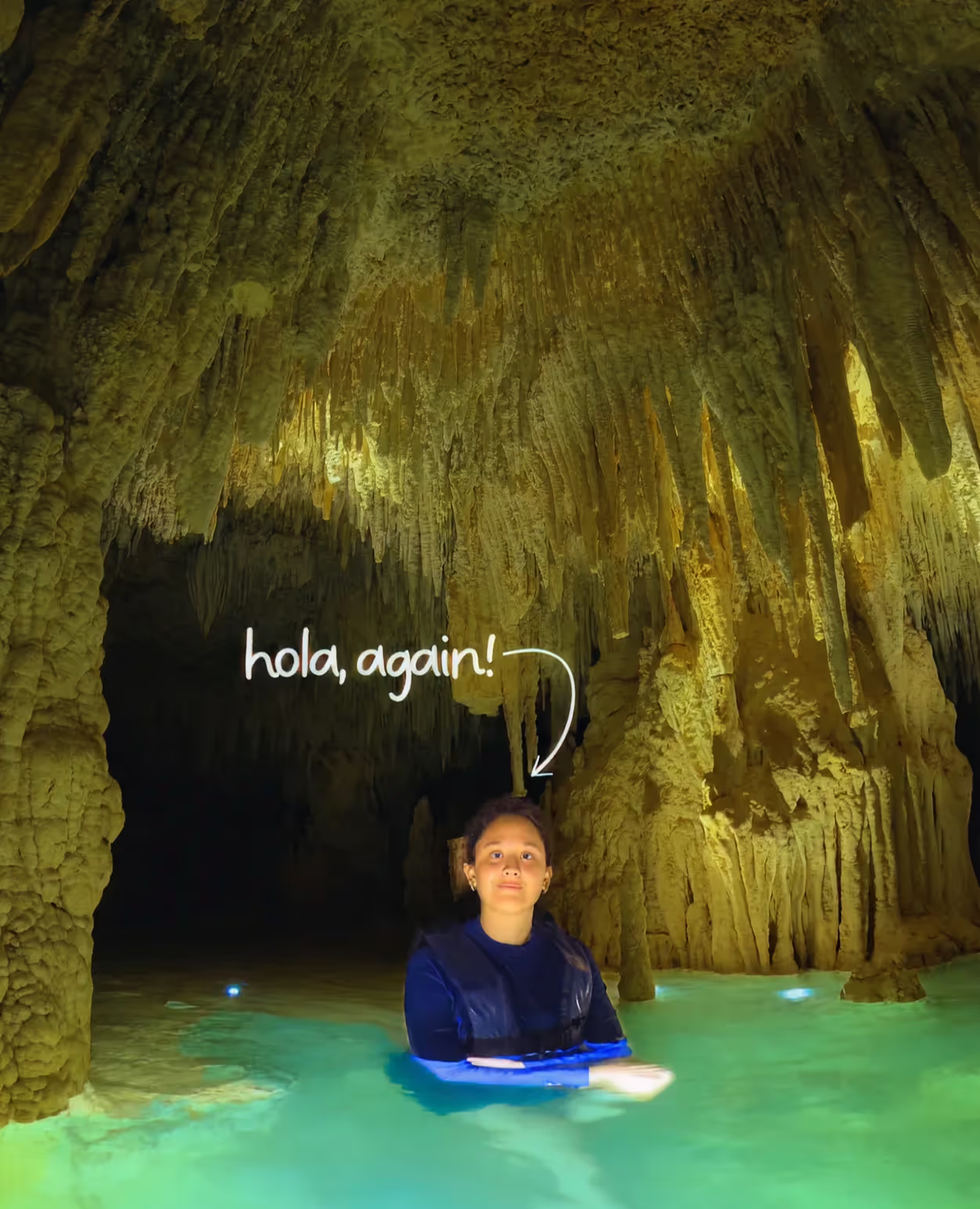
- Cenotes near Cuzamá: About 45 minutes southeast of Mérida, a cluster of three connected cenotes accessed via old henequén rail carts pulled by horses. An unusual experience. The cenotes themselves are cave cenotes with dramatic lighting.
- Route of the Cenotes: The main cenote corridor runs east from Puerto Morelos on the Caribbean coast. From Mérida it is a 3-hour drive. Better accessed from Cancún, Playa del Carmen, or Tulum. Our full cenote tours guide covers logistics.
If you are based in Mérida and want cenotes, Cuzamá is the practical answer. If cenotes are a priority for your trip, plan to spend nights on the Caribbean side. Before any cenote swim, check our cenote safety and tour logistics guide for what to bring and what to expect.
Eco Tip: Protect the Pristine Waters of Cenotes
When swimming in cenotes, avoid applying sunscreens, body lotions, insect repellents, or makeup beforehand. Cenotes are delicate, interconnected freshwater ecosystems with fragile aquatic life; chemical residues dissolve directly into the pristine water, causing long-term contamination.
Sunday Mérida en Domingo
Every Sunday morning, the city closes a large section of Paseo de Montejo and Plaza Grande to traffic for Mérida en Domingo. It is free, it is local, and it is one of the best things in the Yucatán that requires no booking whatsoever.
What happens: outdoor concerts on multiple stages (classical, folk, trova Yucateca), an artisan market along the boulevard, food vendors, cycling families, and most of the city out in the streets. The atmosphere runs from about 9 a.m. to 2 p.m. before the heat sends people home.
If you are in Mérida for any stretch of time, arrange your schedule to be there on a Sunday morning. It is not a tourist production. It is just what Mérida does on Sundays.
When to Visit Mérida (And When Not To)
Best months: October through March. Highs in the mid-20s to low 30s°C, low humidity, occasional cool evenings. December and January can get quite comfortable.
Shoulder season: April, May, and early June are manageable, especially if you start early.
Avoid: August in particular. Mérida's one real drawback is that August is brutal: 36 to 40°C with high humidity, and the historic center's lack of shade makes outdoor touring unpleasant by 11 a.m. The haciendas are better in August because they have pools and grounds to escape into. Plan your city walking for 7 to 10 a.m. and rest during the midday heat if you must travel then.
For a full picture of the Yucatán tour calendar, see our best Yucatán itinerary packages guide.
Bookable Tours
Below are the tour formats our team recommends booking in advance for Mérida:
- City walking tour with a licensed guide: 2 to 3 hours, covers Plaza Grande, cathedral, Palacio del Gobernador murals, and market. Prices range from 600 to 900 MXN ($30 to $45 USD) per person for small-group tours. Worth booking; the murals alone need explanation.
- Night food tour (60th Street corridor): 3 hours, 5 to 6 food stops, usually ends near Plaza Santa Ana. Budget 800 to 1,200 MXN ($40 to $60 USD) per person including food. Book in advance for weekend dates.
- Hacienda Sotuta de Peón half-day: Includes henequén tour, cenote swim, and lunch. Approximately 1,200 to 1,500 MXN ($60 to $75 USD) per person. More rewarding with a guide who explains the labor history.
- Uxmal full-day from Mérida: Guided transport, entrance fees, and commentary. Roughly 1,800 to 2,200 MXN ($90 to $110 USD) per person.
- Cooking class with market walk: See the Doña Patricia section above; 950 MXN ($48 USD). Book at least a week ahead.
- Izamal day trip: Half-day or full day, can be combined with Valladolid. Ask Rutopía's team about combining east-bound stops in a single route.
Rutopía designs tailor-made Yucatán itineraries that include Mérida as a core stop. Tailor-made trips start from $3,000 USD per person, and we ask for a deposit 30 days before arrival to confirm your dates and preferred guides. See how Mérida sits within the wider region in our complete Yucatán tours overview. If you want these tours woven into a broader trip, browse our México packages or reach out to our travel designers directly.
FAQ
What are the best Mérida tours for first-time visitors? Start with a 2 to 3 hour guided city walking tour covering Plaza Grande, the Palacio del Gobernador, and the Mercado Lucas de Gálvez. Follow it with a night food tour the same or next evening. Between those two experiences, you will understand the city's history and its food culture, which are the two things that make Mérida worth visiting.
How many days do you need in Mérida? Two nights and three days gives you one full day in the city (walking tour plus evening food tour) and one day for a day trip (Uxmal, a hacienda, or Izamal). Three nights and four days lets you do all three day trips without rushing. If you are combining Mérida with Chichén Itzá, Valladolid, or the Caribbean coast, see our Yucatán itinerary packages guide for routing options.
Is Mérida safe for tourists? Yes. The U.S. State Department rates Yucatán state as Level 1 (exercise normal precautions), the same rating as most Western European countries. Mérida is consistently cited as one of the safest large cities in Mexico. Standard city precautions apply: be aware of your surroundings and keep valuables out of sight. This is not a city where safety should be a real concern for travelers.
What is the best day trip from Mérida? Uxmal, if you care about archaeology. Hacienda Sotuta de Peón, if you want to understand Yucatán's economic history in a physical way. Izamal, if you want somewhere visually unlike anywhere else. Our team's honest pick is Uxmal plus one hacienda on the same south-bound day.
Is it worth hiring a guide for Mérida city tours? Yes, for the first day. The Palacio del Gobernador murals are technically impressive but much harder to read without context. A good local guide explains the political history behind each panel and makes the city's colonial-Maya layering coherent. After that, self-guided walking is easy.
Can I visit Chichén Itzá from Mérida? Yes. Chichén Itzá is about two hours east of Mérida. The site is large and impressive and receives high visitor numbers. Our guide to visiting Chichén Itzá from Cancún, Tulum, and Playa covers logistics from multiple bases, including Mérida. Leaving by 7 a.m. from Mérida is advisable.
What is Mérida en Domingo? A free weekly event every Sunday morning on Plaza Grande and Paseo de Montejo. The city closes traffic on the main boulevard, sets up live music stages, and an artisan market fills the streets. It runs approximately 9 a.m. to 2 p.m. No tickets, no booking, no cost.
How do I get to Mérida? Manuel Crescencio Rejón International Airport (MID) has direct flights from Mexico City, Cancún, and several U.S. cities. From Cancún by road it is about 3.5 to 4 hours on the toll highway. First-class buses run frequently from Cancún, Playa del Carmen, and Tulum. Within the Yucatán, ADO buses are reliable and comfortable.
What is the weather like in Mérida? Hot and humid most of the year. October through March is the most comfortable window, with temperatures in the mid-20s to low 30s°C. July through September is the rainy season, with August being the hottest and most humid month. Morning touring is always the strategy; midday heat in summer months is difficult outdoors in the city center.
How does Mérida compare to other Yucatán bases? Mérida is the best base for history, food, and cultural depth. Tulum and Playa del Carmen are better bases for beach access and cenote clusters. Valladolid is a quieter, smaller option for those who want a colonial town without the full city. If you are planning a longer trip, our overview of the best Yucatán tours shows how each base connects, and our group vs. private tours comparison helps clarify what kind of trip structure suits each base.
Looking for more Mexico travel resources? Be sure to check out:
Escrito por
Design your trip to Mexico with a local travel designer. Unique activities and lodging, 100% tailor-made and stress-free.
.webp)
Publicaciones relacionadas

Duration:
Blog title heading will go here
Days
Los mejores tours en México para reservar en tus viajes de 2026
Los mejores tours en México para reservar en 2026: rutas culturales, aventuras en la selva y viajes privados desde aproximadamente $1,800 USD. Creados por el equipo de viajes de Rutopía en México.
Leer más
Únete a nosotros sobre esto
viaje
Planifica tu viaje con nosotrosviaje
Únete a nuestro newsletter para mantenerte al tanto de novedades y consejos para tus viajes.
¡Vaya! Se ha producido un error al enviar el formulario.
Ready to experience the real Mexico?
Travel with local experts and get hangds-on supoort every step of the way... from planning to arrival.


Your Travel Companion in Mexico, 24/7
We're with you from arrival to departure via WhatsApp for anything you need.
Trusted by thousand of travelers with a 4.9 rating on Google