Customize my trip


Your 2026 Guide To Mexico Cultural Tours
Mexico cultural tours past the postcards: Oaxacan markets, Chiapan Maya villages, CDMX food and Yucatán ruins. Routes from Rutopía's trip team.


Content
They highlight our work



Unique trips in Mexico.
Tailor made for you.
Request your tripTailor made for you.
Let a local guide help you plan your trip to Mexico
Start tailor-made tripQuick summary: Mexico cultural tours at a glance
- What "cultural" should mean: Time with artisans mid-work, home-cook kitchens, archaeological sites with proper context, and community-run experiences, not photo stops or bus demos.
- Three best regions: Oaxaca (textiles, mezcal, food, Zapotec communities), the Yucatán (Maya ruins, cenotes, Mérida colonial culture), Chiapas (highland Tsotsil and Tzeltal communities, Palenque ruins).
- Typical price band: $1,900–$5,600 per person for 10–14 days, mid-range to premium.
- Best length: 12–14 days, enough to do two regions with real depth and unhurried days.
- The fastest "is it real" test: Ask whether the guide pays the artisan a flat workshop fee or only a percentage of sales. The flat-fee model means your visit isn't a sales pressure situation for either of you.
- Mexico received 42.2 million international visitors in 2023, per SECTUR (Mexico's Secretariat of Tourism), and the cultural-tour share has grown every year since 2022.
If you want our team to design a tailor-made cultural route, start with our Mexico tours and packages page.
Most "cultural tours" are sightseeing tours with a craft demo bolted on. A real one builds the day around the maker, not the bus schedule.
What Mexico Cultural Tours Really Cover

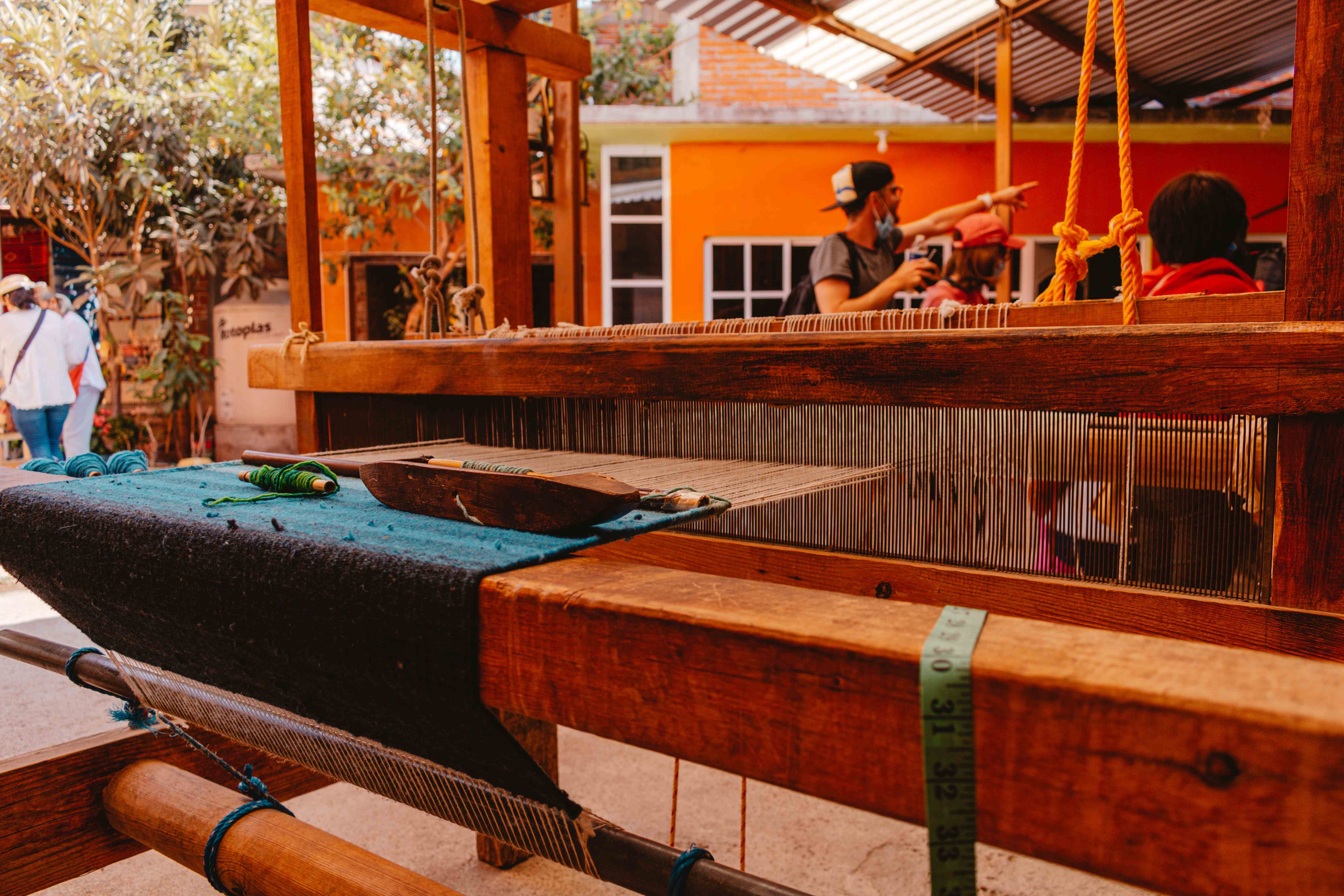
Three categories of experience, in the order that matters. Time with people who make things: weavers at backstrap looms, mezcal maestros at the still, cocineras grinding masa on a stone metate. Visits long enough to ask questions and short enough to respect the workday. Archaeological sites with real context: a guide who can read the INAH-catalogued glyphs at Palenque, not someone with a clipboard at Chichén Itzá reciting the same script every forty-five minutes. Local meals you wouldn't find without us: the home kitchen, the Tuesday market fonda, the tianguis lunch under a stretched blue tarp.
What it shouldn't be: a "demonstration" cued for the bus. If the artisan is performing rather than working, you're at a show. And there's a meaningful difference between watching someone make tortillas and eating tortillas someone just made for their family.
But that distinction is only possible if your operator built the day around the maker's schedule, not the bus schedule. The best Mexico cultural tours put you in the second situation consistently.
The Three Best Regions for Cultural Tours in Mexico
Oaxaca. The textile, food, and mezcal capital. The city is the base. The central valleys are the destination. Day trips run to Teotitlán del Valle (natural-dye Zapotec weavers), San Bartolo Coyotepec (black pottery), Tlacolula (the Sunday market, open before 9 a.m. when it still functions as a working market rather than a tourist circuit), Mitla (Zapotec ruins with the most intricate geometric stonework in Mexico), and the Sierra Sur palenques for mezcal with the people who made it. Best length: 7 days minimum, ideally 9–10.
When in Oaxaca City, you need to find the best nieves in town on the local market next to the Templo de Santo Domingo. My favorite one is “Chocolate Oaxaqueño”, made with water and the typical spiced flavor that characterize artisan oaxaca chocolate.
And since you’re around the area you could also visit “Mezcalería Los Amantes” the small testing shop and not the terrace, here most likely you’ll find a local musician singing with his guitar.
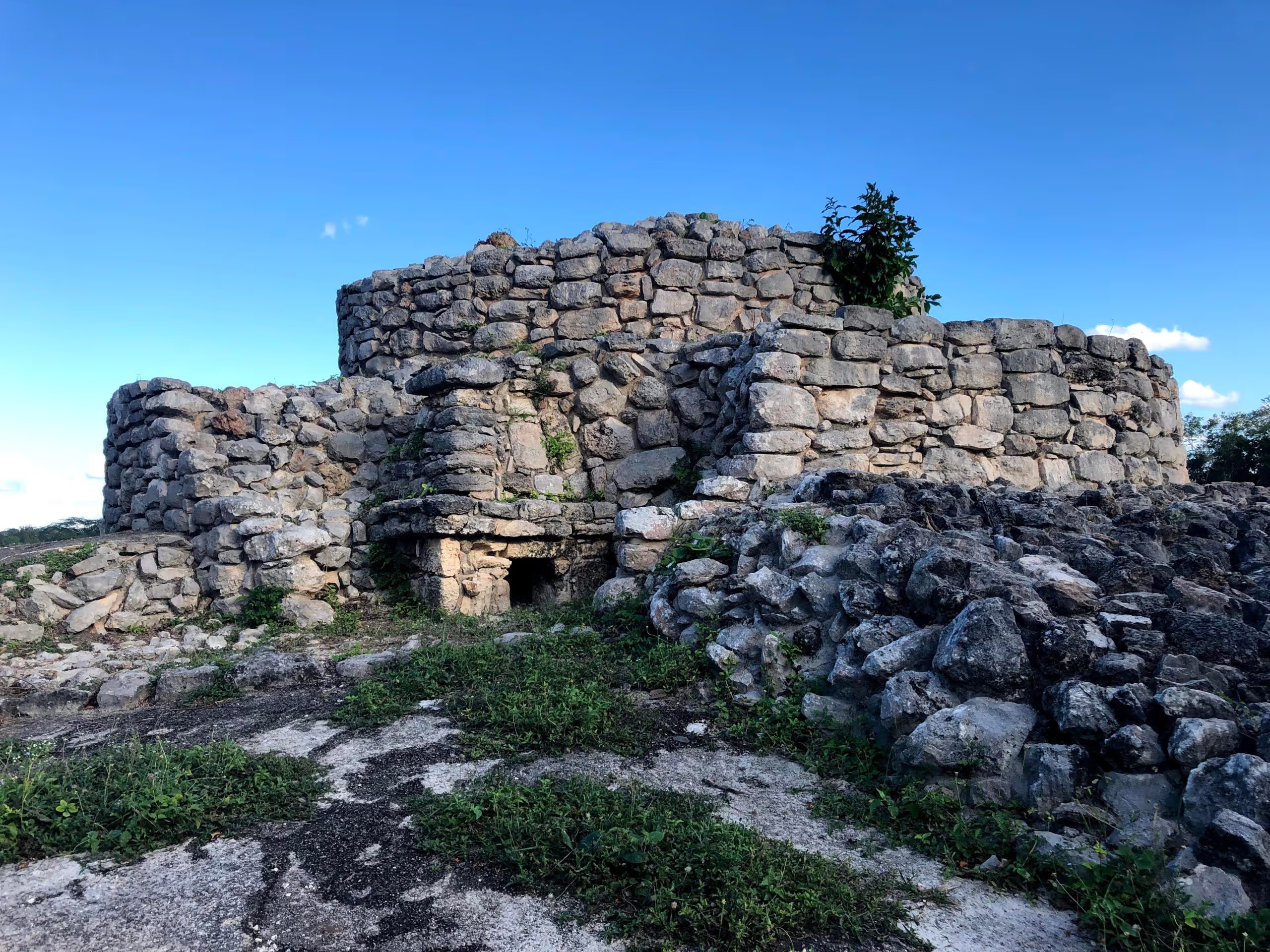
Yucatán. Maya archaeological sites (Uxmal, Ek Balam, Chichén Itzá), cenote networks, contemporary Mayan communities and Mérida's colonial center. Getting involved in the day to day of mayan families will surely be the highlight of your visit to Yucatán: Ek-balam, Yaxunah and Muna will share how contemporary Mayans live and how they’ve preserved their ancestral culture. Best length: 7 days minimum, ideally alongside CDMX or Chiapas for a 12–14-day combined route. A Yucatán-only cultural itinerary pairs well with a beach finish for family travel or a honeymoon route.
Chiapas. Highland Tsotsil and Tzeltal communities, San Cristóbal de las Casas, Sumidero Canyon panga rides, and Palenque ruins (a Sierra Madre overnight from San Cristóbal). The cultural-photography ethics here are non-negotiable: no photos inside San Juan Chamula's church, no photos of children's faces without explicit permission. These aren't rules posted on a sign. They're community standards enforced by the community. Best length: 6 days minimum as part of an Oaxaca plus Chiapas route.
Marquee Experiences Worth Planning a Mexico Cultural Tour Around
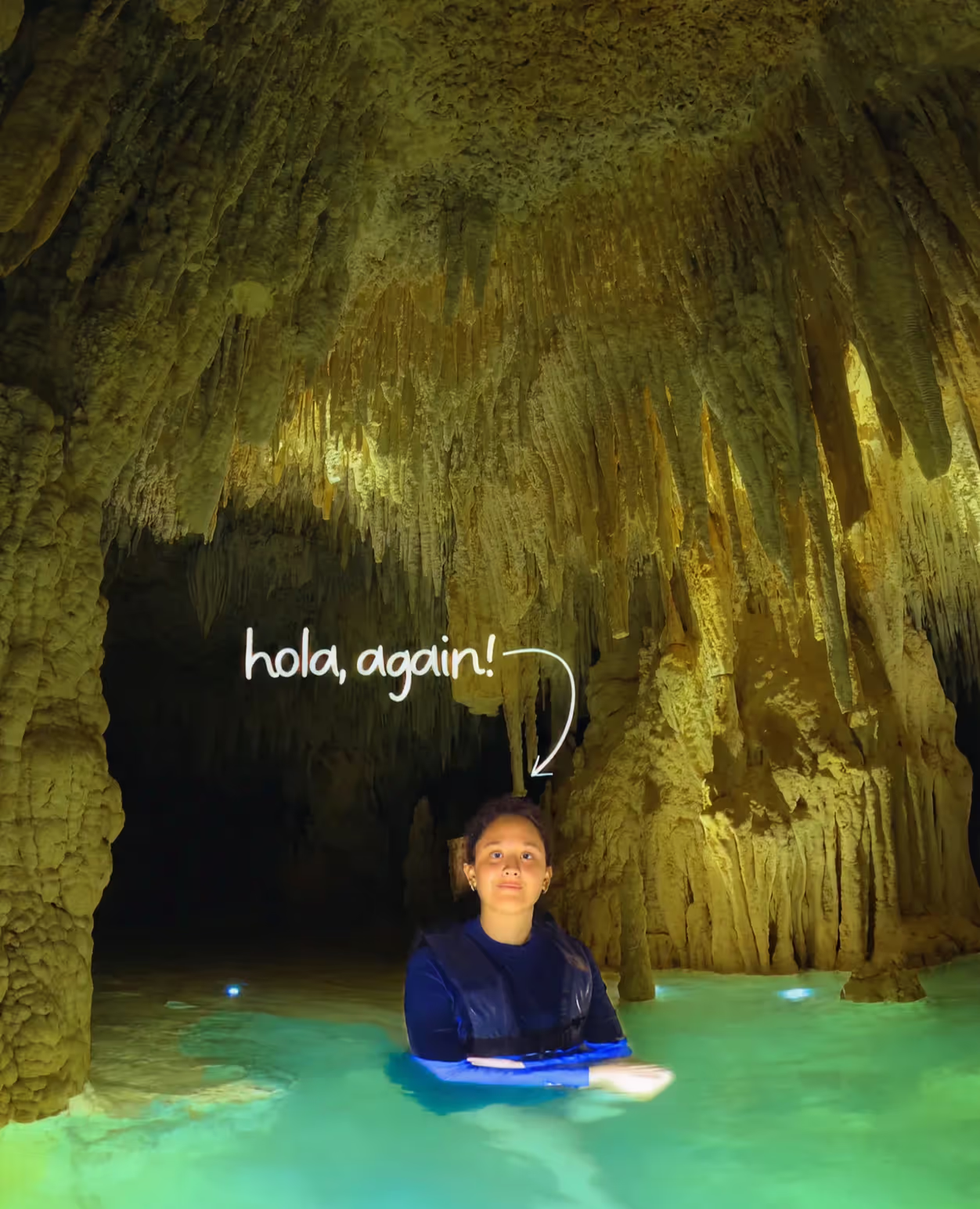
A story about a Yucatán cenote day: On our Homún cenote route, a family runs ropes and dry bags at Cenote Yaal Utzil from a palapa about ten minutes off the main road. Entry runs 150 MXN per person (about $8 USD). Don, the father, will not let you in without a life vest, even if you're a strong swimmer. He's pulled too many people out to care if you find it dramatic. That particular combination of family operation, genuine safety culture, and a cenote most tour buses don't know about is what a cultural tour should feel like, even when the experience itself is just a swim.
Other experiences worth building a Mexico cultural itinerary around:
- A Sunday in Tlacolula: Open before 9 a.m. at its best. The meat-grill counter at the back of the market is where locals queue; the food stalls in the middle are for tourists. Go early, go to the back.
- A highland mezcal palenque in the Sierra Sur: Don Miguel Ángel Cortés ferments tobalá at Palenque Tío Román in San Baltazar Chichicapam. A flight of three pours runs 300 MXN (about $16 USD). He pours into small jícaras and will tell you, gently, that you are holding twelve years of his brother's labor.
- A Teotitlán del Valle workshop visit: Natural-dye weaving with a family who can trace their technique back four generations. Pair this with the cooking class in the same valley for a full cultural day.
- San Juan Chamula on a market day: The church has no pews. Families sit on pine needles on the floor, surrounded by candles and Coca-Cola used in ritual purging. Photography is forbidden. The 200 MXN (about $10 USD) village entry fee goes to the community council.
- Palenque at 8 a.m.: The jungle site at opening, before the tour groups arrive, is a different place than Palenque at 11 a.m. The acoustics, the mist off the Sierra de Chiapas, the howler monkeys in the canopy above Temple XX. Plan an early start.
Pro tip: On any Oaxaca cultural tour, pair an artisan workshop in Teotitlán del Valle with the Tlacolula Sunday market in the same day trip. The drive between them is 15 minutes. Most operators run them separately; ours combines them so you see both the village and the weekly market that the same families have been selling at for generations.
Costs and Sample Mexico Cultural Tour Routes
10-day Oaxaca + Yucatán: $2,800–$4,200 per person mid-range. Days 1–5: Oaxaca city and the central valleys (Teotitlán, Tlacolula, a palenque day). Days 6–10: Mérida and cenotes (Uxmal or Chichén Itzá, a hacienda night, Tulum or Bacalar finish). This is the most accessible entry point: two regions, manageable transit, strong cultural content on both ends.
14-day Oaxaca + Chiapas (the deep cultural route): $3,400–$5,600 per person mid-range. The route our team runs most in winter. Seven nights Oaxaca (city plus central valleys plus Sierra Sur mezcal day plus Teotitlán textile day), OAX–TGZ flight transfer, six nights Chiapas (San Cristóbal cobblestones, Sumidero Canyon panga, Sunday community visit in Chamula or Zinacantán). Day-by-day in our Oaxaca and Chiapas tour itinerary guide.
For the cost breakdown across all formats, see our honest Mexico tour cost guide. And if the cultural focus is part of a longer trip, our 7, 10, 14 and 21-day itinerary options show how to add more regions without rushing.
Pro tip: Book the Oaxaca + Chiapas route in October through early December or February through April. Peak weeks (Easter, Day of the Dead in Oaxaca, December 20–January 5) are spectacular but book out six months ahead and the crowds in Oaxaca city become a limiting factor on the workshop experience. Shoulder season means your cooking class is for your group of four, not twelve.
How to Tell a Real Mexico Cultural Tour from a Sightseeing One
Three questions to ask any operator in writing before you pay a deposit.
- How is the artisan paid? A real cultural tour pays a workshop fee whether your group buys anything or not. A sightseeing tour routes a sales commission only, which means the artisan is financially incentivized to perform a demo rather than work, and your guide is incentivized to steer you toward the shop.
- What's the group size at community visits? Six is the soft ceiling for most highland workshops. Twelve people in a courtyard kitchen is a tour bus with better marketing. Ask the number before you book.
- Can the guide read the site? The difference between Palenque with a real epigrapher-trained guide and Palenque with a clipboard is two hours of context versus ten minutes. Ask what your guide's specific qualification is at the archaeological sites you'll visit.
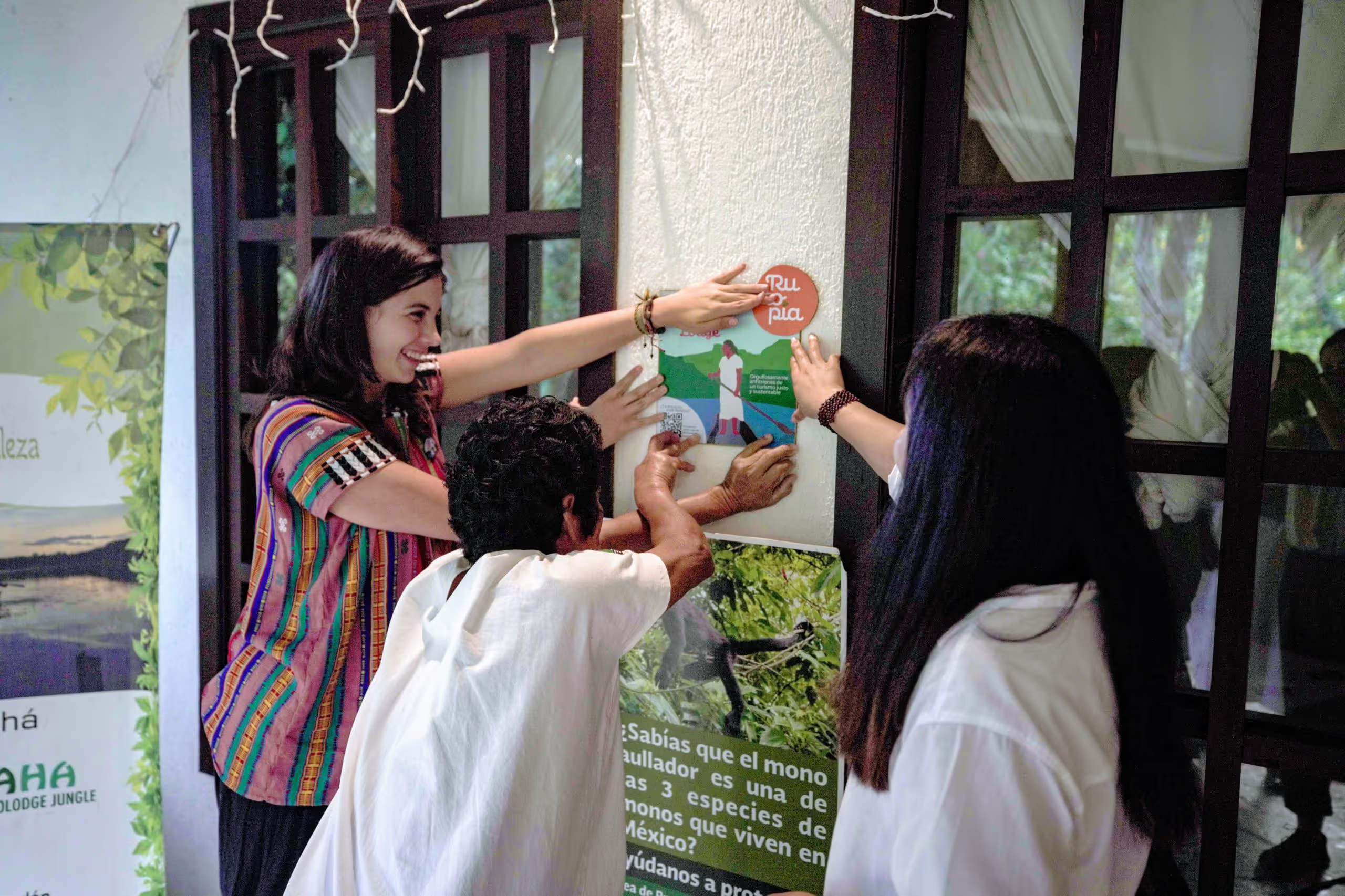
Rutopía is a Certified B Corp Mexican-run operator with on-the-ground partners across Oaxaca, Chiapas, and the Yucatán. For the same operator-vetting framework from the sustainable tourism side, that guide covers how community revenue flows. For the adventure-focused version of many of the same routes, see our Mexico adventure tours guide. For an overview of every tour format in the cluster, the best Mexico tours in 2026 page covers the full picture.
Bookable Mexico Cultural Tours
- Rutopía: Tailor-Made 14-Day Oaxaca + Chiapas. Private guide, boutique and community hotels, Tlacolula and Teotitlán workshop days built in. From $4,200 per person. Plan your cultural route with our team
- G Adventures: Real Mexico. 15-day small-group with cultural site days across CDMX, Oaxaca, and Yucatán. From $2,100 per person. View on Viator
- Intrepid Travel: Oaxacan Adventure. 8-day small-group focused on Oaxacan markets, mezcal, and craft. From $1,580 per person. View on GetYourGuide
- Airbnb Experiences: Oaxacan Cooking Class with a Family. Half-day home kitchen, traditional mole. From $55 USD. View on Airbnb Experiences
Mexico Cultural Tours FAQ
What is the best Mexico cultural tour for first-timers?
Ten days in CDMX plus Oaxaca. Mexico City for the National Anthropology Museum and the market streets of La Merced; Oaxaca for the artisan villages, food, and mezcal. It covers the cultural depth without requiring you to navigate the longer Chiapas logistics on a first visit. Our best Mexico tours overview compares this route against every other starting format, and our guide to Mexico tours for first-timers covers what to expect on that first booking.
How long should a Mexico cultural tour be?
Twelve days minimum for two regions with real depth. Seven days works if you focus on one region only. Anything shorter than five days in Oaxaca and you'll spend two getting oriented. Our guided Mexico itineraries guide shows how different lengths break down across regions.
When is the best time for a Mexico cultural tour?
Mid-October through early December and February through April. Day of the Dead in Oaxaca (late October to early November) is worth the advance planning if you book six months ahead. Avoid Easter week in Oaxaca unless you want two hours to get to your artisan workshop through procession traffic. See the full regional breakdown in our Mexico seasonality guide.
Is a guided cultural tour worth more than independent travel in Mexico?
For most travellers, yes. The artisan introductions, market timing, Maya site context, and mezcal palenque access are hard to assemble independently, especially for a first visit. For repeat visitors with Spanish, independent travel works well. For the format comparison (private guide vs. small-group cultural tours), see our small-group vs. private tours guide.
What's the difference between a cultural tour and a private Mexico tour?
Cultural tours focus on a theme (artisans, food, archaeology, community). Private tours focus on group structure (just your group, flexible route). Most private Mexico trips are cultural in content. The two overlap heavily. See our Mexico private tours guide for how a tailor-made private format works in practice.
Is Mexico safe for a cultural tour in Oaxaca, Chiapas, or the Yucatán?
Yes. These are the three most-visited cultural regions in Mexico, and all three have high rates of safety for travellers on standard itineraries. The community relationships our local partners maintain in Oaxaca and Chiapas are also a practical safety asset: you're known and expected in the places you visit. Full state-by-state read in our Mexico safety guide.
What should I look for in a Mexico cultural tour operator?
Local Mexico-based presence, a flat-fee payment model for artisan visits (not commission-only), guides with genuine language skills at archaeological sites, group sizes under six at community workshops, and a B Corp certification or equivalent credential. Our Mexico vacation packages guide covers the operator-vetting questions to ask before you pay a deposit.
What do Mexico cultural tours cost?
Mid-range: $1,900–$4,200 per person for 10 days, depending on route and hotel tier. Premium: $4,500–$7,500 per person. International flights ($400–$900 per person from major North American hubs) and tips for your guide (800–1,200 MXN, about $40–$60 USD, per person per day) are almost always quoted separately. Our Mexico tour cost breakdown by format and region shows what to budget beyond the headline price.
Looking for more Mexico travel resources? Be sure to check out:
- Best Mexico Tours in 2026: Every Format and Region
- Oaxaca & Chiapas Tour Itinerary: The Deepest Cultural Route
- Guided Mexico Itineraries: 7, 10, 14 & 21-Day Options
- Mexico Sustainable Tourism: How Community Travel Works
- When to Book Mexico Tours: Seasonality by Region
- How Much Do Mexico Tours Cost? Honest Breakdown
Written by
Design your trip to Mexico with a local travel designer. Unique activities and lodging, 100% tailor-made and stress-free.
.webp)
Join us on this
journey
Plan your trip with usjourney
Join our newsletter to stay up to date on features and releases.
Oups ! Une erreur s'est produite lors de l'envoi du formulaire.
Ready to experience the real Mexico?
Travel with local experts and get hangds-on supoort every step of the way... from planning to arrival.

Your Travel Companion in Mexico, 24/7
We're with you from arrival to departure via WhatsApp for anything you need.
Trusted by thousand of travelers with a 4.9 rating on Google